














Every aspiring writer eventually asks the same question: how much do authors make? And behind that is an even bigger one: can I actually make money at this? It’s a fair question, and one that deserves a clear, honest answer rather than a vague shrug or an inflated headline designed to get clicks.
The truth is that author income in 2026 is more complex, more varied, and in many ways more full of opportunity than ever before.
The rise of self-publishing, audiobooks, and direct-to-reader sales has fundamentally reshaped what’s possible for a working author. At the same time, publishing remains a “winner-takes-all” market, where a small percentage of authors earn the majority of total industry income, which means the “average” author salary figures you see online can be deeply misleading if you don’t understand what they’re actually measuring.
1. My book will be published by a...
2. My book will be an:
3. My royalty rate will be:
*Please note that this royalty rate is based on the market averages for paperback books. Actual royalty rates for traditional and indie publishing can vary by author depending on several factors.
4. My book's retail price:
5. The # of books sold:
Your Profit per Book Sold
For books sold, you earn:
For 1,000 books sold, you earn:
For 10,000 books sold, you earn:
Royalties Comparisons for 10,000 books sold
So, how much do authors make?
While there isn’t a baseline number to report on how much authors make, it’s important to realize that author salaries have a very wide range. Some authors make millions, and others don’t make a penny. But writing a book is profitable if you know how to do it well.
The median annual wage for writers and authors in the U.S. is $72,270 as of May 2024, according to the U.S. Bureau of Labor Statistics, which is the most authoritative source of salaried writer income data. The lowest 10% earned under $41,080, while the top 10% earned more than $133,680.
With so many factors to consider when calculating how much authors make it’s important to determine how, and why, the publishing world has such a variance in author income levels.
This guide breaks down author earnings from every angle: what the data really tells us, how income differs depending on your publishing path, which genres tend to earn the most, and what authors at every level are actually making. Whether you’re just starting to explore writing or looking to grow an existing career, this will give you the clearest, most realistic picture possible.
What is an author salary?
An author salary is the total income an author earns from all writing-related activities in a given year. This includes book royalties, publisher advances, speaking fees, course sales, Patreon income, and any other revenue tied to their work as a writer.
Because most authors are self-employed and work by book project, income can swing dramatically from year to year. A year with two new releases and strong marketing will look very different from a quiet writing year with no new titles. That variability is one of the core realities of an author career that every aspiring writer should plan for.
Salary vs. book earnings
It's worth drawing a clear distinction: your book earnings (royalties + advances) are just one piece of your overall author salary. Many working authors supplement book income through:
- Freelance writing or ghostwriting
- Online courses and workshops
- Speaking engagements and events
- Creator platforms like Patreon, Ko-fi, or Buy Me a Coffee
- Consulting and coaching built on their book's credibility
This distinction matters because some of the most financially successful authors in the world earn the bulk of their income from opportunities their book created, not from the book itself. Understanding how to use a book to grow a business is often the real key to a high author salary.
Common misconceptions about how much authors make
Before diving into numbers, it helps to clear away a few common myths:
Writing a book will not make you rich overnight. It takes a solid book marketing plan, often multiple books, and time to build an audience.
Publishing is not a get-rich-quick scheme. Publishing a book doesn't mean instant fame and wealth. It's the beginning of building a platform, not the end.
The "average" salary is almost meaningless. Because a small number of authors (James Patterson, J.K. Rowling) earn tens of millions while the majority earn under $10,000, the arithmetic mean is badly skewed. The median is far more useful.
Self-publishing changes the math significantly. With higher royalty rates, direct-to-reader sales, and control over pricing and marketing, self-publishing opens income possibilities that simply didn't exist 15 years ago.
Some authors write and publish books with the intention of promoting their larger brand. This is the case for many entrepreneurs who want to share a concentrated version of their business vision. The interest generated by the book might translate to increased sales of a product, traffic on their website, or participation in personalized coaching.
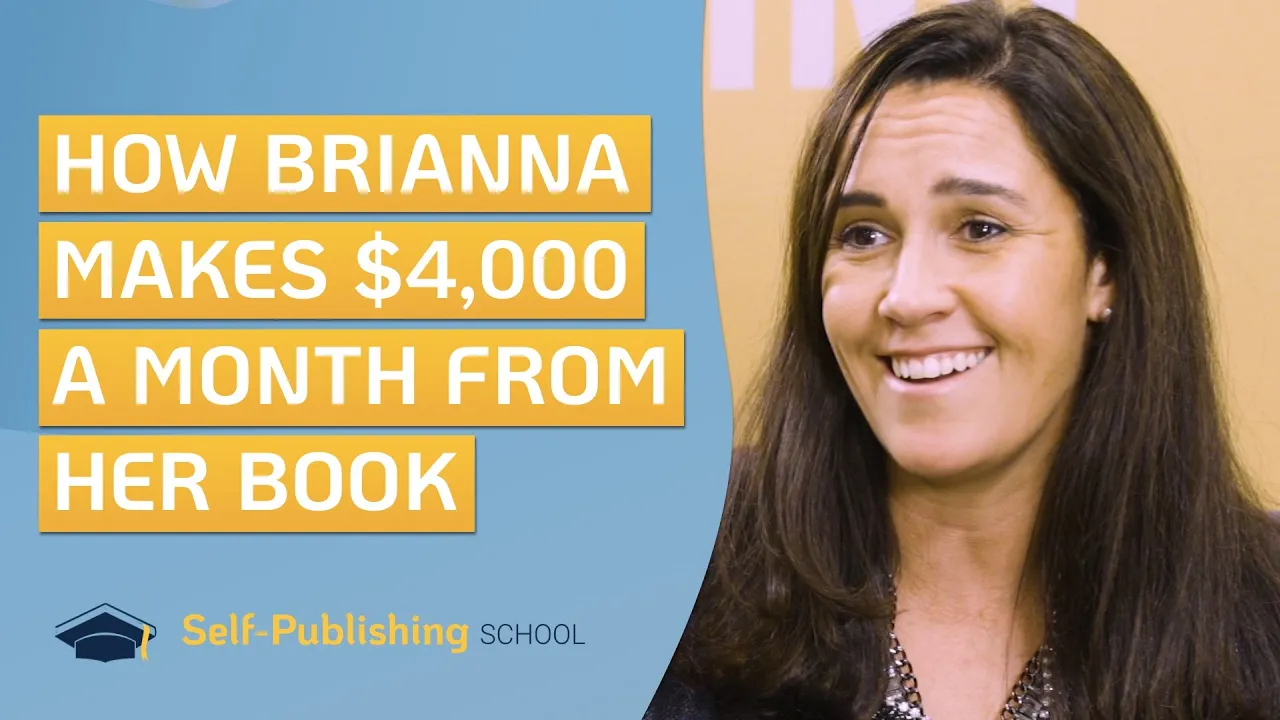
Take Brianna R. in the video below, for example, who used the Self-Publishing School program to write and launch her book, which she now makes $4,000 per month from.

Now that you understand what a salary for authors is, and have a slightly more realistic view of what it takes to earn a high author salary, let's answer the question you're here for: How much do authors make!?
How much do authors make?
As we mentioned above, the median annual wage for writers and authors in the U.S. is $72,270. Of course, what you will earn as a new writer could be much lower, or even higher if you end up on the bestseller list.
Writers live in a time where the opportunity to earn from their creative passions is in abundance.
However, this BLS figure covers employed writers broadly (journalists, technical writers, copywriters, and content professionals are all included).
When you narrow the lens to book authors specifically, the numbers look quite different.
The Authors Guild (the largest professional organization for published authors) conducted a landmark survey of more than 5,000 authors and found a median income of just $6,080 per year for all authors, and $20,300 per year for full-time authors.
That gap between the BLS number and the Authors Guild number tells you a lot: most book authors are either part-time, building their catalog, or relying on the book as one piece of a larger business rather than their primary paycheck.
Third-party salary aggregators like Glassdoor report an average writer/author salary of around $89,211 in 2026, while PayScale puts the median at approximately $50,000. The variance across sources reflects the enormous diversity in what "author" means - a content strategist at a tech company and a debut romance novelist are both technically "authors," but their financial realities are worlds apart.
The key takeaway: author income is a spectrum, not a single number. Where you land on that spectrum depends heavily on how you publish, how often you release books, how well you market, and whether you're building a book business or treating writing as an isolated creative project.
Depending on your goals, there is a path to success for your author career.
In today’s publishing industry, writers can become published authors a lot more easily than they could in the past. Historically, traditional publishing dominated the book industry, and authors had to be accepted by a traditional publishing company in order for their books to be published.
The issue with that is the traditional publishing method has always been very competitive, which means many brilliant writers have been turned away.
Now, with the rise of self-publishing through online platforms like Amazon’s Kindle Direct Publishing, anyone can publish a book. Some argue that this, of course, opens the floodgates and diminishes the quality of books. But many authors have found success through self-publishing high-quality books, and have built sustainable creative businesses.
How much does an author make per book?
Self-published authors typically earn $1.40 to $10+ per book sold, depending on format and pricing. Here's how the math works in practice:
For a hardback priced at $14.99 with a 30% wholesale discount and a $4.67 print charge, an author earns approximately $5.82 per copy.
For a paperback listed at $5.95 with a 60% royalty rate and a $2.15 print cost, the author earns about $1.42 per copy.
For eBooks priced at $4.99 with KDP's 70% rate, the author earns approximately $3.49 per sale with no print costs to subtract.
Traditionally published authors earn 10–15% of the list price on print books. So on a $20 hardcover, that's $2.00 per copy before the advance has been earned out.
For a deep dive into the difference, check out our full guide to self-publishing vs. traditional publishing.
What is the average author salary? Breaking down the numbers
Rather than a single average, it's more useful to look at how income clusters across different types of authors:
| Author Type | Estimated Annual Earnings |
|---|---|
| First-year / debut authors | $500 – $5,000 |
| Part-time authors (1–2 books) | $6,000 – $15,000 |
| Full-time authors (median) | $20,300 (Authors Guild) |
| Mid-tier full-time authors | $40,000 – $80,000 |
| Successful indie authors (10+ books) | $3,000+/month ($36K+ annually) |
| Bestselling / traditionally published | $100,000 – $1M+ |
| Top-earning authors (celebrity tier) | $10M – $90M+ |
The wide range isn't a bug in the data, it's the reality of the profession.
Indie authors with strong backlists of 10 or more books routinely earn $3,000+ per month through platforms like Amazon KDP. Meanwhile, debut authors at traditional houses often earn advances of $5,000 to $25,000 and may not see royalty payments for years afterward.
Publishing ends up being a winner-takes-all market. A small number of authors at the top earn the vast majority of total industry income, which is precisely why building a sustainable author business, rather than counting on a single breakout book, is the most reliable path to a real author salary.
Factors that affect how much authors make
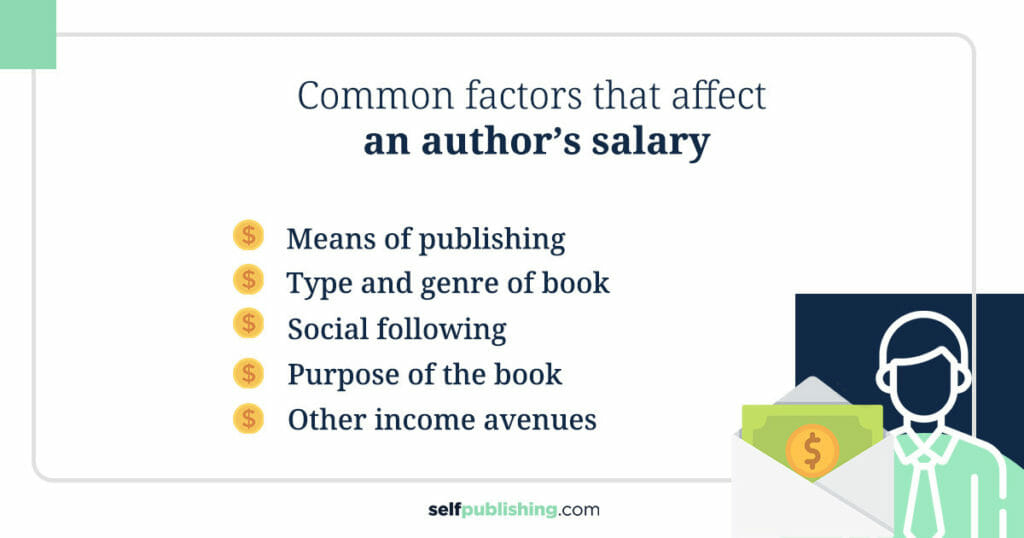
As a baseline rule: more book sales translate to a higher salary. But several factors have as much impact on your income as raw sales volume.
Publishing method. Self-publishing authors typically earn 40–70% royalties per sale. Traditionally published authors earn 10–15% on print and 25% on eBooks — but may receive a substantial advance upfront. For a direct comparison, use our Book Royalties Calculator.
Genre. Some genres are simply more lucrative than others. Romance, thriller/mystery, and fantasy/sci-fi tend to attract large, loyal audiences. Based on annual revenue data, the top-earning book genres break down as follows:
- Romance / Erotica — $1.44 Billion
- Crime / Mystery — $728.2 Million
- Religious / Inspirational — $720 Million
- Science Fiction / Fantasy — $590.2 Million
- Horror — $79.6 Million
Platform and format. Self-published authors on Amazon KDP earn 70% royalties on eBooks priced between $2.99–$9.99, and 60% on paperbacks after print costs. Audiobooks are the fastest-growing format in 2026 and add a meaningful revenue stream for authors who invest in audio production.
Backlist size. Income compounds with each new title. An author with one book is entirely dependent on that book's performance. An author with ten books benefits from ongoing sales across the entire catalog, with each new release driving readers back to earlier titles.
Audience and platform. An existing email list or social following dramatically accelerates early sales. Authors who have built a community before launch have a major advantage over those who publish into a vacuum.
Purpose of the book. Many of the highest-earning "authors" use their books as lead generation for a larger business (coaching programs, courses, consulting, or speaking). If you're writing a book to grow your business, the book's direct royalties may be the least important part of its financial impact.
Royalties with traditional publishing vs self-publishing
How much authors make from each individual sale largely depends on the type of publishing process they choose to take. For instance, if you choose to self-publish, you forego the advance but keep a larger percentage of the royalties. Self-published authors average out to bringing in 60-80% of royalties.
On the traditional publishing side, Forbes says that “the average author at a traditional publishing house can expect to receive 4-15%, depending on your status and contract.” For instance, a debut author will likely make a smaller percentage of royalties than an established author. Once you establish yourself in the marketplace, you will likely bring in larger royalties.
It’s important to note that traditionally published authors receive an advance at the signing of the book contract. According to one literary agency, for debut authors, advances can range from $5,000 to $50,000.
For traditionally published authors, their royalties go toward making up their advance. As soon as their royalties match their advance figure, they begin keeping their royalties.
So, how much does an author make per book? The answer depends on many factors:
- Your percentage of royalties
- Whether you receive an advance
- The format of book you publish
Some genres have better financial results for authors, especially those choosing to self-publish. Writers of fantasy/sci-fi and romance novels are often able to supersede the traditional publishing gatekeepers to find massive success with the devoted audiences of these genres.
Financial guidance and business-building books from recognized figures in their fields also tend to find their way into the hands of readers hungry for useful advice.
For a closer look at the differences in royalty rates depending on publishing method, check out our Book Royalties Calculator:
1. My book will be published by a...
2. My book will be an:
3. My royalty rate will be:
*Please note that this royalty rate is based on the market averages for paperback books. Actual royalty rates for traditional and indie publishing can vary by author depending on several factors.
4. My book's retail price:
5. The # of books sold:
Your Profit per Book Sold
For books sold, you earn:
For 1,000 books sold, you earn:
For 10,000 books sold, you earn:
Royalties Comparisons for 10,000 books sold
So we've talked about the average salary of an author, but let's take a look at some actual examples of how much authors make.
How much do authors make?: Real author salary examples
To give you some real-life examples of how much authors make, and how much of a variance there is, we've compiled a detailed list of salaries from authors.
We aggregated this salary list to cover a wide range of income possibilities, from well-known authors to those still making a name for themselves.
Before we dive into these examples of how much authors make, it’s important to note that this is a very small representation of how much authors make. These authors are only one side of the equation, and do not represent the thousands of other authors who do not make this salary list.
However, we include examples of real authors here, because many of the reports that exist for how much authors make are simply gathered by anonymous surveys. This salary report is used to show a snapshot of the wide spectrum in income levels amongst writers and authors.
Highest Income Authors
We’ll start with authors with the highest salaries. These authors have a long track record of excellence, with their books often adapted into films or TV shows.
James Patterson: $89 million (2025)
James Patterson is a popular thriller writer who topped the Forbes Highest-Paid Authors list, largely from the earnings of The President is Missing - co-published with former President Bill Clinton. He earned $89 million in 2025.
JK Rowling: $80 million (2025)
JK Rowling is the woman behind Harry Potter, the best-selling children’s series of all time. She earned a whopping $95 million in 2017, and a cool $80 million in 2025.
Nora Roberts: $30+ million (2025)
Nora Roberts is a romance novelist who earned over $30 million in 2025.
Jeff Kinney: $23 million (2025)
Jeff Kinney wrote The Diary of a Wimpy Kid and earned $23 million in 2025.
John Grisham: $21 million (2025)
John Grisham is a popular legal drama writer, best known for books like The Firm, who earned $21 million in 2025.
Stephen King: $20 million (2025)
Stephen King is the ‘King of Horror’ due to his many popular scary novels over a decades-long career. He earned $20 million in 2025.
Dan Brown: $20 million (2025)
Dan Brown wrote The Da Vinci Code and earned $20 million in 2025.
Rick Riordan: $10.5 million (2025)
Rick Riordan wrote the Percy Jackson series and earned $10.5 million in 2025.
Danielle Steel: $10 million (2025)
Danielle Steel is a romance novelist and bestselling author. She earned $10 million in 2025.
Niche Author Salaries
Fantasy/sci-fi and romance novelists have managed to carve a successful niche of the publishing world, often by publishing their works directly onto Amazon and other marketplaces. We’ll cover a few of these examples of how much authors make with niche books below.
Amanda Hocking
Amanda Hocking is a fantasy novelist who made her name in the self-publishing world. Her success drew the attention of a major publisher who gave her a $2 million dollar advance for four novels and an additional $750,000 for republishing rights to three books in her back catalog.
Bella Andre
Bella Andre is a self-published romance novelist, best known for her The Sullivans series, who made more than $116,246 dollars in the first quarter of 2011 according to a Washington Post article.
Hugh Howey
Hugh Howey is a self-published fantasy novelist, best known for hisWool series, who has generated more than a million dollars of income from his novels according to a 2014 Bloomberg article.
Joe Konrath
Joe Konrath is a self-published author thriller novelist, best known for his What Happened to Lori series, who earned $78,231 in six weeks after publishing a novel in 2011 according to a Washington Post article.
Jim C. Hines
Jim C. Hines is a Hugo Award-winning writer who has been posting his salary for more than a decade. He earned $13,957 dollars in 2022, mostly from his traditionally published novels.
Kameron Hurley
Kameron Hurley is a Hugo Award-winning author best known for The Stars are Legion and The Feminist Geek Revolution. She published occasional income reports and earned $47,096 in 2016, though only about $18,000 came from the sale of her traditionally and self-published books. The remainder came from Patreon.
Brenna Aubrey
Brenna Aubrey is a self-published romance novelist known for turning down a major publishing contract. She published a blog post stating that she earned $16,589 the month after releasing her first novel in the aftermath of the traditional publishing rejection.
Melanie Hooyenga
Melanie Hooyenga is a self-published romance novelist best known for her The Flicker Effect series. Marie Force, a major voice in romance novels, released a blog post about the experiences of indie/self-published authors, highlighting the experience of four authors, but only uses their first names. The section on "Melanie" mentions enough details to plausibly assume that she is talking about Melanie Hooyenga (year of publication, sales, self-published). The post states that Melanie made $90,000 in 2015.
Jessi Gage
Jessi Gage is a romance novelist who transitioned from traditional publishing to self-publishing to have more freedom and control over her work. She posted an income report that stated a salary of $21,827 in 2017.
Nicholas Sansbury Smith
Nicholas Sansbury Smith was able to leave his government job to pursue writing books full-time. He writes post-apocalyptic science fiction and was able to sell 30,000 copies of his second self-published book Orbs, which led him to traditional publishing opportunities.
Entrepreneur Author Salaries
Another large sector of authors includes those who have used a book to build or grow a business. Entrepreneurs and bloggers are capable of using their books, often self-published, to build their brand and grow interest in their other business ventures, and how much authors make from these books is often directly tied into increased business from their books.
Nick Loper
Nick Loper is an entrepreneur and founder of the Side Hustle Nation blog. A year after publishing his book, Buy Buttons: The Fast-Track Strategy to Make Extra Money and Start a Business in Your Spare Time,Loper posted a blog post stating that it generated a profit of $17,900.
Chandler Bolt
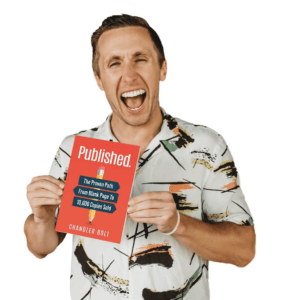
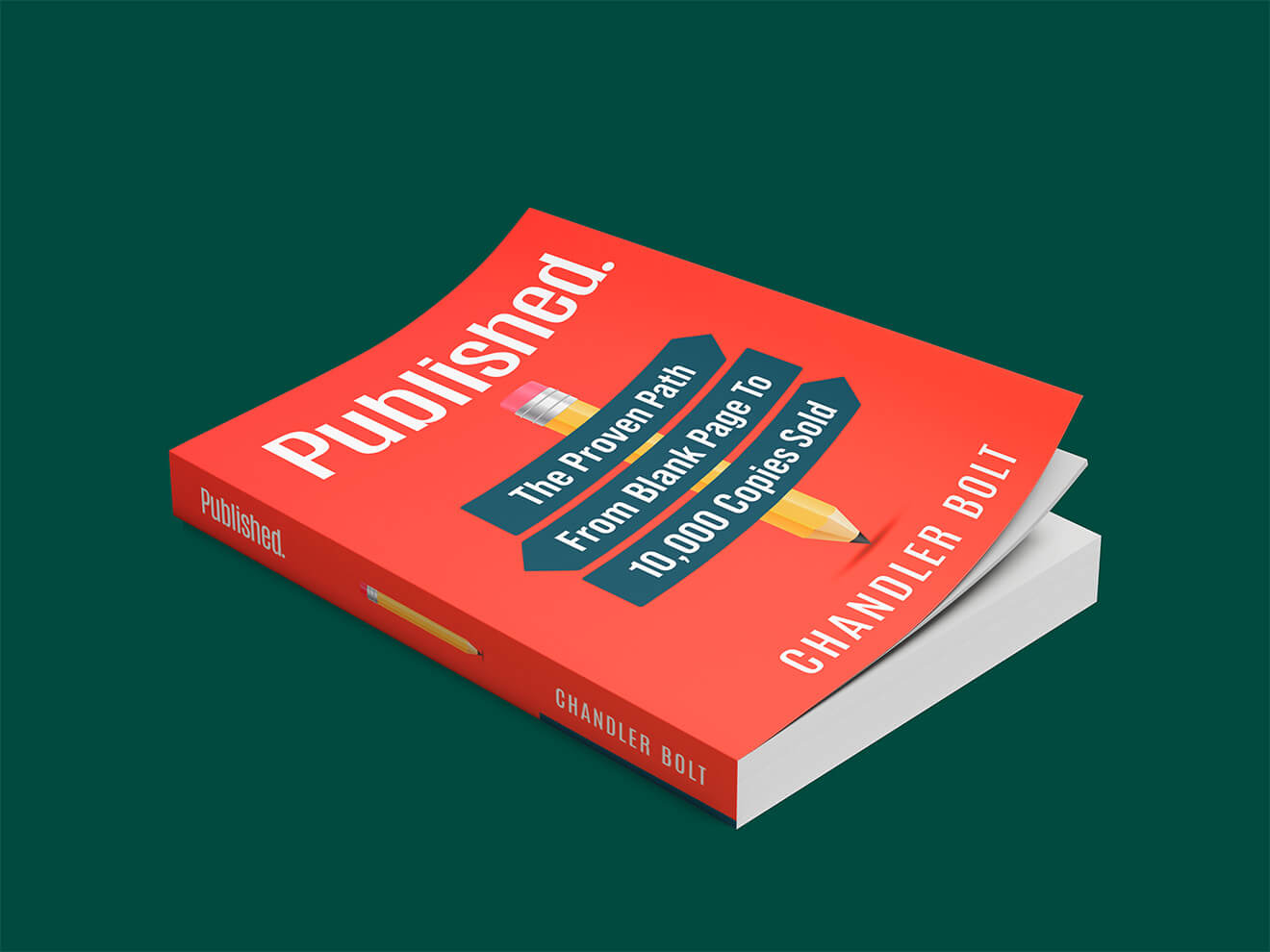
Chandler Bolt is an entrepreneur and founder of the Self Publishing School. (That's me!) He self-published a book, Published: The Proven Path from Blank Page to Published Author. He stated in a 2016 episode of the Superfast Business podcast that the business generated $1.3 million in the year after beginning the venture. Bolt has built a successful business out of helping people around the world realize their dreams of becoming published authors.
Alyssa Padgett
Alyssa Padgett is an RV life blogger who came to prominence after self-publishing her book, A Beginner's Guide to Living in an RV: Everything I Wish I Knew Before Full-Time RVing Across America. She earns about $200 dollars a day according to an interview.
Jordan Peterson
Jordan Peterson is a professor of psychology who wrote the self-help book 12 Rules to Life: An Antidote to Chaos (traditionally published). He earned between $600,00 to $800,000 a month from book sales, speaking engagements, Patreon, his business, and other sources according to an interview.
Pat Flynn
Pat Flynn is an entrepreneur and founder of Smart Passive Income, a course in business building. His self-published manual, Will It Fly?, generated $459,341 in direct and indirect income in the three years after publication according to a report on his blog.
Michal Stawicki
Michal Stawicki is a self-published advice writer who is best known for his How To Change Your Life in 10 Minutes a Day series. He has been publishing his monthly income report for more than five years and earned $1,515 from his writing in April 2019.
Timothy Sykes
Timothy Sykes is a business/investment blogger who self-published An American Hedge Fund about his experience in the penny trading market. He earned between $15 million and $20 million in 2014 according to a Forbes article.
Melyssa Griffin
Melyssa Griffin is a business blogger who self-publishes books, such as A Case Study of My Most Popular Blog Posts, as part of growing her brand. She published monthly income reports and earned $283,680 in December 2016.
Sarah Titus
Sarah Titus is a financial independence blogger who became known after self-publishing How I Became Financially Free: From Homeless to Well-Off: I’ll Show You How. Book sales now make up a small part of her income since she shifted all the book’s information on her blog. She publishes income reports and earned $981,037 in 2017.
John Lee Dumas
John Lee Dumas is a podcaster who founded Entrepreneur on Fire. He self-published a greatest hits book that included highlights from the podcast. The website includes income reports for the brand as a whole. EoFire generated $2,029,744 in 2018, which does not take into account the salaries of the podcast’s employees and other related expenses to run the EoFire.
Joanna Penn
Joanna Penn is an indie author who has built her company, The Creative Penn, around her self-published fiction and non-fiction books. She shares that her income is from course sales, affiliate income, professional speaking, and podcast sponsorships. Her income report from 2016 states that her total book sales income was $95,000. Joanna’s platform has only grown since then, so it’s highly likely her income increased as well.
David Kadavy
David Kadavy, a traditionally published author who turned to self-publishing, shares that he was able to sell 11,000 copies of his first self-published book. However, he explains that after all of his self-publishing costs, including marketing, he earned a humble $3,000. He stresses that his first self-published book was part of a larger scheme in which he plans to publish more books to start generating more organic sales.
Laura DeSilverio
Laura DeSilverio is a best-selling author who has written over 21 novels. In her 2017 income report, she states that her earnings from writing were just over $30,000; however, this was a year where she did not sign any new book contracts. This income came from book royalties from her traditionally published books, book sales from her self-published books, and various other writing-related jobs, such as speaking engagements, editing, and audiobooks.
Author salary report: summary table
| Author | Type | Earnings |
|---|---|---|
| James Patterson | Thriller novelist | $89 million (2025) |
| J.K. Rowling | Young Adult / Fantasy | $80 million (2025) |
| Nora Roberts | Romance novelist | $30+ million (2025) |
| Jeff Kinney | Children's author | $23 million (2025) |
| John Grisham | Legal drama | $21 million (2025) |
| Stephen King | Horror author | $20 million (2025) |
| Dan Brown | Novelist | $20 million (2025) |
| Rick Riordan | Children's / YA | $10.5 million (2025) |
| Danielle Steel | Romance novelist | $10 million (2025) |
| Amanda Hocking | Fantasy novelist | $2M+ advance |
| Bella Andre | Romance novelist | $116,246+ in first quarter |
| Hugh Howey | Fantasy novelist | $1M+ (self-published) |
| Joe Konrath | Thriller novelist | $78,231 in six weeks |
| Kameron Hurley | Sci-fi / Fantasy | $47,096 (2016) |
| Melanie Hooyenga | Romance novelist | $90,000 (2015) |
| Jessi Gage | Romance novelist | $21,827 (2017) |
| Jim C. Hines | Fantasy author | $13,957 (2022) |
| Brenna Aubrey | Romance novelist | $16,589 in first month |
| Jordan Peterson | Nonfiction / Self-help | $600K–$800K/month |
| Timothy Sykes | Business / Investing | $15–20M (2014) |
| Sarah Titus | Financial independence | $981,037 (2017) |
| Pat Flynn | Entrepreneur / Nonfiction | $459,341 over 3 years |
| Melyssa Griffin | Business blogger | $283,680 (Dec 2016) |
| Joanna Penn | Indie author | $95,000 in book income (2016) |
| Chandler Bolt | Entrepreneur | $1.3M+ in year one |
| Nick Loper | Entrepreneur | $17,900 (first year) |
| Alyssa Padgett | Blogger / Travel | ~$200/day |
| Laura DeSilverio | Multi-genre novelist | $30,000+ (2017) |
| David Kadavy | Self-help | $3,000 net after costs (first indie book) |
Frequently asked questions about author salaries
How much do most authors make per year?
Most authors (including part-time and debut writers) earn between $6,000 and $20,000 annually, based on Authors Guild survey data. Full-time authors who have built a catalog and an audience can realistically earn $40,000 to $80,000 per year. A small percentage earn six or seven figures.
Can you make a living as an author?
Yes, but it typically requires multiple books, consistent marketing, and often diversified income streams beyond royalties alone. Many full-time authors combine book sales with speaking, courses, coaching, or other writing-related income. Learning how to publish a book strategically (not just creatively) is essential.
Do self-published authors make more money than traditionally published authors?
Per book sold, self-published authors typically earn significantly more - 40–70% royalties versus 10–15% for traditional authors. However, traditional authors receive advances (upfront payments) that self-published authors do not. Over a career, top self-published indie authors often outpace comparable traditional authors financially, largely due to higher per-book margins and control over pricing and marketing.
How much do authors make on Amazon KDP?
It depends on format and pricing. eBooks priced between $2.99 and $9.99 earn 70% royalties. Paperbacks earn 60% of the list price minus print costs. An author selling a $4.99 eBook earns roughly $3.49 per sale. Scaling that across hundreds or thousands of monthly sales, especially with a multi-book catalog, is how indie authors build real income. Read more in our full guide to self-publishing on Amazon.
What genre makes the most money for authors?
Romance is the highest-grossing book genre by far, generating over $1.44 billion annually. Crime/mystery ($728M) and religious/inspirational ($720M) follow. Fantasy and sci-fi ($590M) also produce strong earnings, particularly for indie authors with devoted fan bases.
How long does it take to make money as an author?
Most authors see minimal income in their first year. Building meaningful royalty income typically takes 2–4 years, multiple books, and consistent marketing effort. Authors who invest in learning the publishing process, rather than treating their book as a one-time project, tend to reach financial sustainability much faster.
How to build a real author income in 2026
The data makes clear that author salary is not a fixed number handed to you by the publishing industry, it's something you build, intentionally, over time. Here's what the most financially successful authors do differently:
Publish multiple books. A single book is a starting point. A catalog is a business. Each new release drives readers back to your back catalog, compounding your royalties.
Treat your book as a business. Understanding book marketing, building an email list, and knowing your reader audience aren't optional extras, they're the engine of your income. Use our Book Royalties Calculator to model your earning potential before you publish.
Consider self-publishing seriously. For most genres, self-publishing now offers higher royalties, faster time to market, and greater creative control than traditional publishing. Learn more about how to self-publish a book.
Diversify your income. Book royalties are one stream. Add speaking, courses, coaching, Patreon, or audiobooks to build a resilient author income that doesn't depend on any single platform or release.
Invest in learning the craft and the business. The authors who build sustainable incomes are not just good writers, they understand publishing. If you want to shorten the learning curve, a self-publishing course can save you years of expensive trial and error.
As bestselling memoirist Cheryl Strayed once noted in an interview, writing means living with the reality that "I might make zero, or I might make $5 million." That uncertainty is real. But with a clear strategy, a commitment to the craft, and the right support, an author career in 2026 offers more paths to meaningful income than at any point in publishing history.
The question isn't whether writing can pay, it's whether you're willing to build it like the business it is.
Leverage your skills to build a book business
As you can see, there are many different examples of how much authors make, with several contributing factors. This report is meant to show a snapshot of the wide spectrum of income levels amongst writers and authors.
With that said, being an author is not a typical 9 to 5 job that promises a guaranteed paycheck every two weeks.
In order to turn a hobby into a satisfying career, authors are responsible for continuously producing books that excite/inform/engage readers.
In addition, especially for those in the self-published or indie publishing community, modern authors must view their book writing as a business, and treat it as such by acquiring the necessary skills and expertise to create a sustainable business.
Earning money from a book typically involves leveraging technical, marketing, and business development skills. If you want to write a book and generate income from your words, it’s important to create a plan for success by thinking beyond your writing skills.
If you're interested in self-publishing your book, but feel overwhelmed at the thought of navigating the process, invest in your career with a self-publishing course.
Pursuing a career as an author is an extremely rewarding career, all financial talk aside. Not only are you able to create something profound in the tangible form of a published book, but you are also able to share your story with readers all across the world. It can open a world of opportunity for you if leveraged correctly.
With clear expectations on how much authors make and realistic, achievable objectives, you can pursue a career as an author, through whichever avenue makes the most sense for you.
Don’t go into writing or publishing if your sole purpose is to make millions; having that mindset could set you up for failure. Instead, go into your author career with a fiery passion for writing and sharing your message with the world. With hard work and persistence, the rest will fall into place.