

















If you've ever wondered whether you should publish under a different name, you're in good company. From Mark Twain to J.K. Rowling, some of the most beloved authors in history have used pen names, and for surprisingly diverse reasons. Whether you want to protect your privacy, write in a new genre, or simply give yourself a name that fits your brand, a pen name might be the right move for you.
In this guide, we'll explain exactly what a pen name is, why authors use one, when you probably shouldn't, and how to choose the perfect pseudonym for your writing career.
TL;DR: A pen name (also called a pseudonym or nom de plume) is a fictitious name an author publishes under instead of their real name. Authors use pen names to protect their privacy, separate different genres, overcome discrimination, or build a stronger author brand. They are completely legal, and self-published authors can use them too, as long as they handle copyright registration and payment details correctly under their real name.
What is a pen name?
A pen name is a fictitious name an author uses in place of their legal name on published work, allowing them to write under a chosen identity while keeping their real name private or separate.
Also called a pseudonym or nom de plume (French for "name of the feather"), a pen name appears on the book cover, title page, and author byline just as a real name would. Readers often have no idea that the name they see belongs to a fictional persona rather than a legal identity.
The practice dates back centuries. Since the 1700s, writers have adopted pen names for reasons ranging from personal safety to marketing strategy. Today, it remains a legitimate and widely used tool in both traditional and self-publishing.
“A pen name is an assumed name used by a writer instead of their real name.”
dictionary.com
Famous examples of pen names include:
- Mark Twain — real name Samuel Langhorne Clemens
- George Orwell — real name Eric Arthur Blair
- Dr. Seuss — real name Theodor Seuss Geisel
- Lewis Carroll — real name Charles Lutwidge Dodgson
- J.K. Rowling writing crime fiction as Robert Galbraith
- Nora Roberts writing science fiction as J.D. Robb
These authors didn't choose pen names on a whim. Each had a specific reason — and understanding those reasons will help you decide whether a pseudonym is right for you.
Top reasons authors use a pseudonym
Now that you know what a pen name is, and that pseudonym, nom de plume, and pen name meaning are all the same, you might be wondering why authors have chosen to go by anything other than their real name.
After all, don't they want credit for their work?
It's important to understand the reasons why an author would choose to use a pen name, so that you can decide if a pen name is what you should be using too!
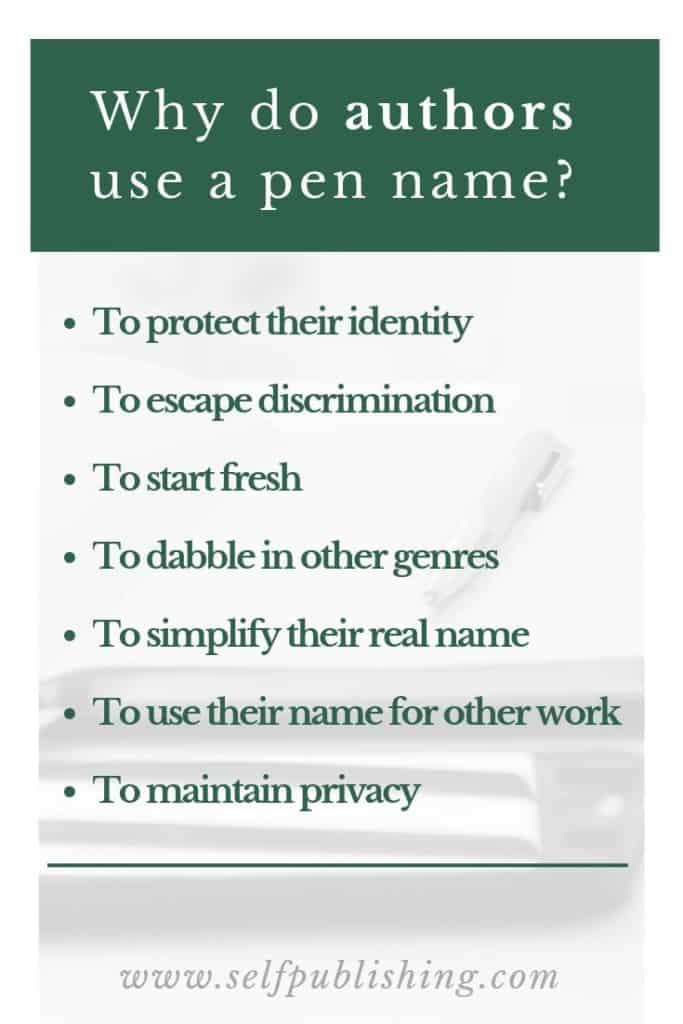
Authors down the years have taken on pen names for a variety of reasons. You might relate to any one of them.
Let’s take a quick look at the major reasons authors have chosen to take on a pen name throughout history.
To protect their identity
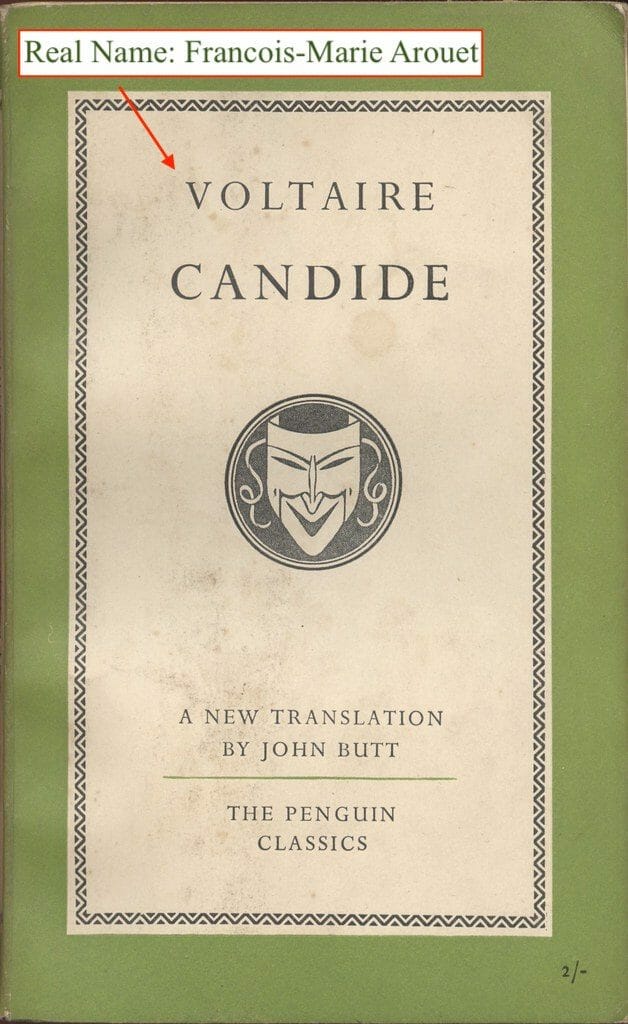
Some authors faced real personal danger if their identity became known. Voltaire (born François-Marie Arouet) wrote politically controversial works that could have cost him his freedom or his life.
Daniel Defoe, best known as the author of Robinson Crusoe, similarly used a pen name to shield himself from political enemies.
George Orwell (Eric Arthur Blair) used a pseudonym partly to protect his family after writing a memoir that described their time living in poverty. When the subject matter of your writing could put you or your loved ones at risk, a pen name provides a necessary layer of protection.
To overcome gender or cultural discrimination
Female authors were historically excluded from or dismissed by the literary establishment. The Brontë sisters published under the male names Currer, Ellis, and Acton Bell because novels written by women were not taken seriously in Victorian England. Mary Ann Evans became the celebrated novelist George Eliot for the same reason.
Ayn Rand, born Alisa Zinov'yevna Rosenbaum, adopted an English-sounding pen name to avoid the cultural prejudice she anticipated as a Russian-born Jewish woman writing for an American audience. A pen name gave her the opportunity to be judged on her ideas alone.
"Women are supposed to be very calm generally: but women feel just as men feel... It is thoughtless to condemn them, or laugh at them, if they seek to do more or learn more than custom has pronounced necessary for their sex."
-Jane Eyre, Charlotte Bronte
To start with a clean slate
Writers like O. Henry (William Sydney Porter) and Dr. Seuss (Theodor Geisel) desired to escape from their dark pasts and clean up their reputations.
Taking on their widely-recognized author pen names allowed them to gain a new opportunity and voice to be heard again on paper.
To dabble in other genres
Popular names like J.K. Rowling, author of the famous children’s fantasy series Harry Potter, took a fancy to contemporary crime, a totally opposite genre to the one she became famous for. A pen name is what allowed her to switch writing genres, and she goes by the name of Robert Galbraith when writing her crime fiction books.
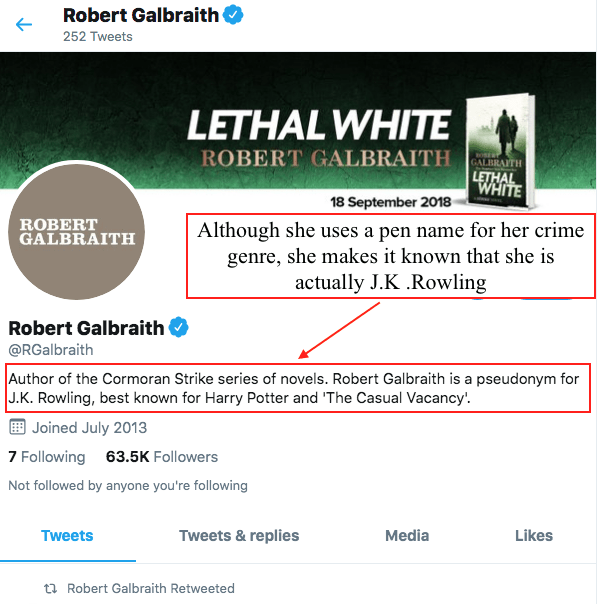
Likewise, Nora Roberts, who is one of the best-loved romance writers in our day and age, wanted to try her hand at science fiction. She, therefore, took on J. D. Robb to publish herself in this genre.
Maybe you're considering using a pen name for self-publishing for a similar reason. For example, let's say you want to write a serious adult drama, but also have a passion for writing a children's picture book; an easy solution would be to use an author's pen name for one genre!
These are all some pretty serious reasons that justified authors using a pen name. But there are, of course, simpler reasons for choosing a pseudonym, which we’ll cover below.
To have an easy-to-remember name
Joseph Conrad (Jozef Teodor Konrad Korzeniowski) just wanted his name to be easily remembered and pronounced by his English readers, which is why he came up with a simplified twist on his real name.
To reserve a name for other works of art
Stan Lee originally longed to be known for more serious works and wanted to reserve his real name, Stanley Lieber, for his novels. However, his pen name unexpectedly rose to fame for The Amazing Spiderman, so a pen name is what he is best known as!
To maintain privacy
Lastly, Lewis Carroll was very private so he kept his personal life as Charles Dodgson to himself. Ironically, it was still found out later, as with all the other authors mentioned.
As a self-published author, you'll rely heavily on the internet and technology for publishing, book production, and book marketing. Consider how easy or difficult it might be to maintain a pen name on the internet!
What is important to note is that these authors were sure about their reasons for deciding to employ pen names.
They knew the publicity and other implications that publishing might possibly bring into their lives and families, so they stood by their decision to opt for a pen name.
But not all reasons for choosing a pen name are good ones. Let's examine some instances when a pen name isn't what you are looking for.
Reasons why you shouldn’t use a pen name
Being an author in the digital age can make the use of pseudonyms a bit more tricky than it might have been in the past.
Nowadays, authors don't really have to use a pen name like many authors throughout history had to. It's more of a preference, which is why it's important that you have at least one solid reason for wanting to use a nom de plume to publish your book.
Here are the top reasons why you shouldn't use a pen name:
- You have a dedicated readership. If readers or followers already know you by one name, don't confuse them and switch it up your name.
- You want to avoid extra work. There are extra legal steps involved with using a pen name to self-publish, and it can be a headache if you're not exactly sure what you're doing.
- You want your real name used in social situations. Consider any interviews, writing conferences, book signings, and in-person events that you may attend. Is a pen name what you want to be known for? If not, use your real name.
- You're not sure about using a pen name. If you're just considering using a pen name because it sounds like a good idea at the moment, think on it more. If you don't have a solid reason for using a nom de plume, like to protect your identity, then your pen name meaning will lose its charm eventually.
If a pen name is what you want, then it's important to know how to make one.
How to choose a pen name: 11 simple tips
The key to creating a fresh pseudonym that will last throughout your author career is to select it carefully, and do your homework on the pen name first. After all, what is a pen name if not lasting in the public eye?
Once you publish a book under your pseudonym, it’ll be really difficult to change it without having some negative repercussions on your author brand. With that said, note that when you choose a pen name you give yourself the opportunity to align your name with the genre you write.
If you want to write thrillers but your last name doesn't fit well, this is your chance to do something many writers don't - align your last name with your chosen genre. A pen name is what helps you to do that.
Similarly, what if you already established yourself in the thriller genre but want to write children's books? A pen name is what allows you to target your new potential readers.
Here are the steps to choose a pen name for yourself:
1. Brainstorm a nom de plume using the alphabet
Go through the alphabet one letter at a time and list all the first names that appear in your mind with every letter until you find “The One”.
Repeat the same process for last names.
Some authors even make up their own fictional character with a backstory. It’s really up to how wildly far your imagination flies.
2. Connect your name to a deeper meaning
Consider whether your pen name should reflect something about your writing, whether it be a theme, a mood, a genre, or a cultural identity. Mark Twain's pseudonym was a riverboat term meaning "two fathoms deep," which connected him to his Mississippi River roots and gave the name personal resonance.
If your pen name feels meaningful to you, it will feel more authentic to your readers too.
3. Browse through baby name resources
If you're a parent, you probably know how stressful naming your child was. And you probably found baby name resources to be super helpful.
In the case of discovering your nom de plume, you might find that baby name resources are your best bet when you're feeling stuck on ideas for coming up with your pen name.
Take some time to peruse through baby name sites, and you just might stumble on the perfect name. You can even search for certain themes, time periods, or languages.
4. Use a pen name generator
If time is running out, and you badly need to decide on using a pen name for self-publishing, do not lose heart! There are always Pen Name Generators that you can try your hand at.

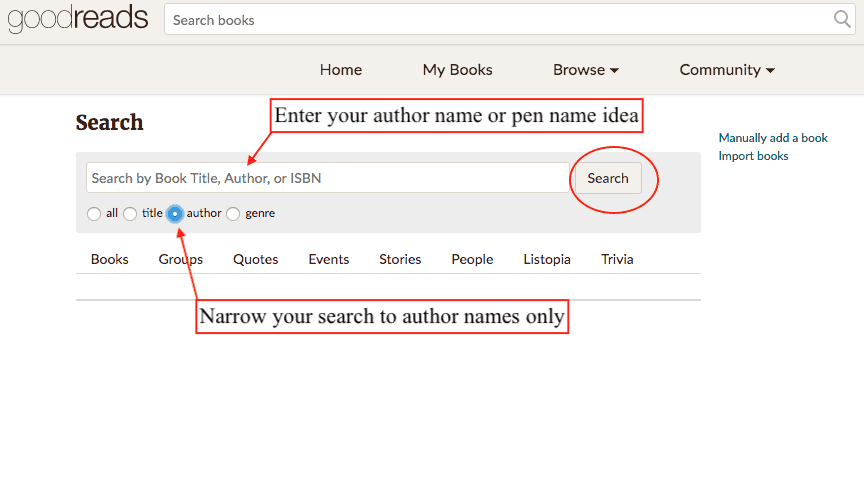
5. Research the pseudonym to see if it’s available
Make sure you research to see whether the pen name is already being used by another author or artist.
Don’t skip this step! Scour through the web, particularly bookselling sites, to find out whether someone else is using the same name. After all, a pen name is what is supposed to set you apart.
You don’t want to confuse readers, and credit for your work might be given to the wrong person.
Even worse, you don’t want to have to compete with any other well-known person within the same space - just because you both are using the same name!
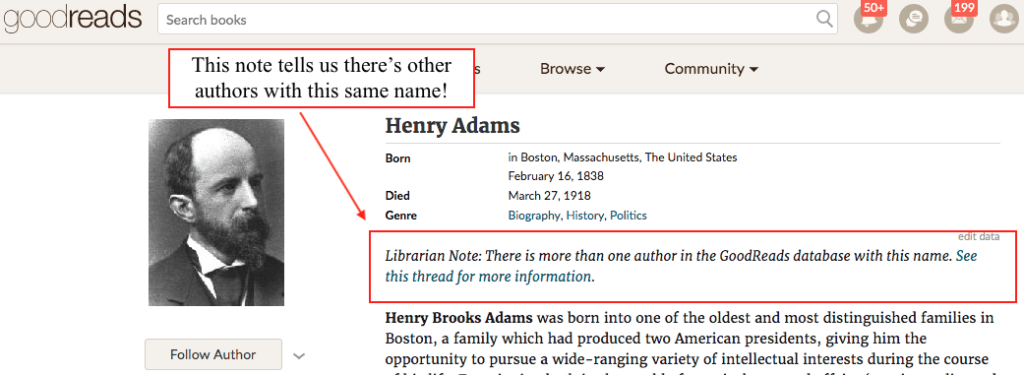
For example, we did a quick search for authors on Goodreads for the name "Henry Adams" (a seemingly common name).
After we entered "Henry Adams" our search results led us to this page, where it is confirmed that more than one author shares this same name!
6. Don’t use the name of someone famous
Avid followers of the entertainment industry might be disappointed with what I am going to say next: Do not use the name of your favorite actor or actress as a pen name.
The public might mistake you for their beloved celebrity, which will definitely frustrate you, them, and the one idolized by many.
Worst case scenario: You may end up bashed on and offline, maybe even branded as an impostor. So for your own personal and literary good, please don’t.
7. Research official name registration listings
This step takes your research a bit further, but your efforts will pay off in the grand scheme of things.
Browse through all registered trademarks at your country’s trademark office. You may unintentionally select a registered name without malice, and put yourself in danger of receiving a cease-and-desist notice.
Likewise, search for domain names that have not been taken yet. This will prevent problems if you decide to register a domain in the long run.
Use sites like this one to conduct a quick name domain search. This will tell you if the domain is available or taken.
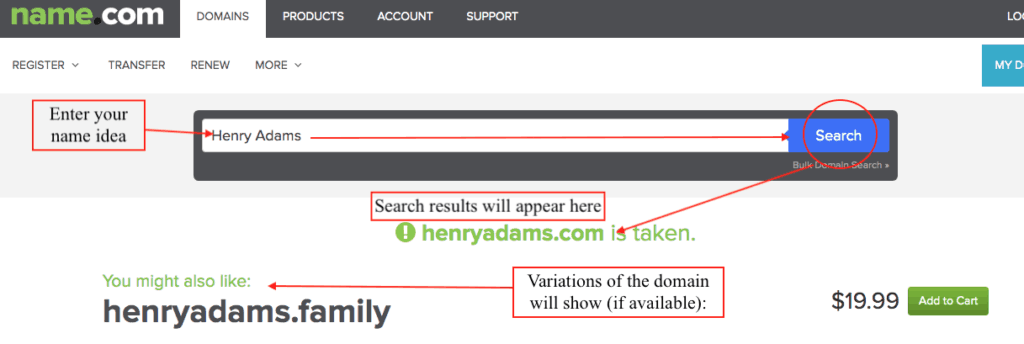
Word of caution: Be careful with domain searches! Sometimes people are able to see what domains have been recently searched, so that they can purchase it and re-sell it to you.
8. Avoid using a real person’s name
Curb possible accusations of identity theft by following this reminder. With billions of names and faces in the world’s population, this is virtually impossible.
You will need the help of social media and search engines to discover if a real person has been, regrettably, named with your author's pen name.
To comfort you though, this will not be an issue as long as you do not write about controversial topics that may harm them nor deliberately try to impersonate them, which is identity theft. If you cannot avoid such, then please look for another nom de plume.
9. Check the pen name’s website domain
If you plan to publish multiple books under your pseudonym, or if you plan to create a book business, it is highly likely that you will consider creating an author website for your books later in your career.
When that time comes, it's important that a pen name is what your website domain is named after - or closely linked to it.
If someone else already owns the website domain for the pen name you want, you might consider choosing another nom de plume that is available.
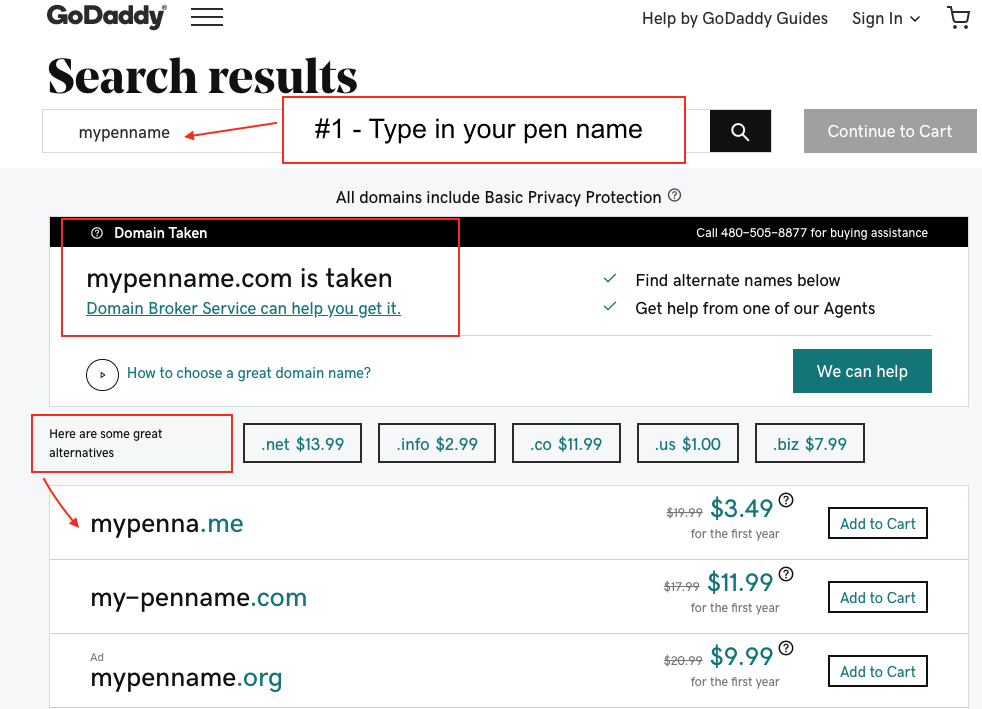
You can check sites such as GoDaddy or NameCheap to search domains and buy the one you want.
10. Purchase the rights to your nom de plume
Once your heart is set on a pen name, it's time to begin the proceedings to secure your new nom de plume officially.
After many agonizing hours, you have finally chosen your pen name and you will not let it go. Now what?
It’s time to claim your name and own it for yourself.
How in the world do you do that? You will need to buy a domain for your name and register it as a trademark before using your pen name for self-publishing.
If you plan to receive payments using this name, you will need to apply for a Fictitious Business Name or Doing Business As (DBA) Statement. These laws will differ in each country, so make the necessary inquiries to be safe.
Once you have purchased the rights to your name, then feel free to use it on your book cover, title pages, and copyright notice. There is no longer any need to add your real name. A pen name is what you will go by going forward.
Of course, you must register the copyright of your work under your pseudonym. And don't forget your ISBN! You may opt to add your real name in the copyright records but bear in mind that your soon-to-be fans may find out your true identity in the public copyrights file (which will be published online).
11. Let your publisher know about your pseudonym
There is no use hiding your real name from your publisher. After all, your legal name will be required in order to get paid royalties and other fees.
They will want to be aware of the identity and background of the authors they publish since their own company name will be at stake, too.
Even if a pen name is what you write under, if you were to have your book traditionally published, keep in mind that contracts are signed in your real name.
Legal issues using pen names
As you may have guessed from some of the tips above, there are some potential legal issues using pen names. But those aren't the only issues to worry about. You are still legally bound, even if you use a pseudonym, nom de plume, or pen name.
Having a registered pseudonym does not automatically mean you can now avoid all the legal issues connected with your real name.
If you have pre-existing contracts like confidentiality or employment agreements, you are still bound to them. Your pen name cannot transform you into a different person and release you from legal papers.
Also, if you plan to defame others with your pen name as an instrument, think again. A thorough investigation will still find you out.
Are pen names legal?
Yes, pen names are completely legal. Authors have the right to publish under a pseudonym, and doing so does not affect the legal validity of their copyright. When registering your work with the U.S. Copyright Office, you can list your pen name, your real name, or both.
However, a pen name does not exempt you from any existing legal obligations. Confidentiality agreements, employment contracts, and non-disclosure agreements you've signed under your real name still apply. A pseudonym is a publishing identity, not a legal shield. If you use a pen name to defame someone, evade debts, or misrepresent yourself fraudulently, you can still be identified and held accountable.
If you have specific concerns about the legal implications of your pen name, it's worth consulting a publishing attorney, especially before signing contracts or registering copyrights.
How to use a pen name when self-publishing
Yes, you can absolutely self-publish under a pen name. In fact, many independent authors do, particularly those who write in multiple genres or want to separate their professional identity from their writing.
Here's a step-by-step overview of how it works in practice:
- Choose your pen name following the tips above.
- Register a DBA so you can legally receive payments and open a bank account under your pen name.
- Copyright your work - you can list your pen name with the U.S. Copyright Office, though your real name will still appear in the underlying records.
- Set up your author profile on your self-publishing platform (Amazon KDP, IngramSpark, Draft2Digital, etc.) using your pen name as the public-facing author name.
- Provide your real name and tax information when prompted for payment and legal purposes. Platforms require this for royalty payments and tax reporting.
- Build your author brand under your pen name - website, social media, author bio, and all marketing materials.
The indie author Joanna Penn is a well-known example. She publishes nonfiction under her real name and thriller and dark fantasy books under J.F. Penn, keeping her two audiences and brand identities cleanly separate.
How much privacy can a pen name actually give you?
A pen name can give you a meaningful degree of separation between your writing identity and your personal life, but it won't make you completely anonymous in the digital age.
Author photos, bios, speaking events, and social media presence all create identifying information. If you commit fully to anonymity (avoiding in-person events, keeping your pen name accounts separate from personal ones, and never disclosing your identity) you can maintain more privacy. But even then, determined readers have unmasked authors over time.
The most important question is: what level of separation do you actually need? If your goal is to keep your employer from knowing you write fiction, a pen name with a separate social media presence will likely be sufficient. If you need genuine legal protection, for example, writing about abuse or political dissent, consult a professional about additional steps.
Frequently asked questions about pen names
What is the difference between a pen name, a pseudonym, and a nom de plume? They all mean the same thing. A pen name is the common English term. Pseudonym comes from Greek, meaning "false name." Nom de plume is the French phrase, literally meaning "name of the feather" (referring to a quill pen). All three refer to a fictitious name used by an author instead of their real name.
Can I use a pen name on Amazon KDP? Yes. When you set up your KDP account, you can enter a pen name as your author name in your book's metadata. Your real name and payment details are stored separately for tax and royalty purposes.
Do I need to copyright my pen name? You don't copyright a name. Copyright protects creative works, not names. To protect a pen name as a brand, you would register it as a trademark. You should also register your written works under your pen name with the Copyright Office.
Can I have more than one pen name? Absolutely. Many prolific authors use different pen names for different genres. There's no legal limit on how many pseudonyms you can use, as long as each one is properly documented for any accounts that require your real identity.
What happens to my royalties if I publish under a pen name? Royalties are always paid to your real legal name, even if your book is published under a pen name. Self-publishing platforms will ask for your real name and tax ID for this purpose. If you've registered a DBA, you may also be able to receive payments through that business name.
Is it harder to market a book under a pen name? Not necessarily, but it does require planning. You'll need to build an author brand from scratch under your pen name, which means a separate website, social media presence, and email list. The upside is that you have full creative control over who that author persona is and how they show up in the world.
Pen name or no pen name? The choice is yours
You know what a pen name is. You even know how to make one. But is a pen name what you really want?
Coming up with a pen name leaves all of us with an awesome privilege: to build a unique persona with a voice that can impact our world and influence people for the better.
But remember, your name is your identity. Only you can decide if a pen name is what you should write under.
Ready to write your book under any name? Explore our self-publishing programs to get the guidance, coaching, and support you need to publish with confidence.