
















I've talked to thousands of aspiring fantasy authors over the years, and one of the most common places they get stuck isn't the plot, the magic system, or even the characters. It's the title.
There's something uniquely paralyzing about naming your book. It has to capture an entire world in a handful of words. It has to make a stranger stop scrolling. And it has to feel true to the story you've spent months (maybe years) building.
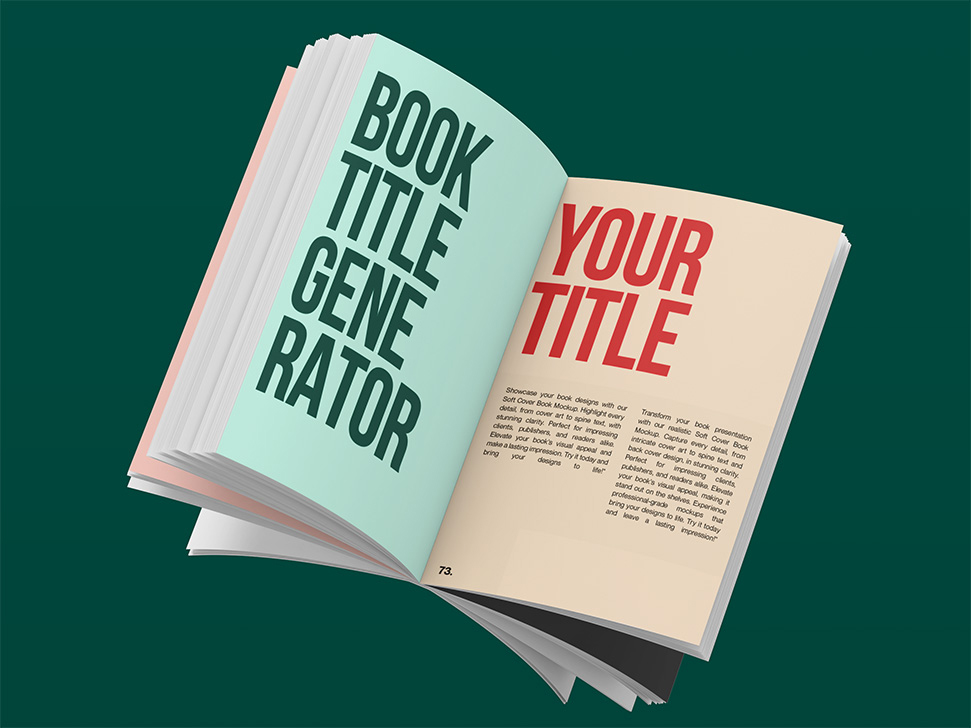
Here's the good news: you don't have to come up with the perfect fantasy book title alone. That's exactly why we built our free fantasy book name generator. It's a free tool that generates title ideas tailored to your story, your subgenre, and your reader.
At selfpublishing.com, we've helped over 7,000 authors write and publish their books. We've seen what works when it comes to titles, and we've built that knowledge directly into the generator. Whether you're deep into your manuscript or just starting to dream up your story, this guide will show you how to use a fantasy book name generator effectively, and how to know when you've found the right title.
TL;DR: A fantasy book name generator helps authors brainstorm title ideas by combining genre-specific language, themes, and story details. The best approach: use the generator with a clear book description or by answering guided questions about your setting, characters, and subgenre. Treat every result as a spark, not a final answer. The goal is to land on a title that is genre-appropriate and uniquely yours.
What makes a great fantasy book title?
A great fantasy book title does three things at once: signals the genre, creates intrigue, and hints at the story's emotional core.
Fantasy is one of the most creative genres to write in, and that freedom extends to naming your book. Unlike a business book that needs to clearly state its promise, a fantasy title can lean into mystery, atmosphere, and world-specific language. But that doesn't mean anything goes. The best fantasy titles follow a recognizable logic.
The anatomy of a memorable fantasy title
Strong fantasy book titles tend to share a few structural qualities:
- A sense of scale or stakes - Lord of the Rings, A Game of Thrones, The Way of Kings all hint at something vast
- A character or role - Assassin's Apprentice, The Name of the Wind, The Blade Itself all center a person or identity
- A contrast or tension - A Court of Thorns and Roses, The Light We Lost, Strange the Dreamer pair opposing ideas
- A specific, evocative object or place - The Priory of the Orange Tree, The Shadow of the Wind, The Paper Magician use concrete nouns that feel mythic
When you use a fantasy book name generator, look for titles that hit at least one of these qualities. A title that feels generic, like "The Dark Quest" or "Rise of the Chosen One", is usually too broad. A great fantasy title is specific enough to feel like it belongs to your book.
The most popular words in top fantasy titles
When we analyzed Amazon's Best Sellers in Fantasy Top 100, the words that appeared most frequently in bestselling titles were:
- Magical / Magic
- Wing / Wings
- Night
- King / Kingdom
- Court
- Witch / Witchery
- Ruin / Ruined
- Throne
- Prince / Princess / Princes
- Serpent
- Secrets
- Shadow / Shadows
These words appear again and again because they carry immediate genre weight. Fantasy readers recognize them as signals. If your title includes one of these words in a fresh context, it's likely to feel both familiar and exciting to your audience.
Don’t forget the subgenre themes
The fantasy genre is vast and deep, so trying to appeal to every fantasy book reader is a slippery slope into “No-Reader” Land.
This is true for your story and for your book’s title. Leaning into the tropes and themes of a book’s subgenre when developing your title will help you create one that is specific to your reader.
The EditorialDepartment.com website offers the following subgenres and examples:
- Comic fantasy (e.g., Robert Asprin’s Myth series, Piers Anthony’s Xanth series, and Terry Pratchett’s Discworld series)
- Contemporary fantasy (e.g., J.K. Rowling’s Harry Potter series, Stephanie Meyer’s Twilight series, and Christopher Moore’s Bloodsucking Fiends)
- Dark fantasy (e.g., Anne Rice’s Vampire Chronicles)
- Epic or “High” fantasy (e.g., J.R.R. Tolkien’s Lord of the Rings trilogy, Terry Brooks’ Shannara series, George R. R. Martin’s A Song of Ice and Fire series, and Robert Jordan’s The Wheel of Time)
- Fantasy of manners (mannerpunk) (e.g., Ellen Kushner’s Swordspoint and Teresa Edgerton’s The Queen’s Necklace.)
- Historical fantasy (e.g., Guy Gavriel Kay’s The Sarantine Mosaic, Robin McKinley’s Beauty and Rose Daughter, and Susanna Clarke’s Jonathan Strange & Mr. Norrell.)
- Sword and Sorcery (e.g., Fritz Leiber’s Fafhrd and the Gray Mouser series)
There are many more subgenres, and the number keeps growing. Knowing where your book fits into the fantasy stratosphere combined with our name generator will put you on the path to finding the perfect book title in no time.
Learn how to use the fantasy book name generator
Using our free fantasy book title generator is intuitive and easy. You can use the fillable form here, or you can keep reading to follow a couple simple steps to get started.
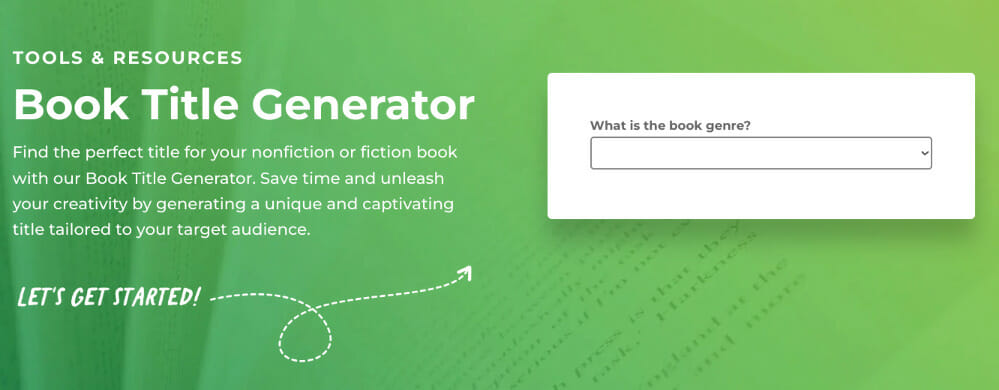
Step 1: Enter your genre in the generator
Go here and click on “What is the Book Genre?” to get started. For your fantasy book, select Fiction in the dropdown menu and go to the next step.
Step 2: Add your book description
If you have a book description, type it into the generator in the next section to get your first title suggestions. You may find this a good exercise in writing a clear book description that accurately describes your story.
As an example, I typed in the following:
"A young girl learns that her family’s bakery is serving up more than cakes and cookies. In this coming-of-age novel, she discovers that hidden magic is the most dangerous of all."

Not exactly what I wanted, so I tried again.
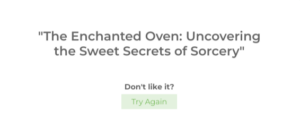
I revised the description to include the subgenre and more details from the story:
In this contemporary fantasy novel, a 16-year-old girl learns that her family’s neighborhood bakery is serving up more than cakes and cookies. In this coming-of-age novel about family, love, and deception, she discovers that hidden magic is the most dangerous kind of all.

Here's the second version with a subtitle:
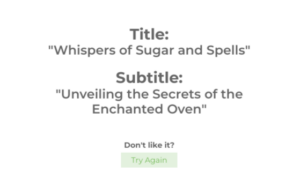
Step 3: Create a title without a book description
If you don’t have a description, the fantasy book name generator can walk you through the naming process. Click “No” when asked if you have a description and answer the questions that follow.
Then click “generate.”
I used the details from my fictitious fantasy novel description above.
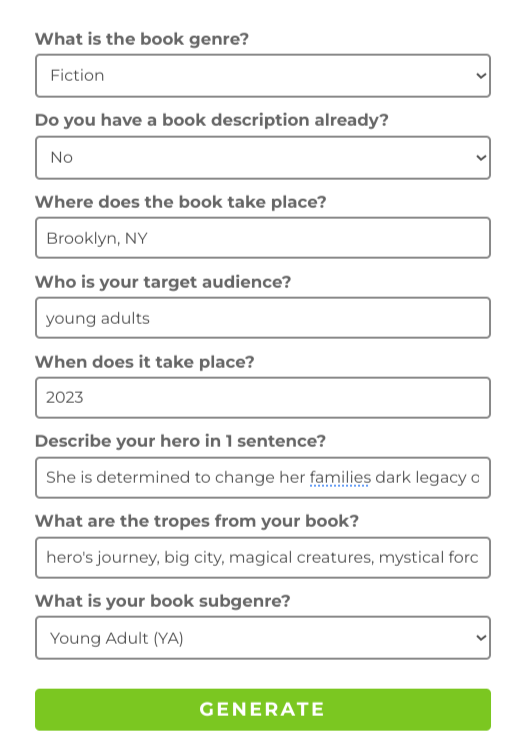
Here's the first title.
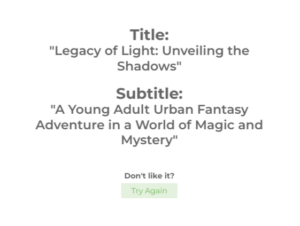
And the second.
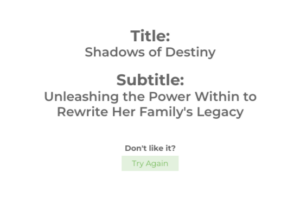
Now it's your turn to give it a try. Remember that it's a tool to inspire ideas.
Based on the output above, I preferred the titles generated without a description. Just like with all AI tools, what you feed it, determines what you'll get back in return.
5 rules for evaluating generated fantasy book titles
Not every output from a fantasy book name generator will be a winner. Here's how to quickly evaluate what the AI gives you:
1. Say it out loud. Does it roll off the tongue easily? If you stumble over it, so will readers and booksellers.
2. Is it googleable? A unique title is easier to find online. Avoid titles that are identical to existing bestsellers. Readers will find the wrong book.
3. Does it signal the right genre? A romantasy reader and a dark epic fantasy reader are looking for very different signals. Your title needs to attract the right audience.
4. Does it create a question? The best titles make readers curious. The Name of the Wind makes you ask: whose name? Why is it the wind? What does the wind mean?
5. Does it feel like it belongs to your book? This is the gut-check. If you can imagine that title on 10 other books in your subgenre, it's probably too generic. If it feels specific to your world, your characters, and your story, that's the one.
Real examples of fantasy book titles done right
Below are some examples of fantasy book titles that echo the stories their books hold. I’ve included a blurb/description for context.
What do you think? Does each title capture the essence of the book’s story?
The Thousandfold Thought by R.Scott Baker
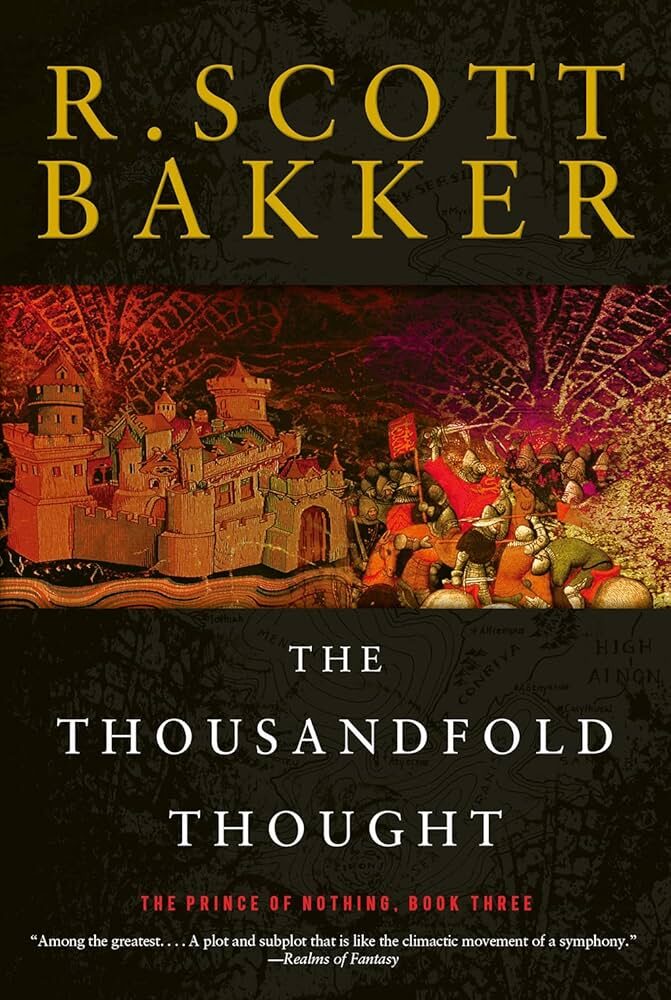
Bakker’s Eärwa is a world scarred by an apocalyptic past, evoking a time both two thousand years past and two thousand years into the future. As untold thousands gather for a crusade, two men and two women are ensnared by a mysterious traveler, Anasûrimbor Kellhus—part warrior, part philosopher, part sorcerous, charismatic presence—from lands long thought dead. The Darkness That Comes Before is a history of this great holy war, and like all histories, the survivors write its conclusion.
Lord of the Rings by J.R.R. Tolkien
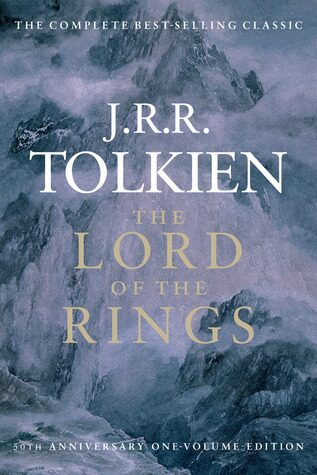
One Ring to rule them all, One Ring to find them, One Ring to bring them all and in the darkness bind them
In ancient times the Rings of Power were crafted by the Elven-smiths, and Sauron, the Dark Lord, forged the One Ring, filling it with his own power so that he could rule all others. But the One Ring was taken from him, and though he sought it throughout Middle-earth, it remained lost to him. After many ages it fell by chance into the hands of the hobbit Bilbo Baggins…
Assassin’s Apprentice by Robin Hobb
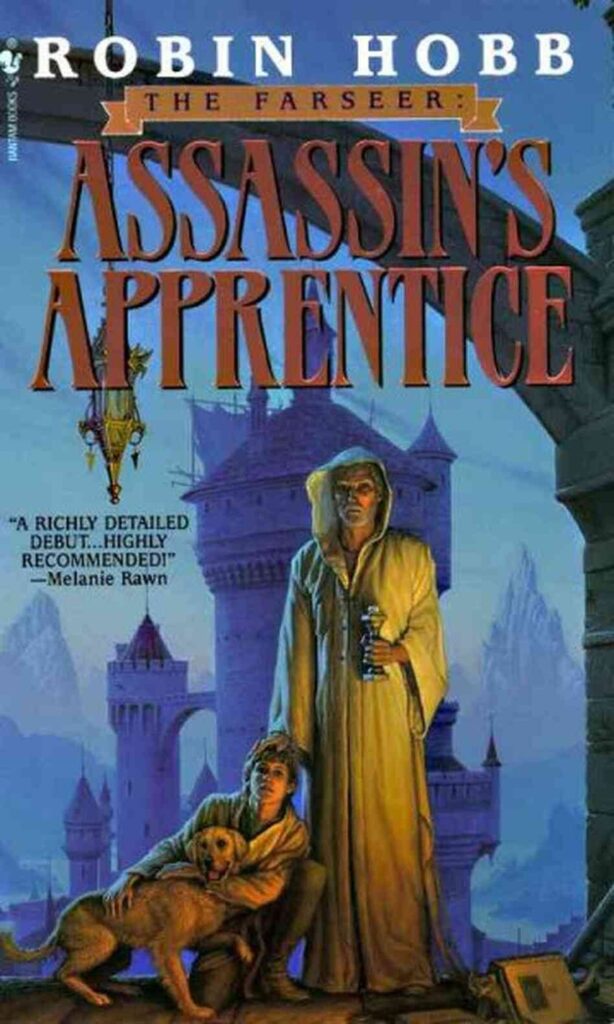
Young Fitz is the bastard son of the noble Prince Chivalry, raised in the shadow of the royal court by his father’s gruff stableman. He is treated as an outcast by all the royalty except the devious King Shrewd, who has him secretly tutored in the arts of the assassin. For in Fitz’s blood runs the magic Skill—and the darker knowledge of a child raised with the stable hounds and rejected by his family.
As barbarous raiders ravage the coasts, Fitz is growing to manhood. Soon he will face his first dangerous, soul-shattering mission. And though some regard him as a threat to the throne, he may just be the key to the survival of the kingdom...
The Paper Magician by Charlie N. Holmberg
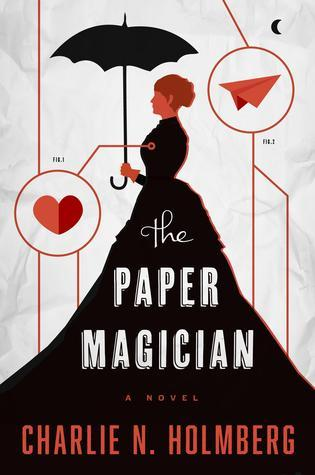
Ceony Twill arrives at the cottage of Magician Emery Thane with a broken heart. Having graduated at the top of her class from the Tagis Praff School for the Magically Inclined, Ceony is assigned an apprenticeship in paper magic despite her dreams of bespelling metal. And once she’s bonded to paper, that will be her only magic … forever.
Yet the spells Ceony learns under the strange yet kind Thane turn out to be more marvelous than she could have ever imagined—animating paper creatures, bringing stories to life via ghostly images, even reading fortunes. But as she discovers these wonders, Ceony also learns of the extraordinary dangers of forbidden magic.
Common mistakes when naming a fantasy book
Even great writers make these titling mistakes. Avoid them before your title is set in stone.
Mistake 1: Copying the structure of a bestseller. Picking a title like "A Court of Ice and Snow" because "A Court of Thorns and Roses" works is a quick way to get lost in the algorithm and confuse readers. Use bestsellers as inspiration, not templates.
Mistake 2: Being too vague. "The Darkness Within," "Shadows Rising," "The Chosen One". These could be any book in any genre. Specificity is what makes a title stick.
Mistake 3: Making it impossible to pronounce. Invented fantasy words can be powerful, but if readers can't say your title out loud, they can't recommend your book. Test it on a friend who hasn't seen it written.
Mistake 4: Ignoring your series arc. If you're writing a fantasy book series, your first book's title sets the pattern for everything that follows. Think ahead before committing.
Mistake 5: Treating the title as final before the book is done. Many authors land on their best title only after finishing the manuscript. Use the fantasy book name generator early for inspiration, but leave room to revisit once you know the full scope of your story.
How the fantasy book name generator works
Our fantasy book name generator is powered by AI that has been trained on genre conventions, successful title structures, and the specific tropes of fantasy subgenres. It's not randomly combining words, it's pattern-matching based on what works in published fantasy literature.
When you give it a description, it analyzes the key themes, character types, and emotional arc of your story and generates title suggestions that reflect them. When you use the guided questions path, it uses your inputs about setting, audience, hero, and subgenre to calibrate its suggestions.
The tool is free and unlimited. You can run it as many times as you want with different inputs. Think of it like brainstorming with a writing partner who has read every fantasy novel in the genre: it won't write your title for you, but it will push your thinking in directions you hadn't considered.
You can also use the generator alongside other free writing tools we offer at selfpublishing.com.
Frequently asked questions about fantasy book name generators
What is a fantasy book name generator? A fantasy book name generator is an AI-powered tool that creates title suggestions for fantasy novels based on your story's description, genre, characters, and themes. It's designed to give writers a starting point for brainstorming when naming their book.
Are the titles from a fantasy book name generator copyrightable? Book titles cannot be copyrighted under U.S. law, so you're free to use any generated title as-is or modified. That said, you should check whether an identical title already belongs to a well-known book in your genre to avoid confusion in the marketplace.
Can I use a fantasy book name generator if I haven't written my book yet? Yes. And it's actually a great exercise. Walking through the generator's guided questions forces you to clarify your story's core premise, your protagonist, your setting, and your subgenre. Many writers use this process to sharpen their idea before writing a single chapter.
How many times should I run the generator? Run it at least 5–10 times with different inputs. The more variations you test, the better your chances of landing on something that feels right. Save any title that creates a spark, even if it's not perfect, and look for common threads.
What's the difference between a fantasy book title and a fantasy character name? A book title captures the arc, theme, or essence of the story. A character name (like Frodo, Arya, or Kvothe) is specific to a person within the world. Both matter for branding, but they serve different functions. If you're looking for character name ideas, check out our character bio template and resources on mythical creatures for world-building inspiration.
Does the title have to include a fantasy word to work? No. Some of the most powerful fantasy titles use completely ordinary words, The Name of the Wind, The Way of Kings, Words of Radiance, that become mythic through context. The goal is resonance, not fantasy vocabulary.
Should my title reflect my book's theme or its plot? Both can work, but theme-based titles tend to age better. A plot-based title like "The Quest for the Golden Orb" can feel dated once readers know the ending. A theme-based title like "The First Law" carries meaning that deepens after you've read the book.
Ready to write and publish your fantasy book?
Finding the right title is just one piece of the puzzle. Once you have a title that feels true to your story, the real work begins — and that's where most aspiring fantasy authors get stuck.
If you have a fantasy book idea brewing, whether it's a standalone novel or an entire fantasy book series, we'd love to help you bring it to life. At selfpublishing.com, we've helped over 7,000 authors write, publish, and market their books. We know exactly what it takes to go from an idea to a published novel, and we're here to help you every step of the way.
Whether you're wondering how to write a book, trying to figure out how to self-publish, or exploring what it means to become a full-time fiction author, book a free consultation with our team today.
→ Schedule your free consultation
Your story deserves to exist in the world. Let's make it happen.
Related reading:
- How to title a book: the complete guide
- Best fantasy book series of all time
- Best fantasy romance books
- List of book genres
- Themes in books: how to find and use them
- How to write a book description
- Mythical creatures: the ultimate guide
- Character bio template
- High fantasy vs low fantasy
- Book title generator (free tool)