

















If you’ve spent any time in the world of entrepreneurship, you’ve almost certainly heard someone reference The Lean Startup. It’s quoted in boardrooms, recommended in incubators, and passed between founders like a secret weapon.
But what makes this book so foundational? And why do so many entrepreneurs treat it like required reading?
In this blog, we’ll explore The Lean Startup, unpack why the ideas have become universal, and show you how to turn your own insights into your own best-selling business book.
The Lean Startup summary
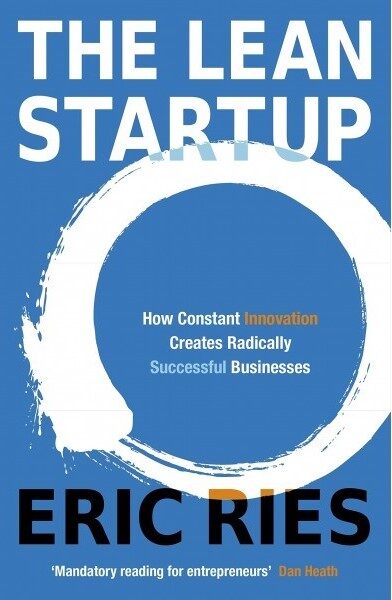
The Lean Startup by Eric Ries redefined how modern companies build products. Instead of the traditional “create in secret, launch big, hope for the best” model, Ries encourages a scientific, iterative approach based on three core pillars:
Build → Measure → Learn
At the heart of The Lean Startup is the Build → Measure → Learn feedback loop. This is a cycle that helps entrepreneurs test ideas quickly and cheaply rather than investing months (or years) building something customers ultimately don’t want.
Building doesn’t mean creating a full-featured product. It means launching a Minimum Viable Product (MVP), which is the simplest version of your idea that still delivers value.
Eric Ries shares the story of IMVU, the 3D avatar chat startup he co-founded. Instead of spending months integrating with existing instant messaging systems (which they assumed customers would want), they quickly built an MVP that allowed users to download a standalone chat tool with avatars.
Once the MVP is in the hands of real customers, you measure what they actually do, not what they say they will do.
When IMVU launched its MVP, customers didn’t use the elaborate chat integrations the team developed. Many didn’t even care about the feature. Instead, users were more excited about customizing their avatars and interacting socially. This data would never have surfaced if they had delayed launch to perfect assumptions.
From the measurements, you learn what customers value and what they ignore, so you can make your next move with confidence.
After measuring real behavior, the team learned that integration with IM clients wasn’t important. So they stripped out the feature and doubled down on social engagement tools, which is something they wouldn’t have known without going through the Build → Measure → Learn loop.
Through repeated cycles of this loop, products improve faster and founders stay aligned with customer reality.
Validated learning
Validated learning is the discipline of turning assumptions into facts through rapid experimentation. Instead of relying on intuition or opinions, you run tests to validate (or invalidate) hypotheses.
Many entrepreneurs believe their idea is brilliant until they put it in front of real customers. Validated learning provides evidence, not opinions, so you don’t rely on guesswork.
Ries describes how IMVU added a “Buy Now” button for virtual goods before those goods even existed. Clicking it would simply display a message saying the product wasn’t ready yet.
Why do this?
To validate whether customers were willing to pay for avatar accessories before spending time building them.
What happened?
People clicked. A lot.
This validated the team’s assumption that virtual goods had monetary value, giving them data-driven confidence to invest in that part of the business.
Pivot or persevere
Every startup reaches a critical decision point. Do we keep going in this direction, or do we change course?
A pivot is not a failure. It’s a strategic shift based on new evidence. A persevere decision means the data supports doubling down on your current path.
IMVU originally believed that users wanted a 3D avatar add-on that worked with existing messaging platforms. After watching customers ignore the integration features, they realized the assumption was wrong. So they pivoted, removing the integrations completely and focusing on creating an independent social platform.
This pivot ultimately made IMVU successful.
Sometimes the data shows that customers are adopting your solution and your growth metrics are improving. In that case, you persevere and scale up.
IMVU saw strong engagement with the avatar customization and virtual goods, so they kept expanding those features.
The Pivot or Persevere framework ensures startups make decisions based on real signals, not emotional attachment to an idea.
This entire methodology makes innovation faster, cheaper, and less risky. It’s why founders across industries, from tech to e-commerce to service businesses, keep a copy of the book close by.
And it’s why The Lean Startup book cover has become iconic: it represents a movement that changed how entrepreneurs build companies.
Why every entrepreneur should read The Lean Startup
Here are just some of the reasons that The Lean Startup is recommended reading for entrepreneurs.
It protects you from wasting time and money
Most startups don’t fail because founders lack passion or intelligence. They fail because they spend months or years building a product nobody actually wants. The Lean Startup helps entrepreneurs avoid this trap by shifting the focus from perfecting a product to testing it.
Ries teaches you how to launch small and avoid investing heavily in the wrong direction. The MVP approach removes guesswork, revealing what customers value long before you drain your budget building features they’ll never use.
It scales with you
One of the strongest advantages of Lean Startup principles is their scalability. Whether you’re a first-time solopreneur or leading a fast-growing team, the methodology adapts to your reality.
- SaaS founders use MVP testing to validate new features before rolling them out.
- E-commerce teams test product-market fit with pre-sales or landing pages.
- Brick-and-mortar stores experiment with pop-up concepts or limited-time offers.
- Nonprofits run small-scale pilot programs before committing full resources.
Because the framework focuses on learning, not size, it’s equally powerful for a one-person operation and a 300-person organization.
It helps you think like an innovator
The Lean Startup encourages founders to stay curious and make decisions grounded in evidence, not ego.
This mindset is what fuels innovation. When you stop protecting ideas and start testing them, you unlock creative solutions you would never have found otherwise. You become less reactive and more strategic, which means you are able to spot opportunities and anticipate challenges.
Founders who master this way of thinking create products that evolve alongside customers instead of falling behind them.
It clarifies your path forward
One of the hardest parts of entrepreneurship is not knowing what to do next. Should you build a new feature? Improve an old one? Pivot entirely? Scale now or wait?
The Lean Startup methodology eliminates this uncertainty by giving you a clear next step: run the next experiment.
Instead of relying on opinions or intuition, your roadmap becomes a series of testable hypotheses. And with every test, you gather data that tells you whether to pivot, persevere, or refine your approach.
How to write your own bestselling business book
If The Lean Startup inspires you, you might find yourself wondering: Could I write a book like this? Could I publish something that shapes how others build businesses?
The answer is yes. And at selfpublishing.com, we help entrepreneurs do exactly that.
Here’s how we guide you from idea to bestselling book:
Clarify your core framework
Just as Eric Ries distilled years of startup experience into a clear methodology, we help you extract your unique process, lessons, and stories into a repeatable, teachable framework.
Outline a book readers love
Our coaches ensure your structure is compelling and marketable. You’ll craft a book that resonates with your audience, not just a long list of ideas.
Write with accountability and support
Whether you want a ghostwriter, a book coach, or a structured writing program, we provide the tools to ensure you actually finish your manuscript.
Design a professional book cover and layout
A great book needs more than great ideas. Like the instantly recognizable book cover of The Lean Startup, your book needs a polished, attention-grabbing design that signals credibility and quality.
Publish and market like a pro
We guide you through editing, formatting, publishing, and launch strategy so your book becomes an authority-building asset, and one that can grow your business and personal brand.
Write your business book today
The Lean Startup transformed the entrepreneurial world because it gave founders a practical, scientific roadmap for creating successful companies. By studying its principles, you can build your legacy while helping others build theirs.
If you’re ready to take the next step and turn your wisdom into a book that inspires, influences, and sells, the team at selfpublishing.com is here to walk you through every stage of the journey.