













If you’re curious about how to become an audiobook narrator, you’re not alone. More people than ever are exploring audiobook narration as a creative and flexible career option.
If you’ve ever listened to an audiobook and found yourself completely immersed in the story, you’ve experienced the power of a skilled narrator. Audiobook narrators bring books to life using only their voice, guiding listeners through stories in a way that feels engaging and personal.
Learning how to become an audiobook narrator doesn’t necessarily require a famous voice or years of acting experience. What it does require is an understanding of storytelling, vocal technique, and the technical side of recording audio.
With the rise of audiobooks across fiction and nonfiction genres, opportunities are growing for new narrators willing to learn the craft and put in the practice.
In this guide, we’ll break down exactly how to become an audiobook narrator, from the skills you need and the equipment required to finding your first narration jobs. Whether you’re interested in audiobook narration as a side hustle or a long-term career, this blog will walk you through the steps to get started with confidence.
What skills do you need to become an audiobook narrator?
One of the most common questions people ask when learning how to become an audiobook narrator is whether they need professional training or prior experience. The short answer is: formal experience helps, but it’s not required.
What matters most is developing a specific set of skills that allow you to tell a story clearly, consistently, and engagingly over many hours of narration.
Here are the core skills every audiobook narrator needs:
Voice quality and vocal stamina
You don’t need a “perfect” or unusually deep voice to be an audiobook narrator, but you do need a voice that is clear, pleasant, and sustainable.
Audiobooks often require recording for several hours at a time, sometimes over many days or weeks. Vocal stamina is essential.
Training can help you learn proper breathing, posture, and vocal care, but many narrators build stamina simply through regular practice and gradually increasing their recording time.
Acting and storytelling skills
Audiobook narration is a form of acting. Even nonfiction requires engagement and intention, while fiction demands emotional range and believable dialogue. You need to understand the story, convey emotion, and keep listeners interested without overacting.
Acting classes, theater experience, or voice acting workshops can be very helpful here, but they’re not mandatory. Many successful narrators develop these skills by studying audiobooks, practicing aloud, and learning how professional narrators approach character and emotion.
Reading comprehension and pacing
Strong reading comprehension is critical when learning how to become an audiobook narrator.
You need to understand the material well enough to emphasize the right words, pause at the right moments, and maintain a natural flow. Poor pacing can make an audiobook feel rushed or difficult to follow.
Experience helps you develop pacing instincts, but this is also a skill that improves quickly with feedback and practice. Recording yourself and listening back is one of the best ways to refine this skill.
Consistency in character voices
In fiction audiobooks especially, listeners expect characters to sound consistent from beginning to end, even if the recording spans several weeks. This includes maintaining the same tone, accent, pitch, and personality for each character.
This is where practice and organization matter more than formal training. Many narrators use notes or reference recordings to stay consistent. Coaching can help, but careful preparation and repetition are just as effective.
Time management and focus
Audiobook narration involves far more than reading aloud. You’ll spend time recording, re-recording, editing, and reviewing your work. A finished audiobook can take several times longer to produce than its final runtime, so focus and time management are crucial skills.
You don’t need experience to learn this, but you do need discipline. Building a routine and understanding how long tasks take will make you more reliable and professional as a narrator.
How to become an audiobook narrator: setting up your space
A professional-sounding recording is just as important as a strong narration performance. When learning how to become an audiobook narrator, one of the biggest milestones is creating a reliable home recording space.
Most audiobook narration work is recorded from home, and publishers and platforms expect clean, consistent audio that meets specific quality standards.
The good news is that you don’t need an expensive studio to get started, but you do need to be intentional about your setup.
Why a home studio is essential
Audiobooks are long-form projects, and narrators often need to record at their own pace and schedule. A home studio allows you to work consistently, redo lines when needed, and meet deadlines without renting professional studio time.
Since many audiobook platforms require narrators to submit auditions and full-length recordings remotely, having a dependable home recording space is important.
Choosing a quiet recording environment
The quietest space in your home is usually the best place to record. This might be a closet, a small spare room, or even a corner of a bedroom that’s far from outside noise. The goal is to minimize sounds like traffic, air conditioners, appliances, and echo.
Smaller rooms often work better because they reduce echo, but absolute silence matters more than size. Before recording, listen carefully for background noise and choose a space where interruptions are least likely.
Basic acoustic treatment
Acoustic treatment helps control echo and unwanted reflections, making your voice sound clean and focused. This doesn’t mean you need professional soundproofing. Soft, dense materials like clothes, blankets, foam panels, or curtains can absorb sound effectively.
Many beginner audiobook narrators record in closets surrounded by hanging clothes because fabric naturally reduces echo. The key is treating the space around your microphone, not the entire room.
Common beginner mistakes to avoid
When setting up a home recording space, beginners often focus too much on equipment and not enough on the room itself. Even a high-quality microphone will sound bad in a noisy or echo-filled space. Another common mistake is recording in large, empty rooms, which create distracting reverb.
It’s also important to avoid recording near windows, fans, or electronics that produce background noise. Taking the time to test your space and make small adjustments can dramatically improve your audio quality.
Equipment you’ll need as an audiobook narrator

When learning how to become an audiobook narrator, it’s easy to assume you need expensive, professional gear right away. In reality, you can start with a simple, reliable setup and upgrade as your skills and workload grow. What matters most is that your equipment produces clean, consistent audio that meets audiobook quality standards.
Below are the essential pieces of equipment every audiobook narrator needs, along with guidance on when to upgrade.
Microphones
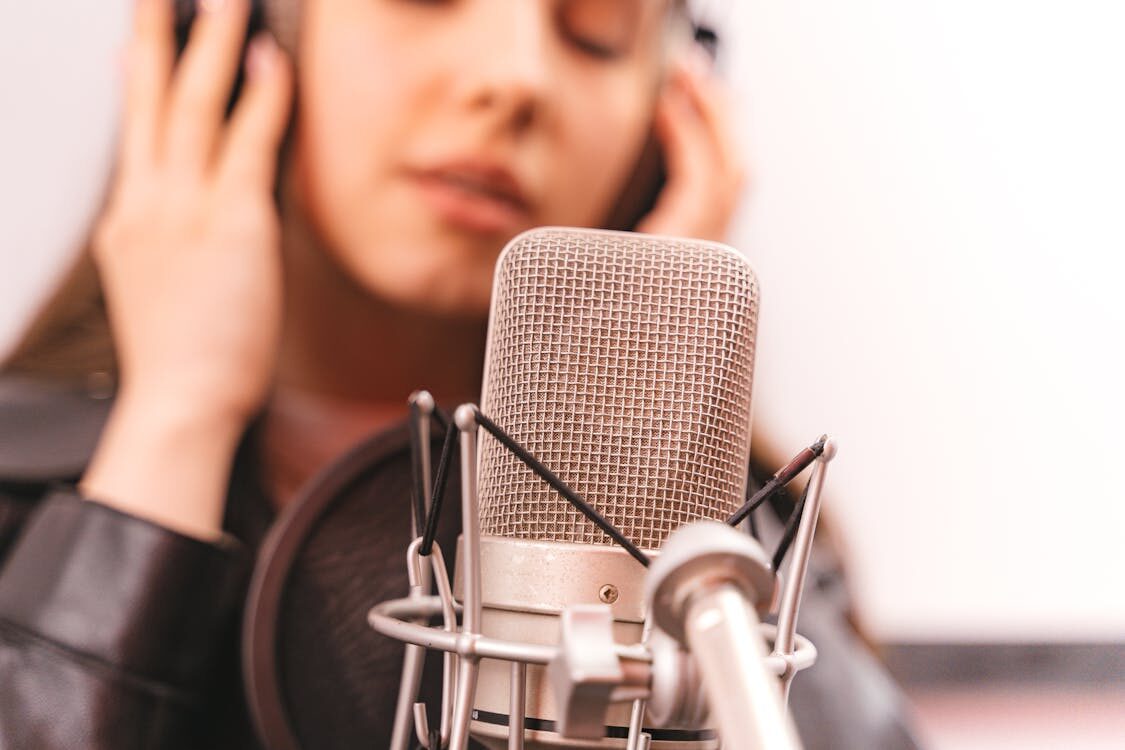
Your microphone is the most important piece of equipment in your setup. Entry-level condenser microphones are often a great choice for beginners because they provide clear, detailed sound at an affordable price. These microphones are widely used by new audiobook narrators and are capable of producing professional-quality recordings when used in a properly treated space.
As you gain experience, you may choose to invest in a higher-end microphone with greater sensitivity and tonal control. Professional microphones can enhance clarity and warmth, but they won’t fix poor room acoustics, so upgrading only makes sense once your recording space is well optimized.
There are plenty of good beginner microphones out there, but if you want to invest up front, the Shure SM7B microphone is used by many professional narrators and podcasters. It delivers warm, rich voice recordings and strong background noise rejection.
Audio interface
An audio interface connects your microphone to your computer and converts your voice into a digital signal. This piece of equipment plays a key role in sound quality and volume control. Entry-level interfaces are easy to use, affordable, and more than sufficient for audiobook narration.
A good audio interface allows you to adjust input levels, reduce noise, and maintain consistent recording quality, something publishers and platforms expect from narrators.
Headphones
Closed-back headphones are essential for audiobook narration. They allow you to clearly hear your recording in real time and catch issues like background noise, mouth sounds, or clipping. Unlike speakers, headphones prevent sound from leaking back into the microphone while you record.
Comfort is important here, especially during long sessions. Many narrators wear headphones for hours at a time, so choosing a pair that fits well can make a big difference.
Recording and editing software (DAWs)
A Digital Audio Workstation (DAW) is the software you’ll use to record and edit your audiobook. Many beginner-friendly DAWs are either free or low-cost and include all the tools needed for audiobook narration, such as noise reduction, cutting mistakes, and adjusting volume levels.
Learning audio editing and quality standards
Learning how to become an audiobook narrator means knowing how to edit your audio to a professional standard. Editing is a required part of the job, and for many narrators, it takes as much time as recording itself.
At a basic level, audio editing involves removing mistakes, reducing background noise, managing breaths and mouth sounds, and adjusting pacing so the narration flows naturally.
You don’t need advanced production skills, but you do need to be comfortable listening closely to your recordings and making consistent, careful adjustments.
It’s also important to understand audiobook technical requirements, such as volume levels, file formats, and noise thresholds. Major platforms have specific quality standards, and your audio must meet them in order to be accepted.
Finding audiobook narration work
Once you’ve built your skills and recording setup, the next step in learning how to become an audiobook narrator is finding narration work. Most audiobook jobs are secured through auditions, and having a polished application package is essential.
Many narrators begin by auditioning on audiobook platforms that connect narrators with authors and publishers. These platforms allow you to create a profile, upload samples, and submit auditions for available projects.
Your audiobook samples are often the first thing decision-makers hear, so they should reflect the genres and styles you want to narrate and demonstrate clean audio quality.
When looking for work, you’ll encounter two main types of clients: publishers and independent authors.
Publishers typically offer more consistent pay and clearer expectations but may be more selective in their hiring process.
Independent authors are often more flexible and can be a great way to gain experience, especially early in your career.
You can often find work directly through the top audiobook platforms.
Is audiobook narration right for you?
Learning how to become an audiobook narrator is a journey that blends creativity and technical skill. Along the way, you’ll develop your voice and storytelling abilities, set up a functional home recording space, learn basic audio editing, create strong audiobook samples, and begin auditioning for work.
If you’re a beginner, it’s important to remember that every professional audiobook narrator started exactly where you are now. You don’t need top-tier equipment, a flawless voice, or years of experience to begin. What matters most is your willingness to practice, learn from feedback, and stay consistent even when progress feels slow.
If audiobook narration sounds like the right fit for you, the best next step is to take action. Start practicing by reading aloud every day, explore training or coaching if you want structured guidance, and work toward recording your first audiobook samples. When you feel ready, submit your first audition and gain real-world experience. The path to becoming an audiobook narrator starts with a single recording – yours.