


























TL;DR
The best books about aliens fall into two camps. For fiction, start with Solaris, Blindsight, or Project Hail Mary depending on whether you want philosophy, horror, or heart. For nonfiction, start with Garrett Graff's UFO for the documented history and Arik Kershenbaum's The Zoologist's Guide to the Galaxy for the science. This list has 35 novels and 21 nonfiction picks, grouped by what kind of story they actually tell.
Most lists of the best alien books are the same 15 titles in a different order, each with a two-line summary that could have been written without reading the book.
This one is sorted differently. Alien novels are not one genre, they're at least six, and someone who loved Blindsight may well bounce hard off The Hitchhiker's Guide to the Galaxy. So the fiction here is grouped by the kind of story it tells, with a note on who each book is actually for.
Public interest in this subject changed completely after the 2017 New York Times story on the Pentagon's UAP program and the 2023 congressional hearings, and most alien reading lists never caught up. The best non fiction books about aliens now include serious journalism and academic work that did not exist five years ago, and they're all in here.
We're a publishing company, not a UFO blog, so there's also a section on what makes these books work structurally. If you're writing one, that part is for you.
Get Your Free eBook of Published.
The proven path from blank page to 10,000 copies sold - written by 7-time bestselling author, Chandler Bolt
Best alien novels: 35 picks by story type
The best alien novels split into 6 story types: first contact, invasion, genuinely alien aliens, alien worlds, alien horror, and big-idea comedy.
Find the category that matches what you're in the mood for, then work down. Every pick includes the year and a note on who it suits, because "best" means nothing until you know what you want out of it.
First contact (7 books)
The signal arrives. Now what? These are about the moment humanity stops being alone, and the mess that follows.
1. Contact by Carl Sagan
1985 · First contact · 432 pages
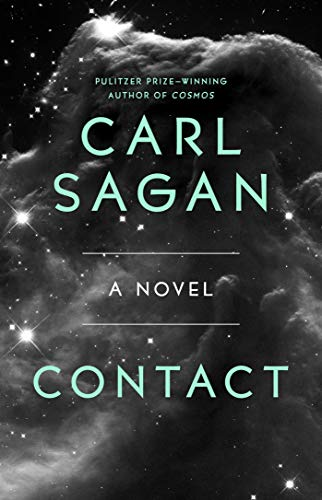
Sagan spent his career arguing that the search for extraterrestrial intelligence deserved real funding, then wrote a novel to show what would happen if it worked. The aliens are almost beside the point. The gripping part is watching governments, religious leaders, and scientists fight over who gets to answer the phone, and what they'd say.
Read it if you want the scientifically literate version of first contact, written by someone who genuinely believed it might happen.
2. The Sparrow by Mary Doria Russell
1996 · First contact · 408 pages
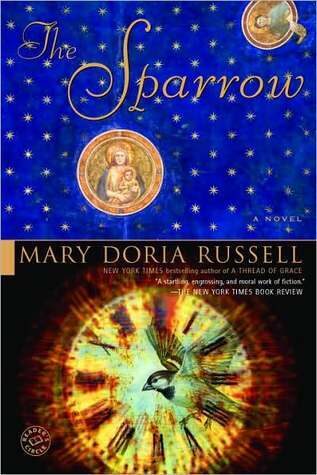
A Jesuit mission reaches another world before any government does. One man comes back, physically ruined and accused of terrible things. Russell runs two timelines at once, so you know from page 30 that the mission ends in catastrophe, and you spend the rest of the book meeting the people it will destroy. It's a book about faith more than spaceflight.
Read it if you can handle a genuinely upsetting ending. Skip it if you can't.
3. Story of Your Life by Ted Chiang
1998 · First contact · Novella, in Stories of Your Life and Others

The novella that became Arrival. A linguist works out a written alien language that has no forward direction, and learning it slowly rewires how she experiences time. Chiang builds the whole emotional payload into the grammar. It's roughly 60 pages and it does more than most 600-page novels.
Read it if you want the single most efficient alien story ever written.
4. Project Hail Mary by Andy Weir
2021 · First contact · 496 pages
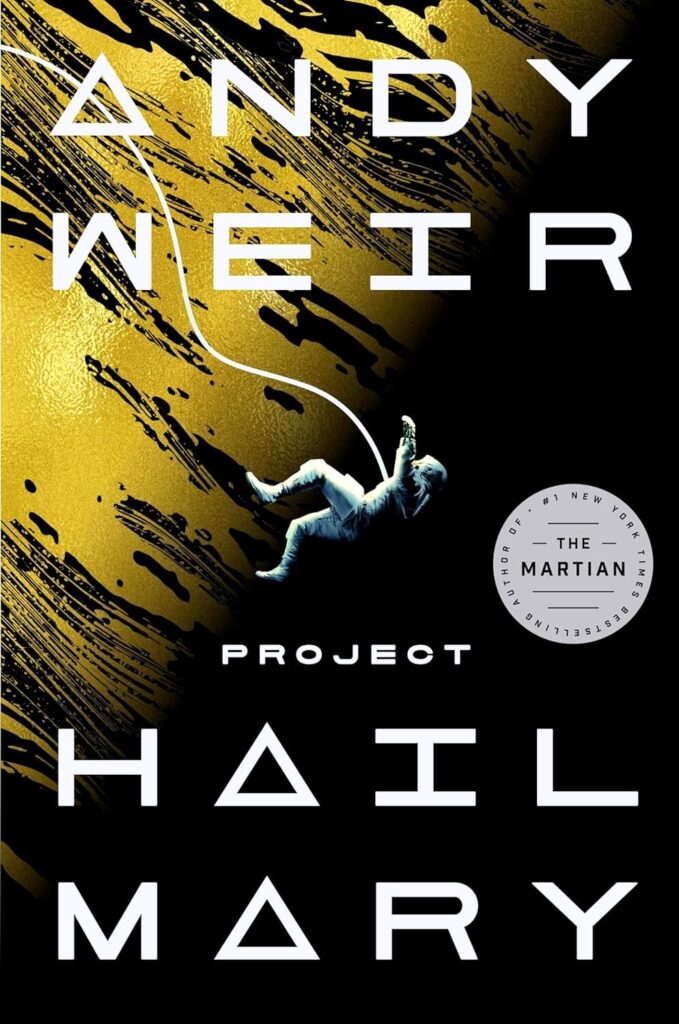
A man wakes up alone on a spaceship with amnesia and two dead crewmates. Then he meets Rocky, a rock-bodied alien who talks in musical chords and has exactly the same problem he does. The two of them working out a shared language through trial and error is the best alien relationship anyone has put on paper this decade.
Read it if you want an alien book that's fun. Genuinely, unironically fun.
5. Rendezvous with Rama by Arthur C. Clarke
1973 · First contact · 288 pages
A cylinder 50 kilometers long enters the solar system. A crew goes inside, maps it, and leaves. That's the plot. Clarke's whole argument is that a civilization advanced enough to build this thing owes us no explanation at all, and the book refuses to give one. The restraint is the point.
Read it if you like exploration over conflict and don't need every question answered.
6. The Mote in God's Eye by Larry Niven and Jerry Pournelle
1974 · First contact · 560 pages
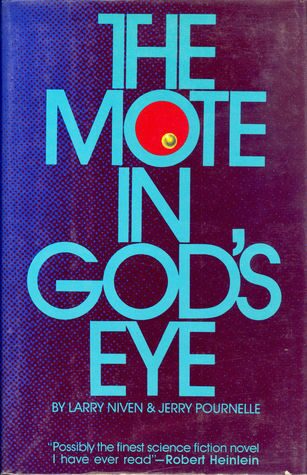
Humanity meets the Moties, an alien species that seems friendly, cooperative, and technologically brilliant. The book then spends 400 pages methodically working out why that assessment is dangerously wrong. It reads like a procedural, and the reveal is earned through evidence rather than plot twist.
Read it if you want the most rigorously worked-out alien biology in classic science fiction.
7. An Absolutely Remarkable Thing by Hank Green
2018 · First contact · 352 pages
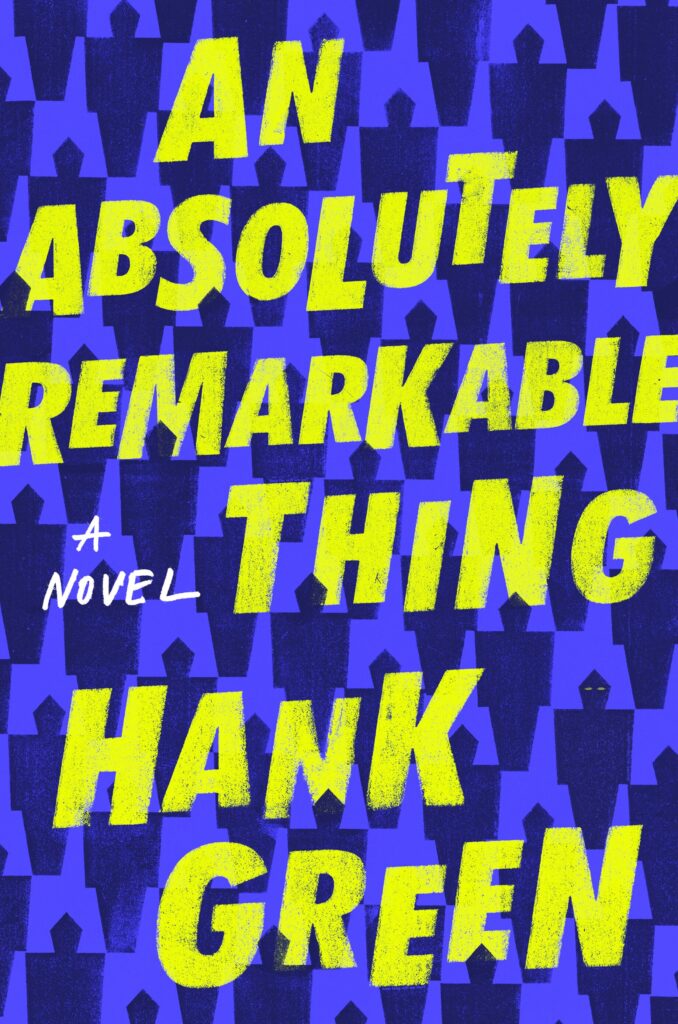
Identical robot sculptures appear overnight in 64 cities. April May films one, posts it, and becomes the most famous person alive by morning. The aliens are a backdrop. The real subject is what internet fame does to a 23-year-old, and Green is unsparing about how badly his protagonist handles it.
Read it if you want first contact filtered through social media and modern celebrity.
Alien invasion (6 books)
They're here, they're hostile, and the odds are bad. The oldest shape in the genre, still the most reliable.
8. The War of the Worlds by H.G. Wells
1898 · Invasion · 192 pages
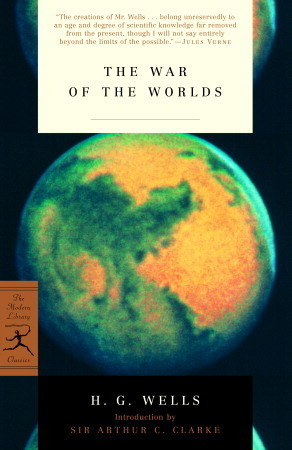
The book that built the template. Martians land in Surrey, and Wells writes the collapse of Victorian England as reportage rather than adventure, all crowds and rumor and roads clogged with people fleeing nowhere. He was writing about colonial invasion with the arrow pointed back at Britain, which is why it still bites.
Read it if you want to see where every alien invasion book that followed got its DNA.
9. Ender's Game by Orson Scott Card
1985 · Invasion · 324 pages

Children are trained through war games to command a fleet against an insect-like alien species. The military school sections are what everyone remembers, but the book's actual argument lands in the final 20 pages, when Ender learns what he was really doing and what the enemy was really thinking.
Read it if you want a page-turner that turns into a moral problem at the very end.
10. Starship Troopers by Robert A. Heinlein
1959 · Invasion · 263 pages
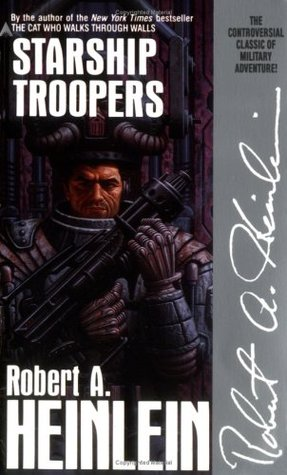
A young recruit fights arachnid aliens in powered armor while the book argues, at length, for a society where citizenship must be earned through service. The politics are contentious and always have been. Its influence on military science fiction, from the drop-pod deployments to the armor itself, is impossible to overstate.
Read it if you want the origin point of military SF. Note that the film is a satire of the book, not an adaptation of it.
11. Old Man's War by John Scalzi
2005 · Invasion · 320 pages
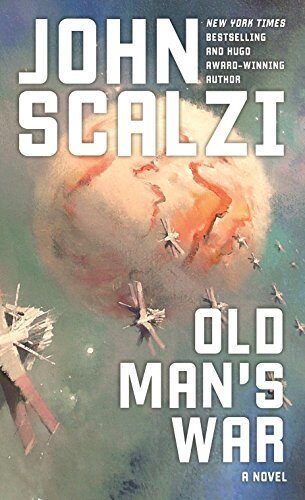
You can enlist at 75. The military gives you a new body and sends you to fight a galaxy full of species competing for the same handful of habitable worlds. Scalzi takes Heinlein's structure and swaps the earnestness for a wry, conversational voice. It moves fast and the aliens are inventive.
Read it if you want military SF that doesn't take itself too seriously.
12. Childhood's End by Arthur C. Clarke
1953 · Invasion · 224 pages

The Overlords arrive, end war and poverty, and refuse to show their faces for 50 years. The occupation is benevolent, which is what makes it unsettling. When they finally reveal what they look like and why they came, Clarke delivers one of the most quietly devastating endings in the genre.
Read it if you want an invasion story where nobody fires a shot.
13. Invasion of the Body Snatchers by Jack Finney
1955 · Invasion · 216 pages
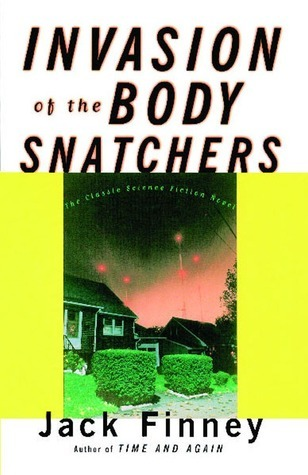
A small-town doctor's patients start insisting their relatives have been replaced by identical strangers. Finney keeps it claustrophobic and domestic, and the horror comes from watching a community stop being itself one person at a time. Every "the people around you are not who they were" story owes this book.
Read it if you want paranoia rather than spectacle.
Genuinely alien aliens (6 books)
Most fictional aliens are people with different foreheads. These six aren't, and that's the whole point.
14. Solaris by Stanisław Lem
1961 · Truly alien · 224 pages

A planet-covering ocean that may be a single conscious organism. Humanity has studied it for a century and produced libraries of theory and zero understanding. Then it starts sending the researchers physical copies of people from their memories, and nobody can say whether that's communication, experiment, or accident. Lem's argument is that genuine contact might simply be impossible.
Read it if you want the most intellectually serious alien novel ever written. Look for the Bill Johnston translation from the Polish, not the older secondhand French version.
15. Blindsight by Peter Watts
2006 · Truly alien · 384 pages

A crew including a surgically altered vampire is sent to investigate an object at the edge of the solar system. What they find processes information, responds intelligently, and appears to have no consciousness at all. Watts uses it to ask whether self-awareness is an advantage or an expensive evolutionary accident. Dense, hostile to the reader, and worth every page.
Read it if you want hard science fiction that leaves you rattled. It's free to read legally on the author's site.
16. Roadside Picnic by Arkady and Boris Strugatsky
1972 · Truly alien · 224 pages
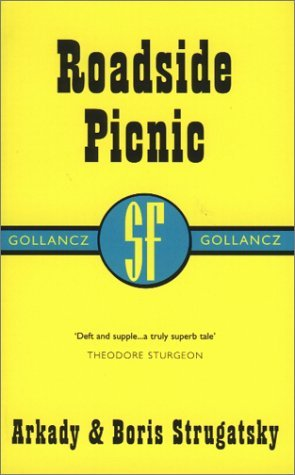
Aliens visited Earth, stayed a few hours, and left without ever noticing us. What remains are six contaminated Zones full of objects that break physics. The title is the thesis: we're the ants at the edge of a picnic blanket, sorting through the litter. Follows the scavengers who go in for the artifacts and come back changed.
Read it if you want the definitive treatment of aliens who are indifferent rather than hostile.
17. Children of Time by Adrian Tchaikovsky
2015 · Truly alien · 600 pages
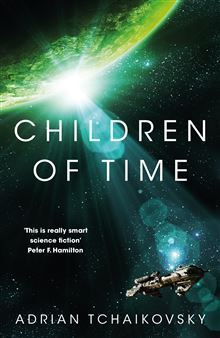
A terraforming experiment goes wrong and an uplift virus meant for primates lands in a population of spiders instead. Tchaikovsky then follows their civilization across thousands of years, in parallel with a human ark ship running out of options. The spider chapters are the reason to read it, and by the end you may be rooting for them.
Read it if you want alien civilization built from evolutionary first principles. Won the Arthur C. Clarke Award.
18. Semiosis by Sue Burke
2018 · Truly alien · 336 pages
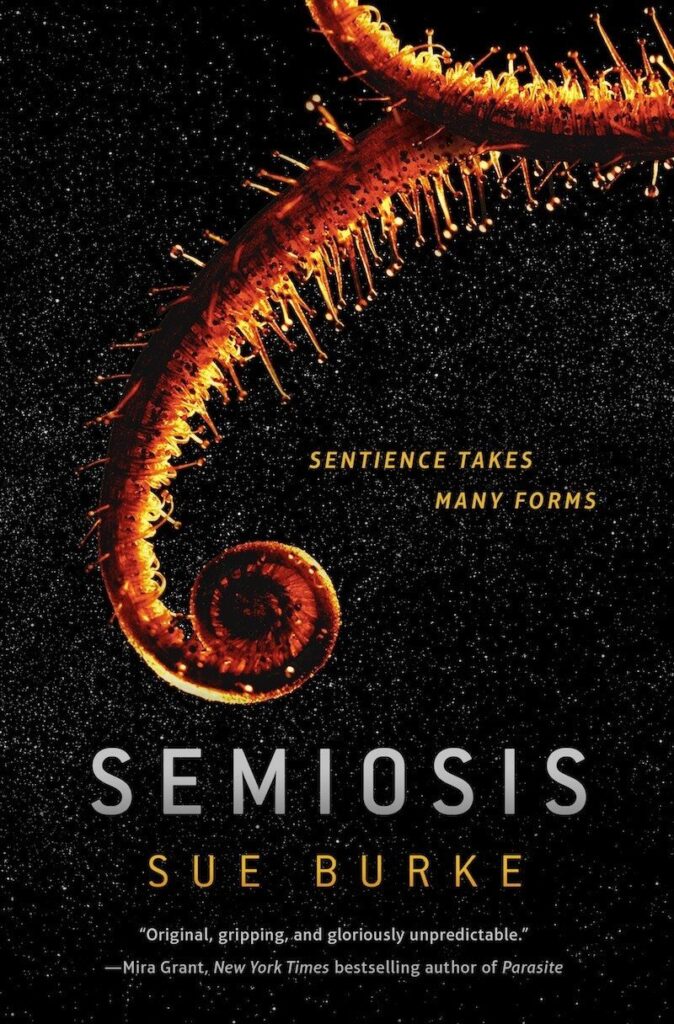
Colonists land on a world where the plants are the dominant intelligent life, and have been running long-term strategy on the local fauna for millennia. Burke tells it across seven generations, each narrated by a different colonist, so you watch a negotiation unfold on a timescale no individual human can perceive.
Read it if you want alien intelligence that thinks in centuries rather than seconds.
19. Annihilation by Jeff VanderMeer
2014 · Truly alien · 208 pages
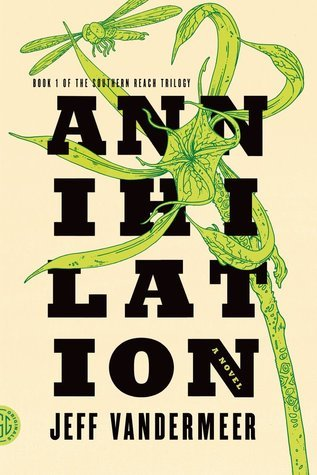
Four unnamed women enter Area X, a stretch of coastline where something is rewriting biology. VanderMeer never explains what it is or what it wants, and the refusal is deliberate: whatever is in there operates outside categories the narrator has words for. Closer to horror than science fiction, and all the better for it.
Read it if ambiguity thrills you rather than frustrates you.
Alien worlds and civilizations (9 books)
Less about the encounter, more about the society. These build entire cultures and let you live in them.
20. The Left Hand of Darkness by Ursula K. Le Guin
1969 · Alien society · 304 pages
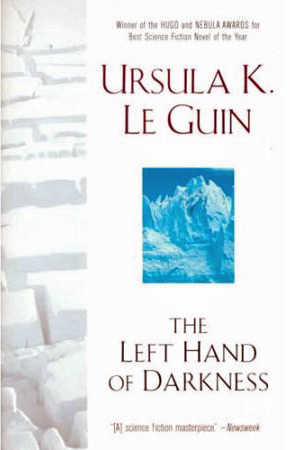
An envoy arrives on a frozen world where people have no fixed sex, cycling into male or female only during a monthly fertile period. Le Guin is less interested in the biology than in what it does to politics, property, and war. The long trek across the ice in the back third is one of the great sequences in science fiction.
Read it if you want anthropology rather than action. Won both the Hugo and the Nebula.
21. Dune by Frank Herbert
1965 · Alien world · 688 pages
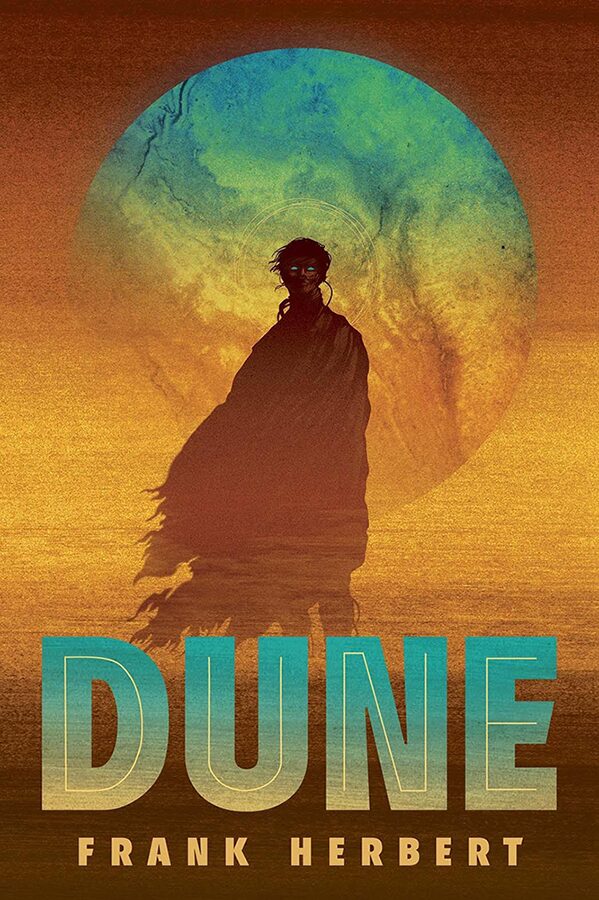
Everyone in Dune is human, so it's a stretch to call it an alien novel in the strict sense. It earns its place because the sandworms and the ecology of Arrakis are more thoroughly imagined than most books manage with actual extraterrestrials. Herbert built a planet where water scarcity determines religion, politics, and biology all at once.
Read it if you want the high-water mark for planetary world building.
22. Speaker for the Dead by Orson Scott Card
1986 · Alien society · 415 pages
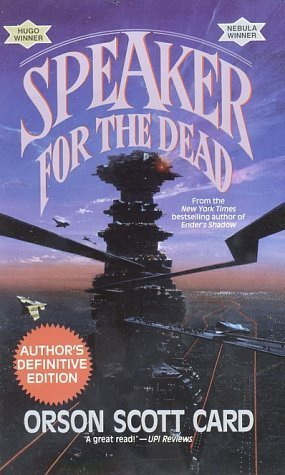
The sequel to Ender's Game, and the better book. Humans are living alongside the pequeninos, a species whose life cycle involves something that looks like ritual murder to every observer. The novel is a slow xenological investigation into why the outsiders are wrong. Card has said this is the book he actually wanted to write.
Read it if you liked Ender's Game but wanted the aliens to be a real culture instead of an enemy.
23. A Memory Called Empire by Arkady Martine
2019 · Alien society · 462 pages
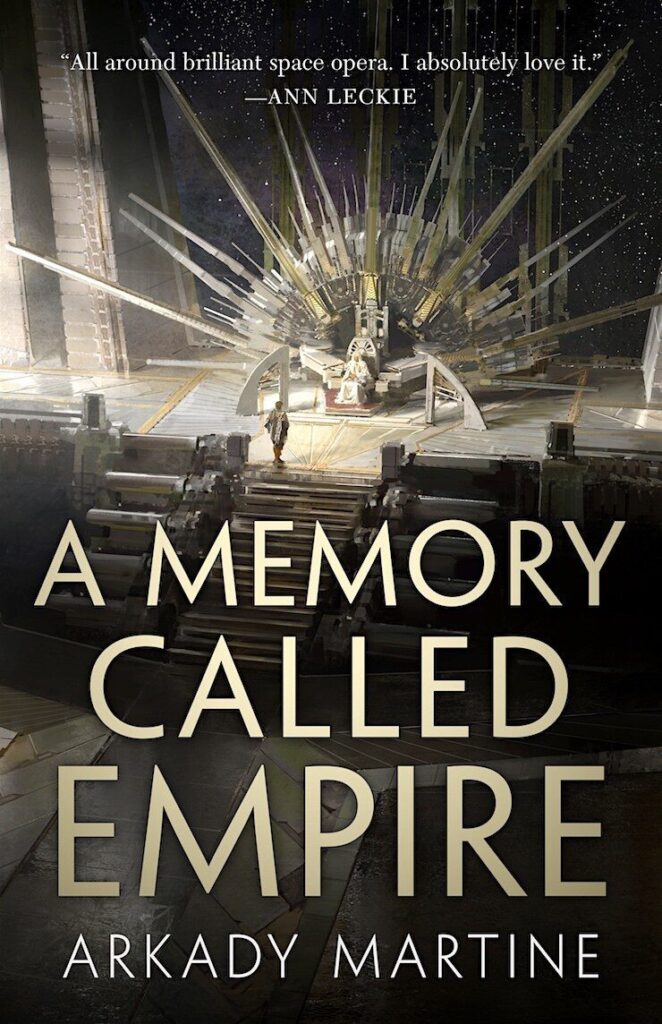
An ambassador from a small space station arrives at the capital of a vast empire whose culture she loves and which is preparing to absorb her home. Martine is a Byzantine historian by training, and it shows in how the politics work. The alien here is the empire itself, and the horror is how badly the narrator wants to belong to it.
Read it if you want political intrigue and a genuinely clever take on cultural assimilation. Hugo winner.
24. Hyperion by Dan Simmons
1989 · Alien society · 482 pages
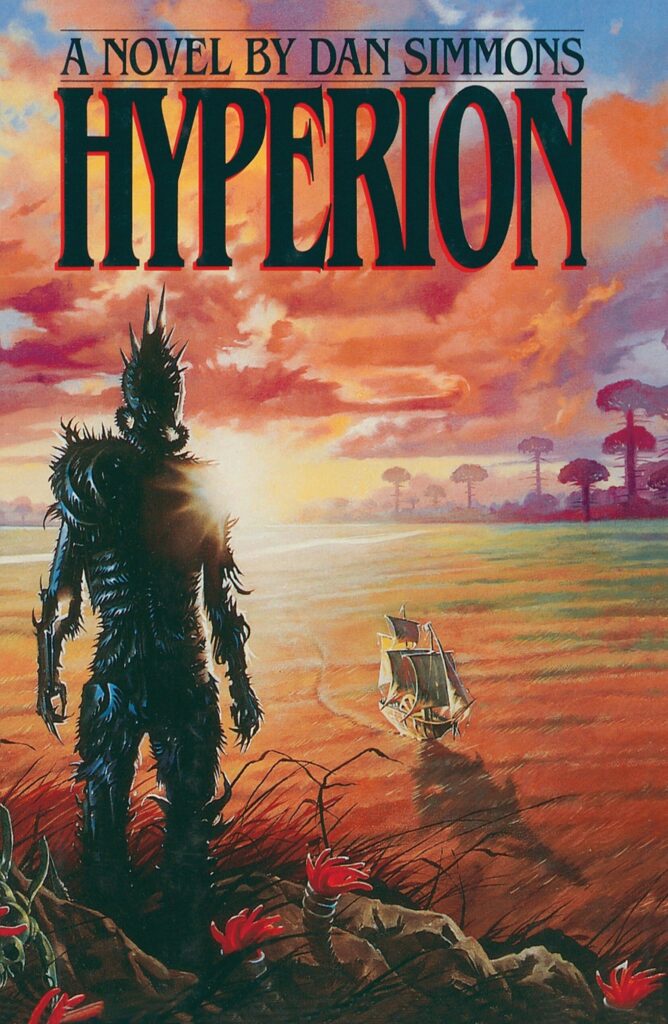
Seven pilgrims travel to a world holding a creature called the Shrike, and each tells their story on the way, Canterbury Tales style. Every tale is a different subgenre: one is horror, one is a detective story, one is a father watching his daughter age backwards. The scholar's tale alone justifies the book.
Read it if you want structural ambition. Be warned that it ends mid-story and the sequel is required.
25. Ringworld by Larry Niven
1970 · Alien world · 342 pages
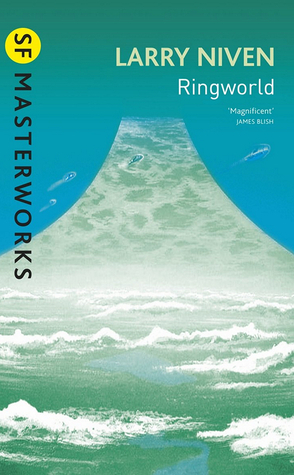
A ring-shaped artificial world circling a star, with the surface area of 3 million Earths. A mixed human and alien crew crash on it and start walking. Some of the 1970 attitudes have aged badly, but the megastructure itself launched an entire subgenre and the alien crew members, Speaker-to-Animals and Nessus, are still excellent.
Read it if you want the book that made "big dumb object" a category.
26. A Fire Upon the Deep by Vernor Vinge
1992 · Alien society · 613 pages
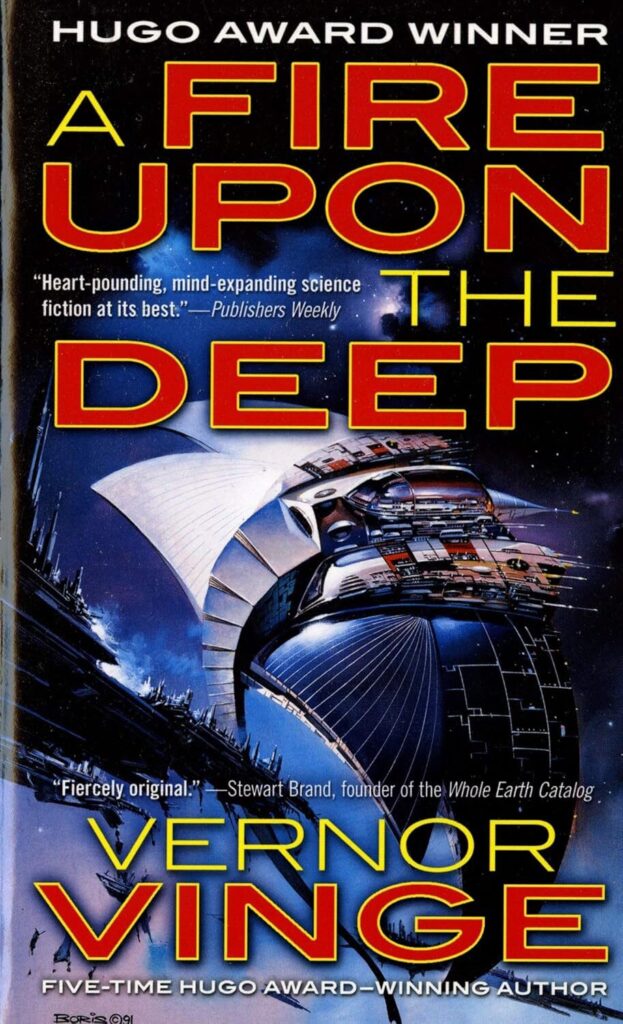
The galaxy is divided into zones where the laws of physics permit different levels of intelligence, so a ship can literally get dumber by flying inward. Meanwhile, on a medieval world, a dog-like species whose individuals are packs of four to six bodies sharing one mind gets caught up in it. The Tines are one of the best alien concepts in the genre.
Read it if you want galaxy-scale ideas and a genuinely novel form of alien consciousness.
27. Binti by Nnedi Okorafor
2015 · Alien society · Novella, 96 pages
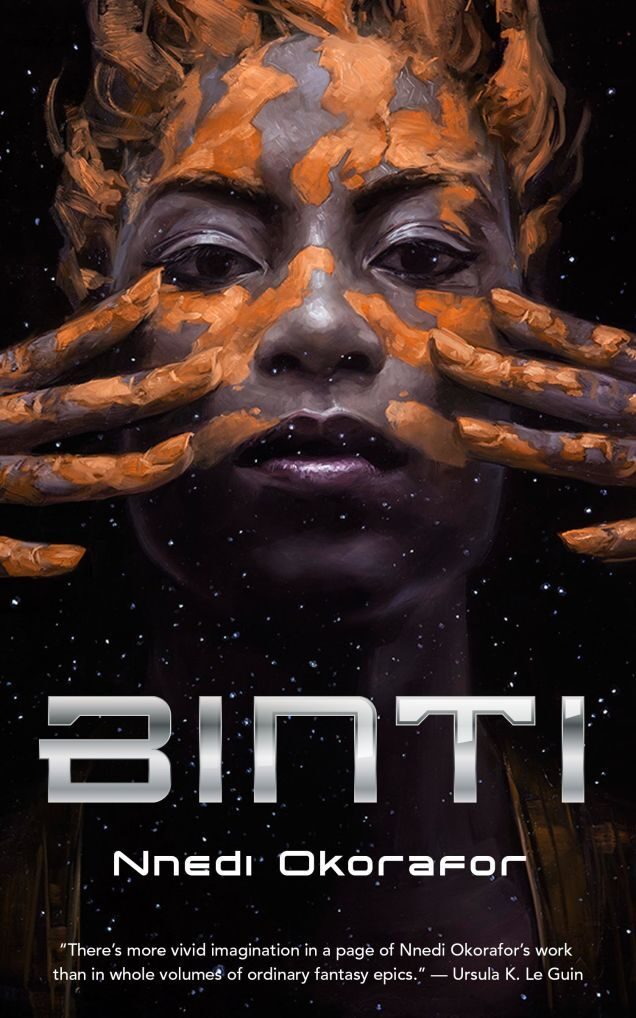
A Himba girl leaves home for a distant university, and her ship is attacked by the Meduse, jellyfish-like aliens in a war with humanity. What saves her is not technology but a piece of her own culture that everyone else dismissed. Okorafor packs a full arc into 96 pages and the alien design is genuinely strange.
Read it if you want an entry point that takes an evening. Won the Hugo and the Nebula.
28. Stranger in a Strange Land by Robert A. Heinlein
1961 · Alien culture · 408 pages
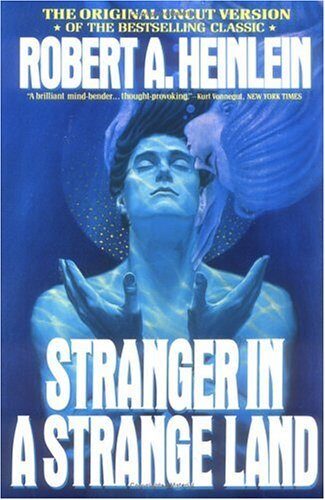
A human raised by Martians is brought back to Earth as an adult and has to learn how his own species works. The Martians never appear on the page. Their influence is entirely in how Valentine Michael Smith thinks, and the book uses him as a lens to take apart religion, money, and monogamy. Very much a product of 1961, for better and worse.
Read it if you want cultural outsider fiction. Get the uncut 1991 edition, it's the version Heinlein wanted.
Alien horror (3 books)
When the encounter goes wrong. If you like horror subgenres, this is where the two shelves meet.
29. Sphere by Michael Crichton
1987 · Alien horror · 400 pages

A team of specialists is sent to a craft on the Pacific seafloor, and the thing they find inside starts making their thoughts real. Crichton keeps the cast small and the setting sealed, so the tension comes from the group turning on each other. The mechanism behind it is one of his better twists.
Read it if you want a claustrophobic thriller that happens to have an alien in it.
30. Under the Skin by Michel Faber
2000 · Alien horror · 311 pages
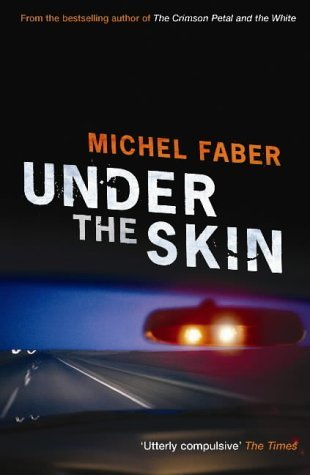
A woman drives the A9 in the Scottish Highlands picking up male hitchhikers. Faber withholds what she is and what she's doing for a long time, and the reveal reframes everything, including the reader's assumptions about who is prey. Bleak, quiet, and unlike anything else on this list.
Read it if you want literary fiction that turns out to be an alien novel.
31. Revelation Space by Alastair Reynolds
2000 · Alien horror · 585 pages
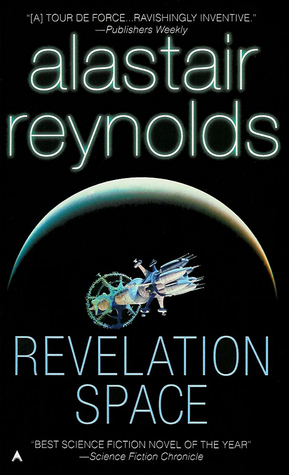
An archaeologist digs into a civilization that was wiped out 900,000 years ago, and finds out why. Reynolds was an astrophysicist at the European Space Agency, and the book is rigorously sub-light: no faster-than-light travel, so every journey costs decades. The dread accumulates slowly and then does not let up.
Read it if you want gothic space opera and a genuinely frightening answer to the Fermi paradox.
Big ideas and comedy (4 books)
Enormous scope, or a refusal to be serious. Sometimes both.
32. The Three-Body Problem by Liu Cixin
2008 English translation · Big idea · 400 pages

Opens during the Cultural Revolution, where a disillusioned astrophysicist answers a signal on humanity's behalf. Liu's aliens live in a solar system with three suns and no predictable seasons, which shapes everything about how they think. The trilogy's central concept, the dark forest, is the most-discussed idea in modern science fiction for good reason.
Read it if you want hard SF with a perspective outside the Anglo-American tradition. Hugo winner, translated by Ken Liu.
33. Pandora's Star by Peter F. Hamilton
2004 · Big idea · 988 pages
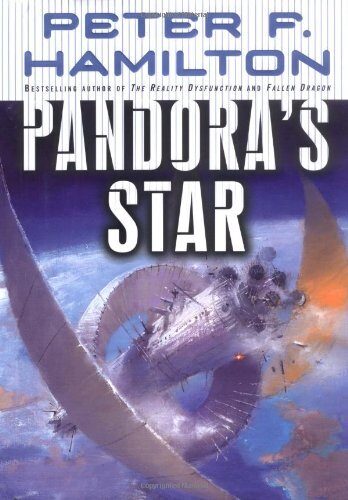
A star vanishes behind an artificial barrier and humanity sends a ship to find out who built it and why. Hamilton runs half a dozen plot threads across a wormhole-connected civilization, and the alien antagonist that emerges is one of the most genuinely alarming in the genre. It's very long and it does need the sequel to finish.
Read it if you want a 1,000-page commitment and a payoff that earns it.
34. The Hitchhiker's Guide to the Galaxy by Douglas Adams
1979 · Comedy · 224 pages

Earth is demolished for a bypass in chapter 3 and Arthur Dent spends the rest of the book in a dressing gown. Adams uses the aliens, from the poetry-torturing Vogons to the mice running the whole experiment, to make the case that the universe is vast, indifferent, and quite funny about it. Still endlessly quotable.
Read it if you need a palate cleanser after Blindsight or The Sparrow.
35. The Long Way to a Small, Angry Planet by Becky Chambers
2014 · Comedy and character · 518 pages
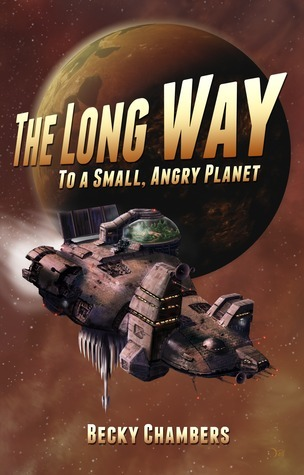
A multi-species crew tunnels wormholes for a living and mostly gets on with each other. There's barely a plot, which is deliberate. Chambers is writing about what it's actually like to share a small space with people whose biology and social rules differ from yours, and the alien crew members are warm without being humans in costume.
Read it if you want low-stakes, character-first science fiction. The originator of the "cozy SF" wave.
Best nonfiction books about aliens: 21 picks
The best non fiction books about aliens fall into 4 groups: the science of whether life exists elsewhere, the documented government record, the human experience of contact, and the fringe theories that shaped popular belief.
This half of the list needed the most work. Between the 2017 New York Times report on the Pentagon's Advanced Aerospace Threat Identification Program and the 2023 congressional UAP hearings, a lot of serious journalism entered a space that used to belong almost entirely to true believers and debunkers.
The grouping below keeps those camps separate on purpose. Reading a Harvard astrophysicist and an ancient-astronaut theorist as if they carry equal weight is how people get lost in this subject. Each section says plainly what kind of book you're getting.
The science: are we alone? (8 books)
Peer-reviewed researchers and science journalists on what we actually know, which is less than most people assume.
1. Cosmos by Carl Sagan
1980 · Popular science · 396 pages
Still the best on-ramp to the whole question. Sagan moves from the origin of life to the scale of the galaxy to the Drake equation without ever making you feel stupid, and the chapter on the Cosmic Calendar reframes human history in a way most readers never shake. The book that got several generations of astronomers into the field.
Read it if you're starting from zero and want context before opinions.
2. The Zoologist's Guide to the Galaxy by Arik Kershenbaum
2020 · Astrobiology · 368 pages
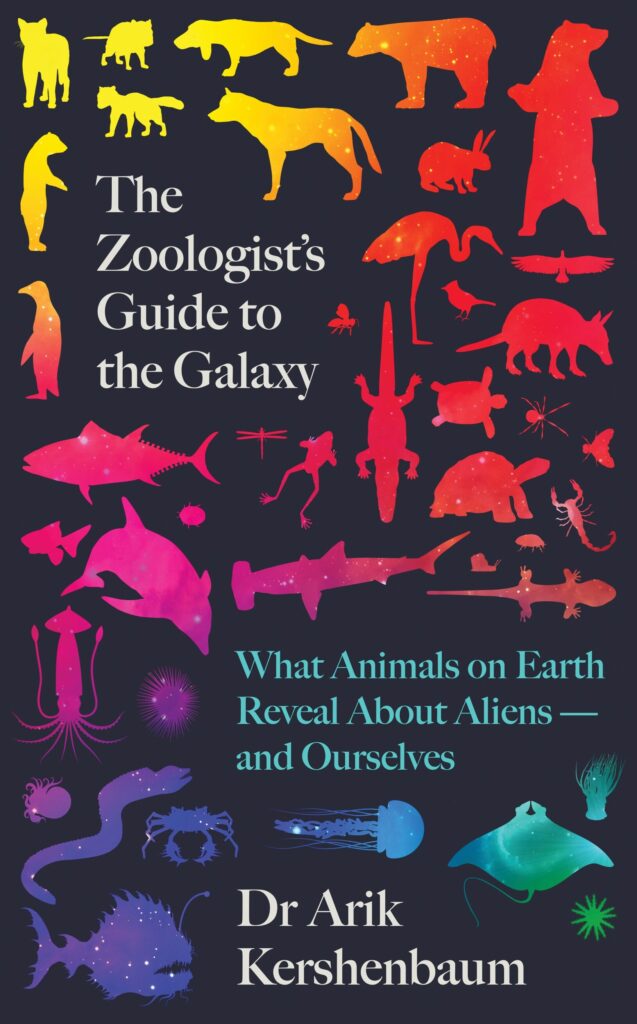
A Cambridge zoologist argues that we can predict a great deal about alien life without ever finding any, because natural selection is a universal process. He works through movement, communication, sociality, and intelligence, showing which traits are likely to converge anywhere. Easily the most useful book on this list for a novelist designing a species.
Read it if you want a scientific framework instead of speculation. Writers, start here.
3. Rare Earth by Peter Ward and Donald Brownlee
2000 · Astrobiology · 368 pages

The counterargument. A paleontologist and an astronomer make the case that microbial life may be common while complex life is vanishingly rare, because Earth needed an improbable stack of conditions: a large moon, plate tectonics, Jupiter clearing debris, a stable orbit. Contested since publication, which is exactly why it's worth reading.
Read it if you've absorbed a lot of optimism and want the strongest case against it.
4. If the Universe Is Teeming with Aliens ... Where Is Everybody? by Stephen Webb
2015, 2nd edition · Fermi paradox · 434 pages
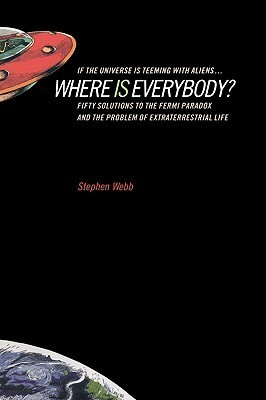
Webb catalogues 75 proposed solutions to the Fermi paradox and evaluates each one, from "they're already here" to "interstellar travel is simply too hard" to "we are genuinely first." Structured as a reference, so you can dip in anywhere. If you want a plot hook for a novel, there are 75 of them in here.
Read it if you want every serious answer to the great silence in one volume.
5. The Eerie Silence by Paul Davies
2010 · SETI · 241 pages
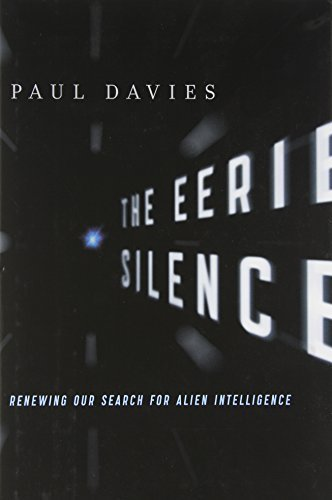
Written for SETI's 50th anniversary by the physicist who chairs its post-detection taskgroup, the committee that would advise on what to do if a signal ever arrived. Davies argues the search has been too narrow, looking for radio signals from beings much like us, and proposes hunting for physical traces instead.
Read it if you want an insider's honest account of why 50 years of listening found nothing.
6. The Contact Paradox by Keith Cooper
2019 · SETI · 344 pages
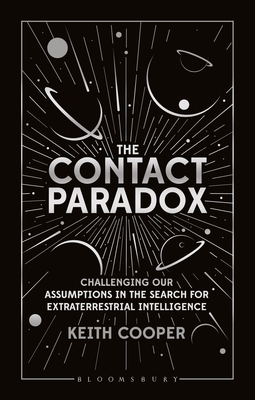
Cooper picks at the assumptions buried inside SETI: that an advanced civilization would be peaceful, that altruism scales, that anyone would want to talk. He also covers the genuine controversy over METI, the practice of deliberately broadcasting our location, which a number of scientists think is reckless.
Read it if you want the ethics and politics of the search, not just the engineering.
7. Aliens: Science Asks, Is There Anyone Out There? edited by Jim Al-Khalili
2016 · Essay collection · 232 pages
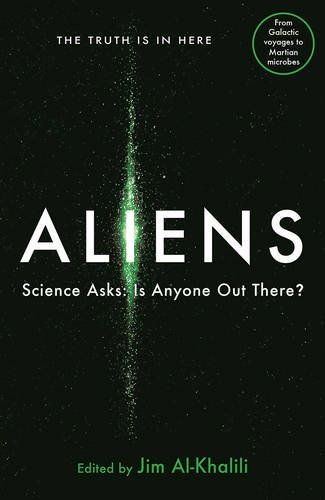
Nineteen short pieces from astronomers, biologists, mathematicians, and one science fiction novelist, each taking a different angle. Because it's a collection, the contributors openly disagree with one another, which gives you a much truer picture of where the field actually sits than any single-author book.
Read it if you want range and short chapters you can read out of order.
8. Out There by Michael Wall
2018 · Popular science · 240 pages

A Space.com senior writer works through the practical questions people actually ask: where would we look, what would we find, what would happen to religion and politics, could we ever visit. Light, well-sourced, and honest about the limits of current evidence.
Read it if you want an accessible survey without the physics.
The government record (5 books)
Documented history, declassified programs, and the reporting that changed the conversation after 2017.
9. UFO: The Inside Story of the US Government's Search for Alien Life Here and Out There by Garrett M. Graff
2023 · Investigative history · 528 pages
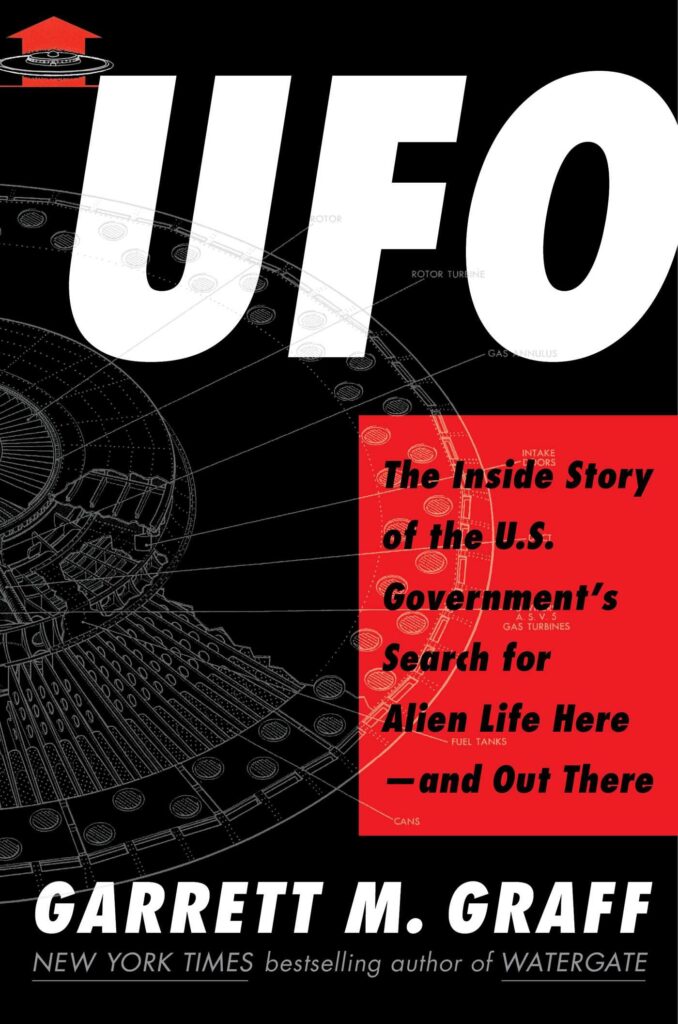
The best single book on the subject, and the one to hand a skeptic. Graff is a serious national security historian, and he traces 75 years of US government interest without ever telling you what to believe. His conclusion is careful: something real has been observed, institutional secrecy made it far stranger than it needed to be, and the alien explanation remains unproven.
Read it if you only read one nonfiction book about aliens. Start here.
10. Imminent by Luis Elizondo
2024 · Memoir and disclosure · 320 pages
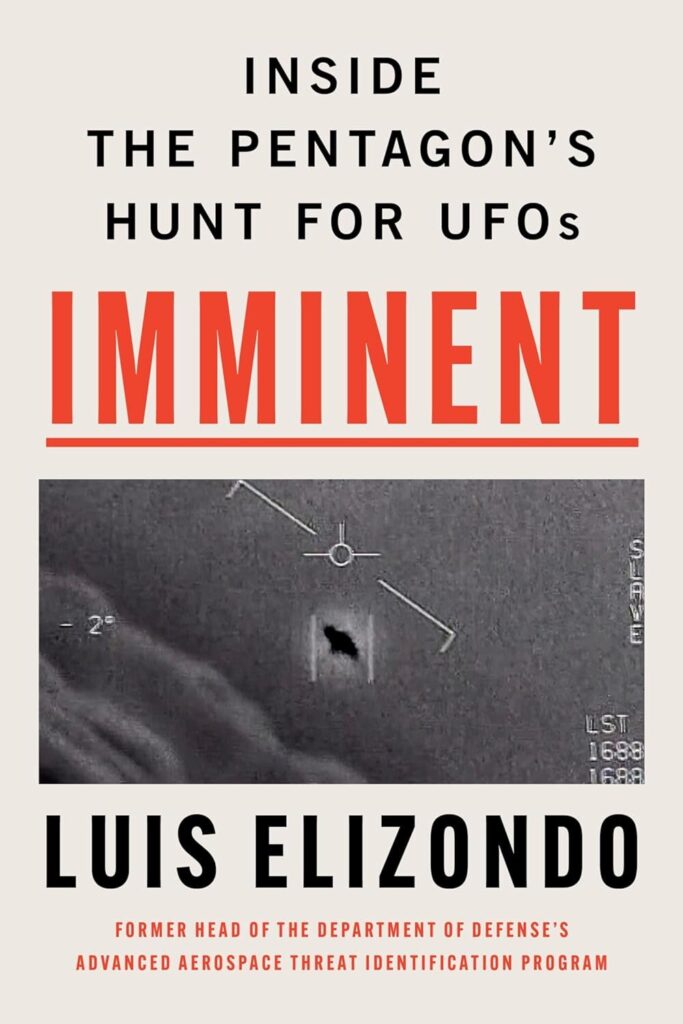
Elizondo ran the Pentagon program at the center of the 2017 New York Times story, and this is his account of what he saw and why he resigned. Treat it as a primary source rather than a neutral one: it's a firsthand narrative from an interested party, and the claims it makes have not been independently verified. Read it alongside Graff, not instead of him.
Read it if you followed the congressional hearings and want the insider version.
11. The Report on Unidentified Flying Objects by Edward J. Ruppelt
1956 · Primary source · 315 pages
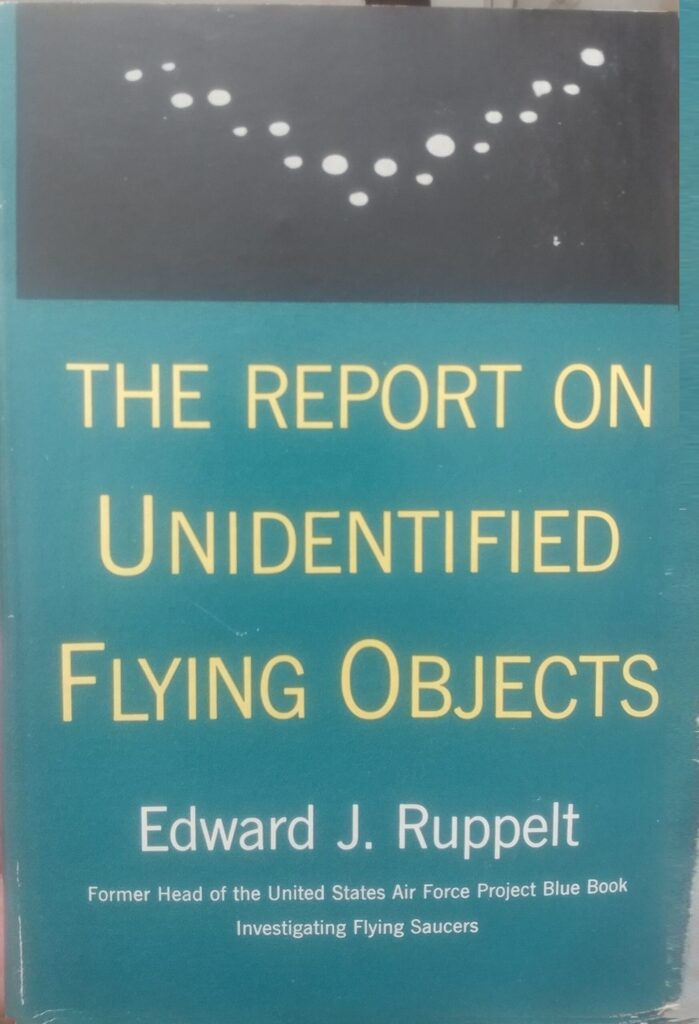
Ruppelt directed Project Blue Book and coined the term "unidentified flying object" specifically to get away from "flying saucer." Written by the man running the investigation while it was still active, it's dry, procedural, and unusually candid about how many cases the Air Force could not close. The foundational document.
Read it if you want the original file rather than someone's summary of it.
12. Extraterrestrial by Avi Loeb
2021 · Argument · 240 pages
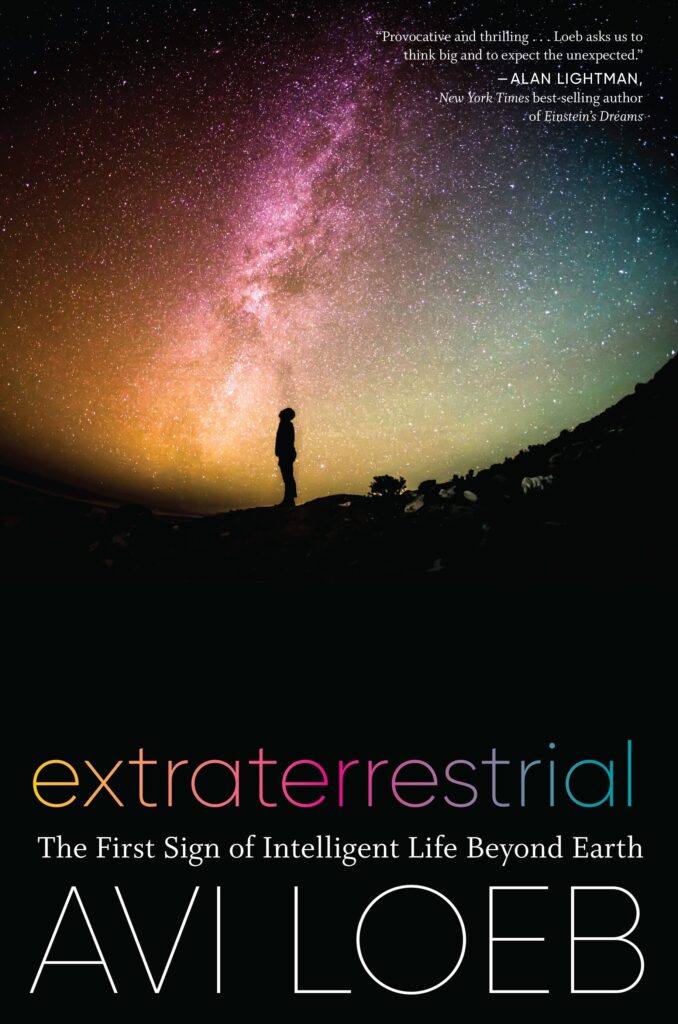
The former chair of Harvard's astronomy department argues that 'Oumuamua, the first confirmed interstellar object to pass through our solar system, behaved in ways that natural explanations struggle to account for, and that its artificial origin deserves serious consideration. Most of his colleagues disagree. The book is as much about scientific conformity as about the object.
Read it if you want to watch a mainstream scientist break ranks in real time.
13. Interstellar by Avi Loeb
2023 · Argument · 256 pages
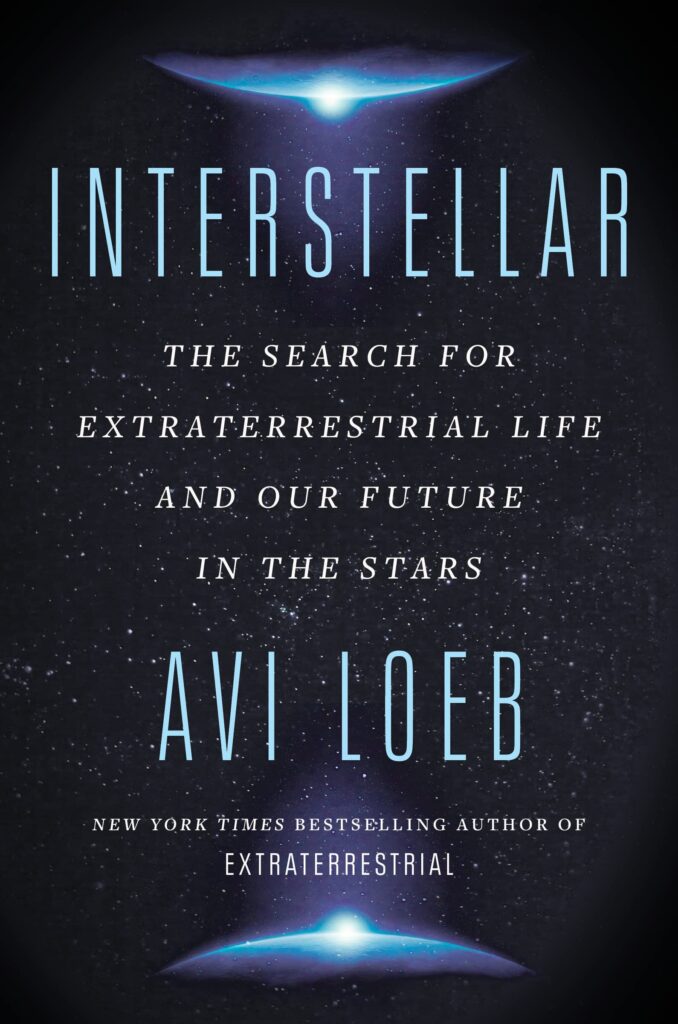
The follow-up, covering the Galileo Project and Loeb's expedition to recover material from a suspected interstellar meteor off Papua New Guinea. More contested than the first book, and the metallic spherules he retrieved remain disputed. Worth reading for the methodology argument even if you don't buy the conclusion.
Read it if you read Extraterrestrial and want to see where the argument went next.
Contact, belief, and the human side (5 books)
Not about whether aliens exist, but about what happens to people who believe they've met one.
14. American Cosmic by D.W. Pasulka
2019 · Religious studies · 288 pages
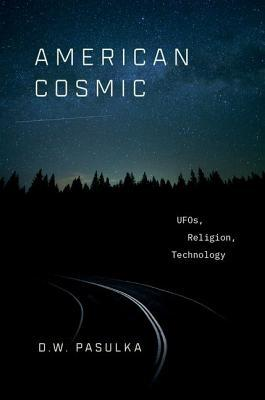
A professor of religious studies studies UFO belief the way an anthropologist would study any faith, and finds something surprising: several of the most committed believers she meets are working scientists and Silicon Valley figures who keep it entirely private. Her argument is that this is a religion forming in real time, with technology in the role of the sacred.
Read it if you want the most intellectually interesting book on this list. Academic but readable.
15. Abduction by John E. Mack
1994 · Psychiatry · 464 pages
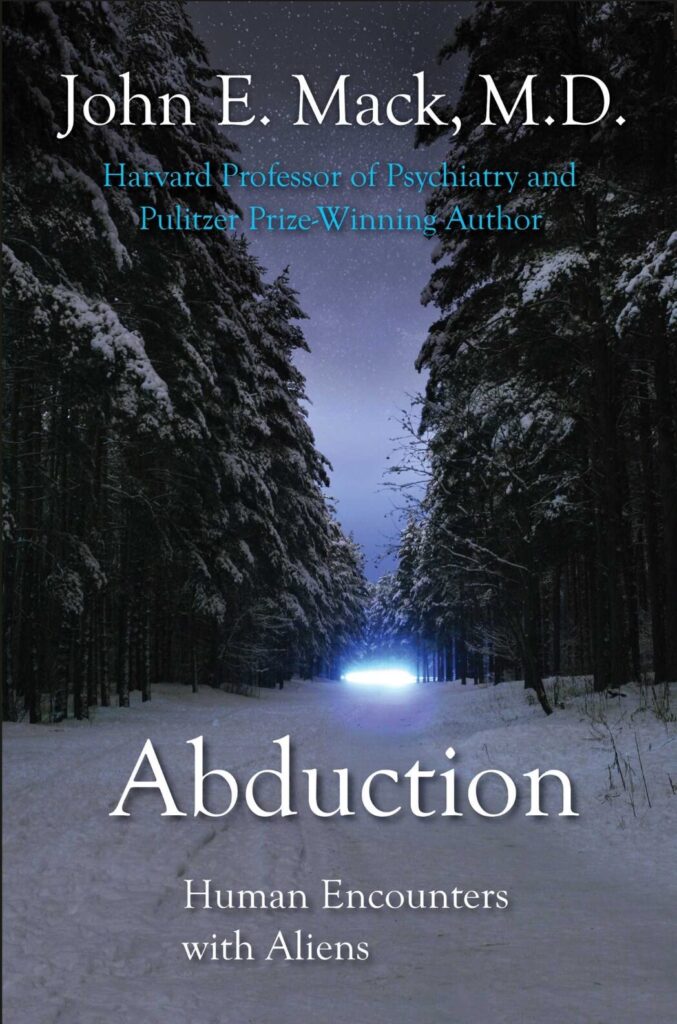
A Pulitzer-winning Harvard psychiatrist interviewed dozens of people reporting abduction experiences and concluded that they were not mentally ill and were not lying. He stopped short of saying the events were literally real, and Harvard investigated him for it. The case histories are the value, whatever you conclude about the cause.
Read it if you want the clinical evidence handled by a credentialed professional.
16. Passport to Magonia by Jacques Vallée
1969 · Comparative folklore · 176 pages
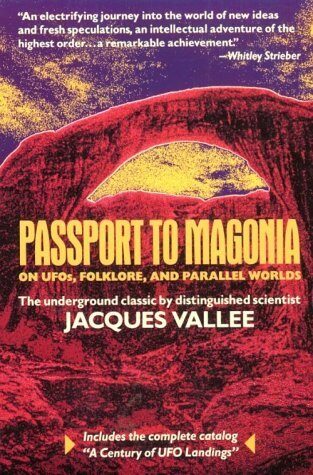
Vallée, a computer scientist and astronomer, lines up modern abduction reports against centuries of fairy encounters, demonic visitations, and religious apparitions, and shows how closely they rhyme. His conclusion is that whatever is happening is not nuts-and-bolts spacecraft. Steven Spielberg based the French scientist in Close Encounters on him.
Read it if you want the most original framework in the entire field.
17. Communion by Whitley Strieber
1987 · Memoir · 320 pages
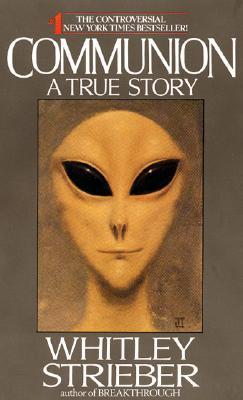
A working horror novelist wrote a first-person account of what he says happened to him in a cabin in upstate New York, and it sold in the millions. The cover image did as much as the text to fix the modern image of the grey alien in public imagination. Included as a cultural document, not as evidence.
Read it if you want to understand why the grey looks the way it does in every film since.
18. The Demon-Haunted World by Carl Sagan
1995 · Skepticism · 457 pages
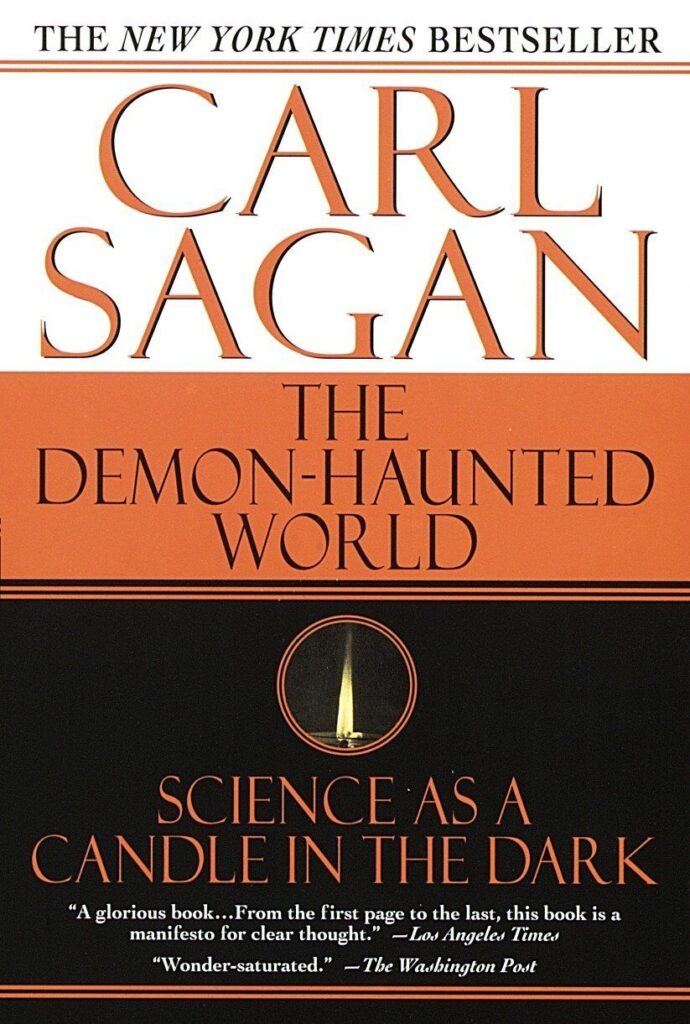
Sagan's last book, and the necessary counterweight to almost everything above. He walks through why abduction accounts fail as evidence, then gives you the baloney detection kit, a set of tools for evaluating any extraordinary claim. He isn't dismissive of the people, only of the reasoning, and that distinction is what makes it land.
Read it if you're reading anything else on this list. Read it second, not last.
Ancient aliens and the fringe (3 books)
Not supported by evidence, and hugely influential anyway. Included because you cannot understand the culture without them.
Read this section differently
The 3 books below are rejected by mainstream archaeology, history, and astronomy. They're here because they shaped decades of television, film, and popular belief, and because knowing the source material is useful whether you're writing fiction or arguing with someone at a dinner party. Don't cite them as fact.
19. Chariots of the Gods by Erich von Däniken
1968 · Fringe theory · 240 pages

The book that launched the ancient astronaut industry, arguing that the pyramids, the Nazca Lines, and Easter Island required visiting extraterrestrial help. Archaeologists have dismantled essentially every claim in it. It sold tens of millions of copies and spawned a television franchise still running today.
Read it if you want the origin of a theory you've heard your whole life. Historically important, factually not.
20. The 12th Planet by Zecharia Sitchin
1976 · Fringe theory · 416 pages
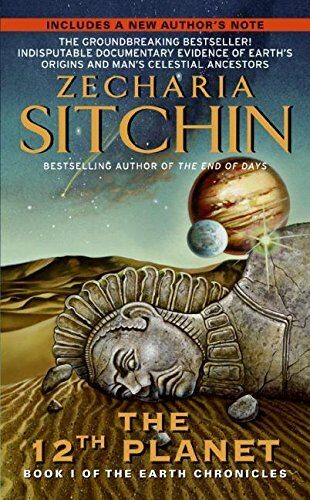
Sitchin claimed Sumerian tablets describe the Anunnaki, beings from a planet called Nibiru who engineered humanity as a labor force. Assyriologists say his translations are simply wrong. The Nibiru idea nonetheless produced a doomsday panic in 2012 that NASA had to publicly address.
Read it if you're researching how a mistranslation becomes a global belief system.
21. The Day After Roswell by Philip J. Corso
1997 · Disputed memoir · 371 pages
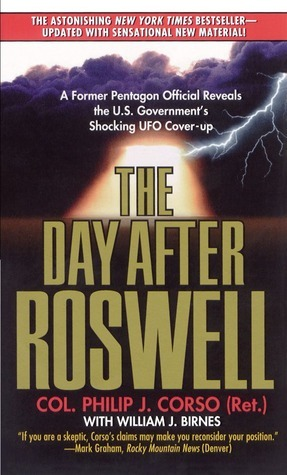
A retired Army colonel claimed he personally seeded recovered alien technology into US industry, producing fiber optics, integrated circuits, and Kevlar. All three have well-documented human inventors and development timelines. The book is the direct ancestor of the modern reverse-engineering narrative.
Read it if you want the source of the "crashed craft, back-engineered tech" claim that resurfaces in every disclosure cycle.
Alien franchise novels: where to start
Searches for "alien books" often mean tie-in novels from Ridley Scott's Alien films rather than science fiction about extraterrestrials generally. There are more than 40 of them.
Worth separating out, because these are a different shelf entirely. If you came here looking for the Xenomorph rather than for first contact literature, this is your section.
The franchise fiction runs from the 1979 film novelization through comics adaptations and original novels. Quality varies a lot. The consensus starting points:
| Book | Author | Year | Why start here |
|---|---|---|---|
| Alien: The Official Movie Novelization | Alan Dean Foster | 1979 | Written from an early script draft, so it includes material cut from the film |
| Alien: Out of the Shadows | Tim Lebbon | 2014 | Set between the first two films. The usual recommendation for where to begin the modern novels |
| Alien: River of Pain | Christopher Golden | 2014 | Tells the Hadley's Hope colony story that Aliens only refers to |
| Alien: The Cold Forge | Alex White | 2018 | Widely rated the best original novel in the line. Corporate thriller structure |
| Aliens: Earth Hive | Steve Perry | 1992 | The first of the Bantam novels, adapted from the Dark Horse comics |
These sit in the tie-in category, which has its own market dynamics. If you're curious how licensed fiction fits into publishing more broadly, our master list of book genres maps where it lands.
What makes a great alien book work
The books that last share one trait: the alien exists to test something specific about humans, and its biology, culture, and technology all follow from a single consistent premise.
We publish an average of 3 books per day, and science fiction manuscripts fail in predictable ways. Here's what separates the 56 books above from the ones that don't get finished.
Start with one constraint, not a design
Tchaikovsky didn't design his spiders feature by feature. He asked what happens if you give intelligence to a species that already communicates through vibration and web geometry, then followed the consequences. Kershenbaum's Zoologist's Guide is useful here precisely because it forces that discipline: pick the environment first, let the biology answer to it.
Aliens that read as a list of traits feel designed. Aliens that read as a solution to a problem feel evolved.
Decide what the alien is for
Every book on this list uses its alien to pressure-test a human question. Le Guin uses hers to ask what gender does to politics. Lem uses his to ask whether understanding is even possible. Watts uses his to ask whether consciousness is worth having. Strip the alien out and each of those books collapses, which is the test.
If your alien could be replaced with a hostile foreign army and nothing would change, it isn't doing any work yet.
The alien is never the subject. It's the instrument you point at the humans.
Pick your science tolerance and hold it
Reynolds refuses faster-than-light travel and pays for that choice on every page, with journeys that cost decades. Adams cheerfully invents an Infinite Improbability Drive. Both work. What doesn't work is a book that establishes hard rules in act one and then quietly breaks them in act three because the plot needed it.
Set the tolerance early and treat it as a contract with the reader.
Get the pacing structure right
First contact stories have a built-in problem: the most interesting moment is the reveal, and once you spend it, tension drops. The books above solve it three ways. Russell reveals the outcome up front and makes you dread the approach. Watts keeps the reveal but replaces the mystery with a worse one. Clarke simply refuses to reveal anything and makes the withholding the theme.
Pick one deliberately. Discovering the problem in your second draft is expensive. Our guide on novel word counts by genre is useful here too, since science fiction runs long and structure has to carry more weight.
Make the aliens characters, not conditions
Rocky in Project Hail Mary works because he has a personality, a sense of humor, and things he wants. The Tines in A Fire Upon the Deep work for the same reason. If your alien species only ever appears as a threat level or a plot obstacle, you have a weather system rather than a character. Our guide to round characters applies to nonhumans exactly as it does to humans.
Frequently asked questions
What is the best book on aliens?
For fiction, Solaris by Stanisław Lem is the most influential and intellectually serious alien novel ever written. For a modern reader who wants something more accessible, Project Hail Mary by Andy Weir is the easiest entry point.
For nonfiction, UFO by Garrett M. Graff is the best-researched single volume on the documented history, and The Zoologist's Guide to the Galaxy by Arik Kershenbaum is the best on the underlying science.
Is there scientific evidence that aliens exist?
No confirmed evidence of extraterrestrial life has been found as of 2026. What exists is circumstantial: billions of potentially habitable exoplanets, organic molecules detected in space and on Mars, and a number of unexplained atmospheric observations. The Pentagon's All-domain Anomaly Resolution Office has resolved most reported cases as conventional objects, sensor artifacts, or balloons, while leaving a small number unexplained. Unexplained is not the same as extraterrestrial.
What is the most popular alien book series?
By sales, the Alien franchise novels are the largest, with more than 40 titles across several publishers. Among original science fiction, Orson Scott Card's Ender saga and Liu Cixin's Remembrance of Earth's Past trilogy, which begins with The Three-Body Problem, are the most widely read. Peter F. Hamilton's Commonwealth Saga and Alastair Reynolds's Revelation Space sequence are the biggest in scope.
How many Alien books are there?
More than 40 novels tied to the Alien and Alien vs. Predator films, plus dozens of comic collections. The line started with Alan Dean Foster's 1979 film novelization, continued through Bantam's series in the 1990s, and was relaunched by Titan Books in 2014.
Was Alien originally a book?
No. Alien was an original 1979 screenplay by Dan O'Bannon and Ronald Shusett. Alan Dean Foster's novelization was written from the script and published alongside the film, which is why it contains scenes that were cut before release.
What are the best non fiction books about aliens for a skeptic?
Start with The Demon-Haunted World by Carl Sagan for the reasoning tools, then UFO by Garrett M. Graff for the documented history handled without advocacy, then Rare Earth by Peter Ward and Donald Brownlee for the strongest scientific case that complex life is rare.
What should I read to write believable aliens?
The Zoologist's Guide to the Galaxy by Arik Kershenbaum for the evolutionary logic, Blindsight by Peter Watts for how far you can push a nonhuman perspective, and Children of Time by Adrian Tchaikovsky for building a civilization from a single biological premise. Read all 3 and you'll have both the science and two working models of how to apply it.
Ready to write your own alien book?
Science fiction remains one of the strongest self-publishing categories, and the alien subgenre has room for anyone with a genuinely new premise.
Reading 56 books about aliens will show you the shape of the genre. It won't get your book written. The authors above all started with one idea they couldn't stop thinking about, and then did the unglamorous work of turning it into 90,000 words.
If you have that idea, the next step is an outline, not more research. Our step-by-step guide to writing a book covers the full path, and The Fundamentals of Fiction by Ramy Vance goes deeper on plot, character, and world building for fiction specifically.
At selfpublishing.com, We've helped over 7,000 authors to publish the books of their dreams. If you want a clear path from first draft to launch, with 1:1 coaching through writing, editing, design, and marketing, let's talk through your idea. Schedule a free consult.


