
























TL;DR: Psychological romance is a hybrid genre where the love story and the suspense plot are the same plot. The danger comes from inside the relationship rather than outside it. Think Gone Girl, You, and Verity. To write one, make the romance itself the thing the reader cannot trust.
Here is the quickest way to tell whether you are reading a psychological romance or a thriller that happens to have a love interest in it.
Take the romance out. If the suspense plot still works fine without it, you have a thriller with a subplot. If the whole thing collapses, you have a psychological romance.
That distinction sounds academic until you are 40,000 words into a draft and something feels off. Usually what feels off is exactly this: two separate stories running side by side, politely taking turns, neither one making the other more frightening.
This guide covers what the genre actually is, ten romance thriller books worth studying, and the specific techniques that make the blend work.

What is psychological romance?
Psychological romance is fiction where a love story and a suspense plot are inseparable, and the threat to the protagonist comes from inside the relationship.
The genre goes by several names depending on who is shelving it. Psychological thriller romance, romantic suspense, dark romance, domestic suspense. Readers use these loosely and interchangeably, which is part of why the category is confusing to write for.
What the strongest books in the space have in common is a single structural choice: the person the protagonist loves is also a source of danger, or is hiding something that will become one. Intimacy is the mechanism of threat. Every kiss carries risk because you cannot be certain who you are kissing.
That is what separates it from a psychological thriller with a romance subplot. In a psychological thriller, the love interest is usually an ally or a complication. In psychological romance, the love interest is the question.
Psychological romance vs. romantic suspense vs. dark romance
Romantic suspense puts external danger around the couple. Psychological romance puts the danger inside the couple. Dark romance makes the danger part of the appeal.
These three get used interchangeably by readers and precisely by algorithms, which matters a great deal when you are picking Amazon categories. Here is how they actually differ.
| Romantic suspense | Psychological romance | Dark romance | |
|---|---|---|---|
| Where the threat lives | Outside the couple | Inside the couple | Inside, and it is the draw |
| The couple's role | Allies against a common enemy | Uncertain, possibly adversarial | Power imbalance is the point |
| Ending convention | Happy ending expected | Ending can be bleak | Happy ending usually expected |
| Reader promise | Danger, then safety | Doubt sustained to the last page | Intensity without apology |
| Typical example | Nora Roberts suspense titles | Gone Girl, You | Haunting Adeline |
Pick one before you outline. Not because genre labels are sacred, but because each has a different ending contract with readers, and breaking that contract is the fastest route to one-star reviews. Romantic suspense readers expect the couple intact at the end. Psychological romance readers will forgive an ending that hurts.
10 romance thriller books that define the genre
The best thriller romance books to study are Rebecca, Gone Girl, You, Verity, The Silent Patient, and Behind Closed Doors.
If you want to write in this space, read in it first. Here are ten worth your time, with the specific thing each one does well.
- Rebecca - Daphne du Maurier, 1938
The ancestor of the whole category. A new wife, a husband with a history, and a house that will not let go of the first Mrs. de Winter. Study it for how long du Maurier sustains uncertainty about whether the husband is a threat. This is also gothic romance. - Gone Girl - Gillian Flynn, 2012
The book that made domestic suspense a commercial juggernaut. Two unreliable narrators, one marriage, and a mid-book reveal that reframes everything before it. If you only study one structure, study this one. - You - Caroline Kepnes, 2014
A romance narrated by the stalker, in second person, addressed to the woman he is stalking. Kepnes makes obsession read like devotion, which is the single hardest trick in the genre. - The Girl on the Train - Paula Hawkins, 2015
Three women, one unreliable memory, and a protagonist whose alcoholism makes her doubt her own account. Excellent model for withholding information without cheating the reader. - Behind Closed Doors - B.A. Paris, 2016
A marriage that looks perfect from outside and is a prison from within. Paris alternates timelines to let readers watch the trap close, which builds dread far better than a straight chronology would. - Verity - Colleen Hoover, 2018
Worth noting for this audience: Hoover self-published Verity before Grand Central picked it up, and it went on to sell millions. A ghostwriter, a manuscript that reads like a confession, and an ending that readers still argue about. - The Wife Between Us - Greer Hendricks and Sarah Pekkanen, 2018
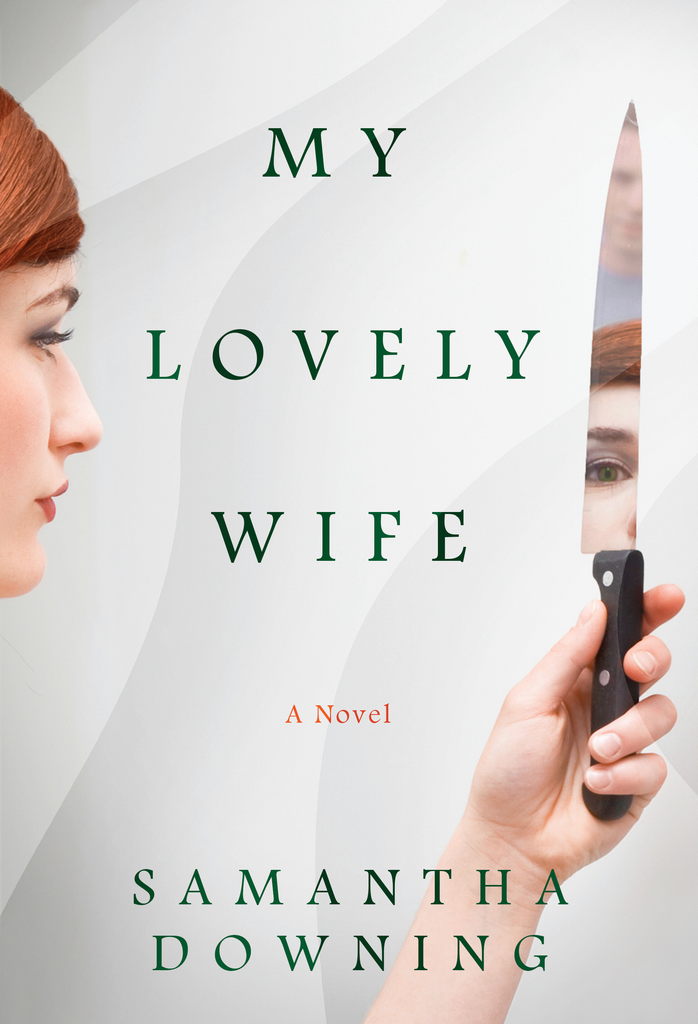
Built entirely on a misdirection about who the narrator is. A masterclass in constructing a twist that is fair on reread. - My Lovely Wife - Samantha Downing, 2019
A married couple bound together by shared crime. Downing solves the hardest problem in the genre, which is keeping a reader invested in people they should not root for. - The Silent Patient - Alex Michaelides, 2019
A woman shoots her husband and never speaks again. Leaner on romance than the others here, but the interrogation of a marriage sits at its center, and the pacing is worth copying. - Haunting Adeline - H.D. Carlton, 2021
Self-published, built on BookTok, and now one of the biggest indie titles in dark romance. Read it to understand what that audience currently rewards, and note how clearly the content warnings are handled.
Two of these ten started as self-published titles. That is not a coincidence. Psychological romance and dark romance are among the friendliest categories in fiction for indie authors right now, largely because the readership is enormous, active on social platforms, and reads fast.
How to master psychological depth and suspense
Psychological depth comes from characters wanting two incompatible things at once, then acting on both across the book.
Depth is not backstory. Plenty of drafts hand a character a childhood trauma in chapter 2 and call the work done. Readers can feel the difference between a character who has a wound and a character who is currently being pulled in two directions by it.
The practical version looks like this. For your protagonist, write down two sentences:
- What she wants and will admit to wanting.
- What she wants and would be humiliated to admit.
In a psychological romance, the second one is almost always tangled up in the love interest. She wants to be safe. She also wants to be chosen by the one person who might not be safe. Every scene where those two pull against each other generates suspense without a single external event.
Unreliable narration, used properly
Unreliable narrators are the signature move of the genre and the most commonly botched. The rule that separates the good ones from the frustrating ones: the narrator can be wrong, but the text cannot lie.
Rachel in The Girl on the Train misremembers. She does not withhold things she is actively thinking about. Readers forgive the first and feel cheated by the second, and the reviews will tell you which one you did.
How to balance thrill and romance
The balance works when suspense scenes advance the relationship and romantic scenes raise the danger, rather than alternating.
Most drafts handle this as an alternation problem. Chapter of tension, chapter of intimacy, repeat. It reads like two books stapled together, and the pacing sags in both.
The fix is to stop thinking about balance and start thinking about overlap. Ask of every scene: is this doing both jobs?
Alternating: Chapter 8: they have dinner and the attraction deepens. Chapter 9: she finds a receipt that does not add up.
Overlapping: Chapter 8: they have dinner, the attraction deepens, and she notices he has lied about something small and pointless. She says nothing. She wants the evening to keep going.
The overlapping version is the same information delivered in half the space, and the suspense now comes from her own desire rather than from a plot device. That is the genre working correctly.
A rough target for a first draft: at least 60% of your scenes should be doing both jobs at once. Audit a finished chapter against that and you will usually find the sag.
How to create multifaceted characters
In psychological romance, characters need competing loyalties rather than complicated backstories. Loyalty conflicts generate plot; backstory does not.
The protagonist
She needs agency, and this is where a surprising number of drafts fail. A protagonist who spends 300 pages having things happen to her will lose modern readers by chapter 12. Give her an investigation, a plan, a lie of her own. Rachel is a mess, but she keeps going back to that street.
The love interest
The love interest has to be genuinely appealing, not appealing-in-hindsight. This is the part authors flinch from. If readers can see the red flags from page one and the protagonist cannot, she reads as foolish and the romance dies.
Write him so that the reader also wants her to choose him. Then make that want the thing that hurts.
The antagonist, when there is a separate one
Give the antagonist a motive that would be sympathetic at a smaller scale. Wanting to be loved, wanting to be believed, wanting something back that was taken. The horror is in the scale of what they will do for it, not in the wanting.
How to make the plot gripping
Gripping plots in this genre run on information control: what the reader knows, what the protagonist knows, and the gap between them.
Suspense is not the same as mystery. Mystery is the reader not knowing. Suspense is the reader knowing something the character does not and being unable to warn her. Hitchcock explained it with a bomb under a table, and the principle has not aged.
Practical structure that works reliably for this genre:
- First quarter: establish the relationship as desirable. Readers have to want it before you can threaten it. Plant one detail that will not matter until much later.
- Midpoint: the reader learns something the protagonist does not. From here the intimacy scenes become unbearable, which is the effect you want.
- Third quarter: the protagonist starts catching up. Let her be smart. Every question she asks should cost her something.
- Final quarter: she acts. Not rescue, action. She should be the one who resolves it.
On twists: a good one is surprising in the moment and obvious on reread. If you have to conceal information the point-of-view character already knew, the twist is not earned, and readers will say so in public.
How to explore dark themes without losing readers
Dark themes work when they are specific to these characters. Generic darkness reads as edginess; specific darkness reads as truth.
Coercive control, obsession, grief, addiction, the erosion of someone's confidence in their own memory. These are the themes the genre runs on, and they are the reason readers come back to it. Handled carelessly, they are also the reason a book gets torn apart in reviews.
Three things that keep it on the right side of the line:
- Consequences are real. Harm that the narrative treats as romantic without cost is the single most common complaint about this genre.
- The protagonist's perception is respected. If she is being gaslit, the reader should eventually be certain of what actually happened. Ambiguity about events is fine; ambiguity about whether she was wronged usually is not.
- Content warnings are stated plainly. Standard practice in dark romance now, and readers expect them. They help you find the right audience rather than narrowing it.
Romantic thriller writing techniques worth stealing
The core romantic thriller writing techniques are dual timelines, the dramatic irony gap, weaponized small details, and chapter-end reversals.
Five techniques you can apply to a draft this week.
1. The weaponized small detail
Plant something ordinary early, then make it mean something else later. A brand of cigarette, a locked drawer, the way he answers the phone. The reveal lands harder because the reader saw it and did not flinch.
2. Dual timelines
Run "how they met" against "how it is now." Readers watch the charm in one thread and the damage in the other, and the contrast does the work no single timeline can. Behind Closed Doors is the clean example.
3. The dramatic irony gap
Give the reader one piece of information the protagonist lacks, then write an intimate scene. This is the highest-leverage move in the entire genre and it is underused.
4. Chapter-end reversals, not cliffhangers
A cliffhanger interrupts. A reversal recontextualizes. End a chapter on a line that changes what the previous scene meant, and readers cannot stop. "She had been so relieved when he offered to drive her home."
5. Physical tells that read two ways
A racing heart, a held breath, a hand on the back of the neck. Write the body language so it fits attraction and fear equally. The reader's body does not distinguish between the two, and that ambiguity is the genre in miniature.
How to write a psychological thriller romance: mistakes to avoid
- Two plots politely taking turns. Covered above, and it is the number one structural failure. Overlap or cut.
- A love interest nobody would fall for. If the red flags are visible on page one, the protagonist looks foolish and the tension evaporates.
- A twist that requires hiding a character's own thoughts. Readers notice, and they do not forgive it.
- Trauma as shorthand for depth. A backstory is not a personality. Show what the character does about it now.
- An unearned happy ending. If you spent 90,000 words establishing that this man is dangerous, a tidy reconciliation in the last chapter will read as a betrayal.
- Miscategorizing on Amazon. Listing a bleak psychological romance under romantic suspense puts it in front of readers who expect a happy ending. That is a review problem masquerading as a metadata problem.
Frequently asked questions
What is psychological romance?
Psychological romance is fiction where the love story and the suspense plot are the same plot, and the threat comes from inside the relationship rather than from an outside force. The reader is kept uncertain about whether the love interest is safe.
What are the best psychological romance novels?
The most widely recommended are Rebecca by Daphne du Maurier, Gone Girl by Gillian Flynn, You by Caroline Kepnes, Verity by Colleen Hoover, and Behind Closed Doors by B.A. Paris. For contemporary dark romance, Haunting Adeline by H.D. Carlton is the genre's biggest recent indie success.
What is the difference between a psychological thriller and a psychological romance?
A psychological thriller can have a romance subplot that could be removed without collapsing the story. In a psychological romance, the relationship is the engine of the suspense, so removing it leaves nothing behind.
How long should a psychological romance be?
Most run 80,000 to 100,000 words. Dark romance titles often run shorter, in the 70,000 to 90,000 range, and series are common in that subcategory.
Can you self-publish thriller romance books successfully?
Yes, and it is one of the strongest indie categories in fiction. Verity was self-published before a traditional publisher acquired it, and Haunting Adeline built a massive readership entirely through indie channels and BookTok. The audience is large, highly engaged on social platforms, and reads quickly, which rewards authors publishing on a series schedule.
How to write psychological thriller romance: closing thoughts
Everything in this guide reduces to one test. Take the romance out of your outline. If the suspense plot survives, you have not written a psychological romance yet, and the fix is not more tension. The fix is making the relationship carry the threat.
Read the ten books above with that lens and you will see the same move in every one of them. The danger is never really the killer, the house, or the secret. The danger is that she loves him.
From blank page to published author
We have helped over 7,000 authors to publish their books with one-on-one coaching and professional help every step of the way. If you are writing a psychological romance and want structure support before you are 60,000 words into a draft that is not working, talk to us. Book a free consult.


