



















TL;DR
Fantasy romance blends a fully built fantasy world with a central romantic relationship that carries as much weight as the plot around it. Most novels run 90,000 to 120,000 words. Readers expect strong character voice, a merged plot where romance and fantasy stakes drive each other, and a satisfying ending for both storylines. Here's the exact structure to build one, from first page to final draft.
You already know the pitch: put a love story in a magic system and you're done. Except it isn't that simple, and if it were, this wouldn't be one of the fastest-growing subgenres in fiction with some of the most demanding readers in publishing.
Fantasy romance readers show up with specific expectations. Get the balance wrong and they'll tell you exactly where, in the reviews, on BookTok, and in your sales numbers. Get it right and you're writing in a genre where Fourth Wing and the A Court of Thorns and Roses series have both proven there's a massive, hungry audience waiting for your book.
Here's how to write fantasy romance that actually delivers on both halves of the promise.

Unlock the Magic of Imagination
With the Ultimate Fantasy Author's Resource Bundle!
What is fantasy romance?
Fantasy romance, also called romantic fantasy or "romantasy", is a genre that fuses a romantic relationship with a built fantasy world, where neither element is optional. The romance has to be as fully developed as the world-building, and the world-building has to be as fully developed as the romance.
Unlike a fantasy novel with a love interest tucked into the plot, in fantasy romance the relationship is the plot, running alongside a fantasy storyline (a war, a curse, a political conflict) that carries equal weight. Pull either thread out and the book falls apart.
A quick note on terminology
You'll see "fantasy romance" and "romantasy" used interchangeably by readers, retailers, and authors, and this guide treats them the same way. Some sites draw a technical line between "fantasy romance" (equal-weight blend) and "romantic fantasy" (romance as subplot). In practice, the same reader will call A Court of Thorns and Roses and Fourth Wing both "fantasy romance" and "romantasy" in the same sentence. Write the book. Don't get stuck on the label.
What are the elements of a fantasy romance?
Every fantasy romance needs a fully realized magical setting, a central romantic relationship, epic external stakes, and a resolution that satisfies both storylines. These are some things you need when learning how to plot a fantasy novel with romance thrown in.
- A built fantasy world: magic systems, mythical creatures, alternate realms, or supernatural societies with real rules.
- A central romance: the love story drives character choices, not just their downtime.
- Epic external stakes: a war, a curse, or a quest that the romance is tangled up in, not separate from.
- Character growth on both fronts: your leads change because of the relationship and because of what the fantasy plot demands of them.
- Sharp dialogue and banter: readers screenshot and share lines from this genre more than almost any other. Make every exchange earn its place.
How long should a fantasy romance be?
Fantasy romance novels typically run 90,000 to 120,000 words, longer than standard contemporary romance because you're building a world and a relationship at the same time.
| Subgenre | Typical word count |
|---|---|
| Contemporary romance | 70,000 to 90,000 words |
| Fantasy romance | 90,000 to 120,000 words |
| Epic fantasy romance series (later books) | 120,000+ words |
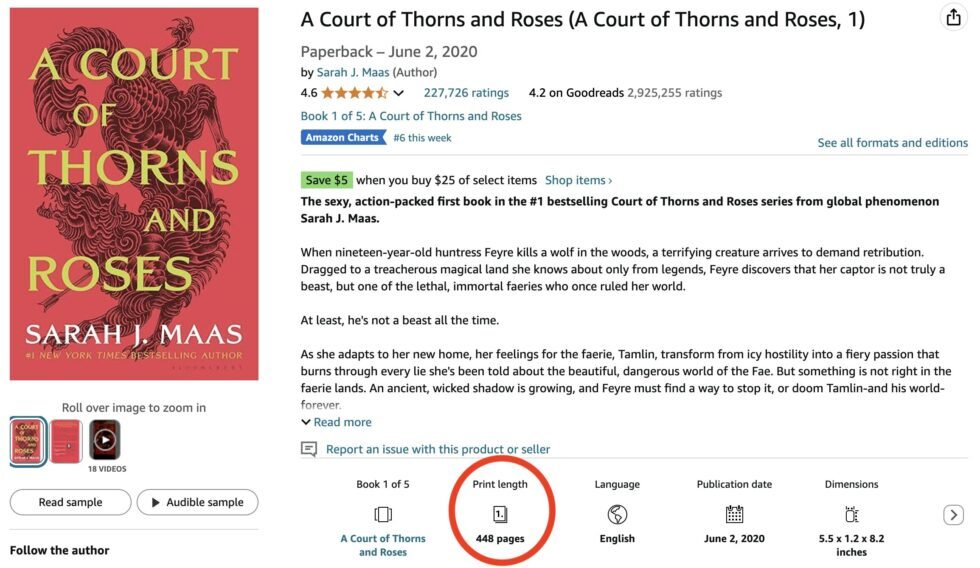
A Court of Thorns and Roses opens at 448 pages, and the series only grows from there. Give yourself room. A dual plot needs the word count to breathe.
How to write a fantasy romance novel, step by step
Here are some romantic fantasy writing techniques to help you write a book that isn't just another typical fantasy romance.
1. Commit to the merged genre
Fantasy romance isn't fantasy with a love interest bolted on, and it isn't romance wearing a costume. Both halves have to be strong enough to stand alone. Decide now, before you outline a single scene, that your fantasy stakes and your romance stakes are equally non-negotiable. This decision shapes your book marketing plan later too. Position the book as pure fantasy when it's really romance-driven, and readers will feel misled.
2. Build your characters before your world
Start with fully fleshed-out protagonists: their core traits, backstory, and what they want outside the relationship. Give each character a distinct magical ability or skill that ties into the world and into their arc, not just window dressing. Then build the emotional landscape: fears, vulnerabilities, and the internal conflict between what they want and what loving this person will cost them.
Readers should never ask, "Why are these two even together?" If you can't answer that in one sentence, go back to character work before you touch plot.
3. Choose a narrative voice and stay in it
First person makes the romance's emotional beats easier to land, but third person works too if you commit to it. Fantasy romance tends toward a slightly more lyrical voice than straight romance, since it's carrying world-building alongside emotion. Pick a voice that matches your world's atmosphere and don't drift from it chapter to chapter.
4. Combine the two plots, don't run them in parallel
The romance and the fantasy plot need to drive each other. The characters' romantic choices should affect the quest, the war, or the curse, and the fantasy stakes should complicate the romance. If you can delete your romance subplot and the fantasy plot still resolves the same way, they aren't combined. They're just sitting next to each other.
5. Write a meet cute that earns the "romance" half of the label
Even in a war-torn magic system, the meeting has to set a romantic tone early. A magical mishap, a fateful clash with a mythical creature, or an enemies-to-lovers first encounter all work. If you want to lean into popular romance tropes, an argument-first meet cute sets up enemies-to-lovers cleanly.
6. Let each plot cover for the other's lulls
When the fantasy plot slows down, deepen the romance. When the romance needs to cool off, let the fantasy plot pick up the pace with action or intrigue. This keeps the pacing tight and is a big part of why fantasy romance reads faster than either genre alone.
7. Separate the lovers
If your leads get everything they want immediately, there's no book. Split them up, whether that's a war, a curse, or a magical barrier, and use the separation to raise the stakes on both plots at once. The anticipation of reunion is what keeps readers turning pages at 1 a.m.
8. Land an ending that resolves both storylines
Fantasy romance readers expect a happy ending (HEA) or a happy-for-now (HFN), the same as any romance. The fantasy plot needs its own resolution too. You don't have to fully close the romance if you're writing a series, but you do need enough resolution that book one feels complete on its own.
Common mistakes to avoid
- Treating the romance as a subplot. If you can cut it without changing the ending, it isn't fantasy romance.
- Under-building the world. Vague magic systems and unclear world rules break reader immersion fast, and this genre's readers notice.
- Skipping the separation beat. Instant, uninterrupted togetherness kills tension.
- Mislabeling the book. Marketing it as straight fantasy when it's really fantasy romance (or the reverse) sets the wrong reader expectations and shows up in your reviews.
5 fantasy romance books worth studying
Read inside the genre before you write it. These five fantasy romance examples are worth studying for craft, not just enjoyment, and reviews are a great place to see exactly what readers loved and hated about the balance between plots.
- A Court of Thorns and Roses by Sarah J. Maas - the genre's benchmark for merging Fae politics with a slow-burn romance.
- From Blood and Ash by Jennifer L. Armentrout - forbidden love with a tightly wound political plot.
- Radiance by Grace Draven - an arranged-marriage romance that earns its emotional payoff through two very different cultures colliding.
- Serpent & Dove by Shelby Mahurin - a forced-proximity marriage plot with real stakes on both the romance and fantasy fronts.
- The Bird and the Sword by Amy Harmon - lyrical prose with a tightly merged magic-and-romance plot.
For a longer list organized by heat level, see our 30 best fantasy romance books roundup.
Frequently asked questions
Is fantasy romance the same as romantasy?
Yes, for practical purposes. Readers and retailers use both terms for the same genre. Some sources draw a technical distinction between fantasy romance and romantic fantasy based on how central the romance is, but the terms are used interchangeably in everyday reader and market conversation.
How long does it take to write a fantasy romance novel?
Given the 90,000 to 120,000 word length, most authors need several months of consistent writing to complete a first draft, plus additional time for revision. Building a believable world alongside a full romance arc takes longer than either genre alone.
Do I need a series, or can fantasy romance be a standalone?
Both work. A standalone needs to resolve the fantasy plot and give the romance a complete HEA or HFN by the last page. A series can leave more of the world's larger conflict open, as long as book one still feels finished.
What's the biggest difference between writing fantasy romance and straight fantasy?
The romance can't be optional. In straight fantasy, a love interest can exist without changing the plot's outcome. In fantasy romance, removing the romance should break the story.
Ready to write your fantasy romance novel?
You've got the structure. selfpublishing.com's Fundamentals of Fiction program pairs you with 1:1 coaching to help you outline, write, and publish your fantasy romance from blank page to bestseller. Book a free strategy call to start today.