










TL;DR: Print on demand books are printed one copy at a time when a reader orders, so you carry no inventory. The major services are free to start. Amazon KDP Print has the lowest printing cost and pays 60% of list price minus printing on books priced $9.99 or above. IngramSpark reaches bookstores and libraries. Most authors should use both.
You've seen the garage. Maybe it was a friend's, maybe a relative's. It had boxes of a book nobody ordered, slowly warping in the heat. That was the old model: gamble a few thousand dollars on a print run and hope.
Print on demand ended that gamble. But it introduced a quieter one, which is that the service you pick quietly decides how much you earn on every single copy for the life of your book. The difference between the best and worst choice on a $16.99 paperback is more than $3 a copy. Over 1,000 sales, that's a used car.
We've helped authors publish over 7,000 books, so we've watched this decision play out thousands of times. Here's the current math, the services that hold up in 2026, and the ones to walk away from.
What are print on demand books?
Print on demand books are printed and shipped individually after a reader orders, so authors carry no inventory, no storage, and no upfront print run.
Traditional book printing works in bulk. You order a pallet, you pay for the whole pallet, and every unsold copy is money sitting on a shelf. Publishers do this because per-unit costs drop sharply at volume, but they're absorbing the risk with a marketing budget behind it.
On demand publishing flips the sequence. Nothing gets printed until money changes hands. A reader clicks buy, a machine prints that one copy, and it ships from the printer to the reader. You never touch it.
The tradeoff is per-copy cost. You'll pay more to print one book than a publisher pays to print 5,000. In exchange, your financial risk on printing drops to zero, which for a first-time author is the trade worth making almost every time.
How on demand publishing actually works
- You upload a print-ready interior PDF and a cover file to a POD platform
- You set a list price and choose your distribution channels
- A reader orders through Amazon, a bookstore, a library, or your own site
- The printer produces that copy and ships it directly to the reader
- The platform deducts printing costs and its cut, then pays you the remainder
Two things people get wrong here. First, print on demand is a printing and distribution method. It does nothing to edit, design, format, or market your book. Second, "royalty" doesn't mean what it does in traditional publishing. You're not being paid a percentage of profit. You're being paid a percentage of list price, minus the printing cost.
Print on demand book printers compared
Six print on demand book services are worth an author's time in 2026: Amazon KDP Print, IngramSpark, Draft2Digital Print, Lulu, Barnes & Noble Press, and BookBaby.
| Service | Cost to start | Print cost, 200pp B&W paperback | What it's genuinely best at |
|---|---|---|---|
| Amazon KDP Print | $0 | ~$3.40 | Lowest print cost, free ISBN, fastest setup, and Amazon is where most books actually sell |
| IngramSpark | $0 (setup fee removed) | ~$4.25 | Distribution to 40,000+ retailers, libraries, and bookstores. Hardcover options KDP doesn't offer |
| Draft2Digital Print | $0 | ~$5.66 | Ingram's reach with a plain 10% commission instead of wholesale discount math |
| Lulu | $0 | ~$5.84 | Specialty formats like photo books, square trims, calendars, comics. Strong print quality |
| Barnes & Noble Press | $0 | Varies | Getting into the B&N ecosystem directly, including in-store event stock |
| BookBaby | $399–$2,190+ packages | ~$6.48 | Done-for-you bundling if you want one invoice and no dashboards |
Print cost estimates reflect a 200-page black-and-white paperback and vary by trim size, page count, and ink.
One thing to know about BookBaby
BookBaby requires a minimum order of 25 copies, which means it isn't true print on demand. It behaves more like a small print run with POD attached. At 25 copies, a 200-page paperback runs roughly $12 per unit. The same book on KDP costs about $3.25.
That's not a scam. It's just a different business model, and the packaging genuinely helps authors who don't want to learn three dashboards. Just go in knowing what the convenience costs.
How much do print on demand books cost?
Starting costs are $0 on most platforms. Your real cost is per-copy printing deducted from every sale, plus platform fees and distribution discounts.
Here's the formula that governs your earnings on Amazon, which is where the majority of self-published print sales happen:
Printing cost = $1.00 + ($0.012 × page count) for black ink, regular trim, on Amazon.com
Royalty = (list price × royalty rate) − printing cost
Run it on a real book. A 300-page paperback priced at $16.99:
Printing: $1.00 + (300 × $0.012) = $4.60
Royalty: ($16.99 × 0.60) − $4.60 = $5.59 per copy
Color changes this dramatically. Premium color runs $1.00 plus $0.065 per page, so that same 300-page book costs $20.50 to print, which forces a list price high enough that most readers won't buy it. If your book needs color on every page, budget accordingly and design for fewer pages.
The KDP royalty change most authors still haven't noticed
On June 10, 2025, Amazon split its print royalty into two tiers for the first time in nearly 20 years. Books priced at $9.99 or above on Amazon.com still earn 60%. Books priced below $9.98 now earn 50%.
The practical effect: pricing a paperback at $8.99 to look competitive now costs you a tenth of every sale and leaves you closer to the printing-cost floor. For most books, $9.99 is now a hard minimum rather than a suggestion.
Expanded Distribution (the channel that pushes your KDP book to other retailers) pays 40%, not 60%. That gap is precisely why many authors run a hybrid setup instead.
5 hidden costs in print on demand book publishing
The advertised price is rarely the real price. Wholesale discounts, revision fees, market access fees, proof copies, and returns all reduce what you keep.
1. The wholesale discount
On IngramSpark you set the discount retailers keep, typically 40% or 55%. Physical bookstores effectively require 55% plus the right to return unsold stock. Set it lower and shops simply won't order. That discount comes out of your side.
2. Market access fees
IngramSpark raised its market access fee from 1.5% to 1.875% of list price on February 1, 2026, and adjusted print costs at the same time. It applies to every title enabled for distribution. Small per copy, real across a backlist.
3. Revision fees
IngramSpark historically charged $25 every time you updated a file after publishing. The policy changed with the February 2026 rate card and now includes a grace window. KDP charges nothing for unlimited revisions. Either way, the lesson holds: proofread before you upload, not after.
4. Proof copies and author copies
Order a physical proof before you approve anything. Screen previews hide spine alignment problems, trim creep, and color shifts. A $10 proof copy has saved more launches than any piece of software.
5. Returns
If you enable returnability to get bookstore orders, unsold copies can come back, and you absorb the cost. It's worth doing for a launch push, and worth reviewing afterward.
How to choose the right print on demand option
Start with where your readers buy. If that's Amazon, start with KDP. If bookstores and libraries matter, add IngramSpark.
Use Amazon KDP Print if you…
- Are publishing your first book and want the shortest path to a live listing
- Expect most sales to come from Amazon, which is true for the large majority of indie authors
- Want the lowest printing cost and therefore the highest margin per copy
- Don't have your own ISBN and would rather take the free one
Add IngramSpark if you…
- Want bookstores, libraries, or schools to be able to order your book
- Are speaking, selling at events, or building authority where a bookstore presence matters
- Want hardcover options, including jacketed hardcovers
- Own your ISBN and want control of your metadata across every retailer
Consider Lulu or Draft2Digital if you…
- Are publishing a photo book, a square trim, a comic, or another specialty format (Lulu)
- Want Ingram's reach without learning wholesale discount math, and prefer a flat 10% commission (Draft2Digital)
The hybrid setup most working authors land on
Publish the Amazon paperback and Kindle edition through KDP. Publish the hardcover and wide distribution through IngramSpark with your own ISBN. You get KDP's margin where most of your sales happen, and Ingram's reach everywhere else, without letting Expanded Distribution's 40% rate eat your Amazon earnings.
Set this up in the right order (KDP first, then IngramSpark, with distinct ISBNs per format) or you'll create duplicate listings that split your reviews. Our IngramSpark guide walks through the sequence.
What print on demand doesn’t do
Print on demand solves printing and distribution. It does nothing for the quality of the book or whether anyone finds it.
This is where the garage full of books gets replaced by a quieter failure: a book that's live on Amazon, technically available worldwide, and selling four copies a month to people who already knew you.
POD is plumbing. It doesn't tell you whether your structure holds, whether the cover signals the right genre, whether your categories and keywords put you in front of buyers, or whether your launch generates enough early velocity for the algorithm to keep showing your book.
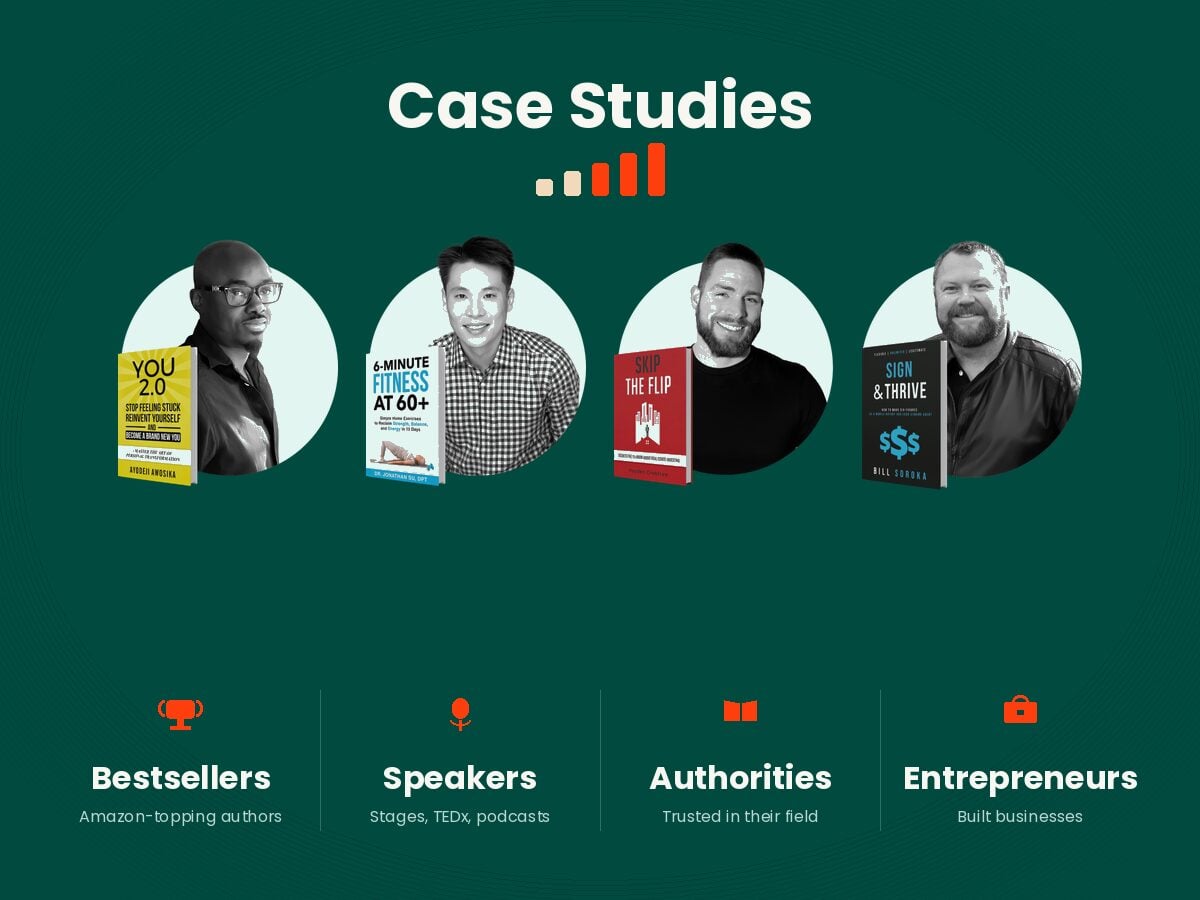
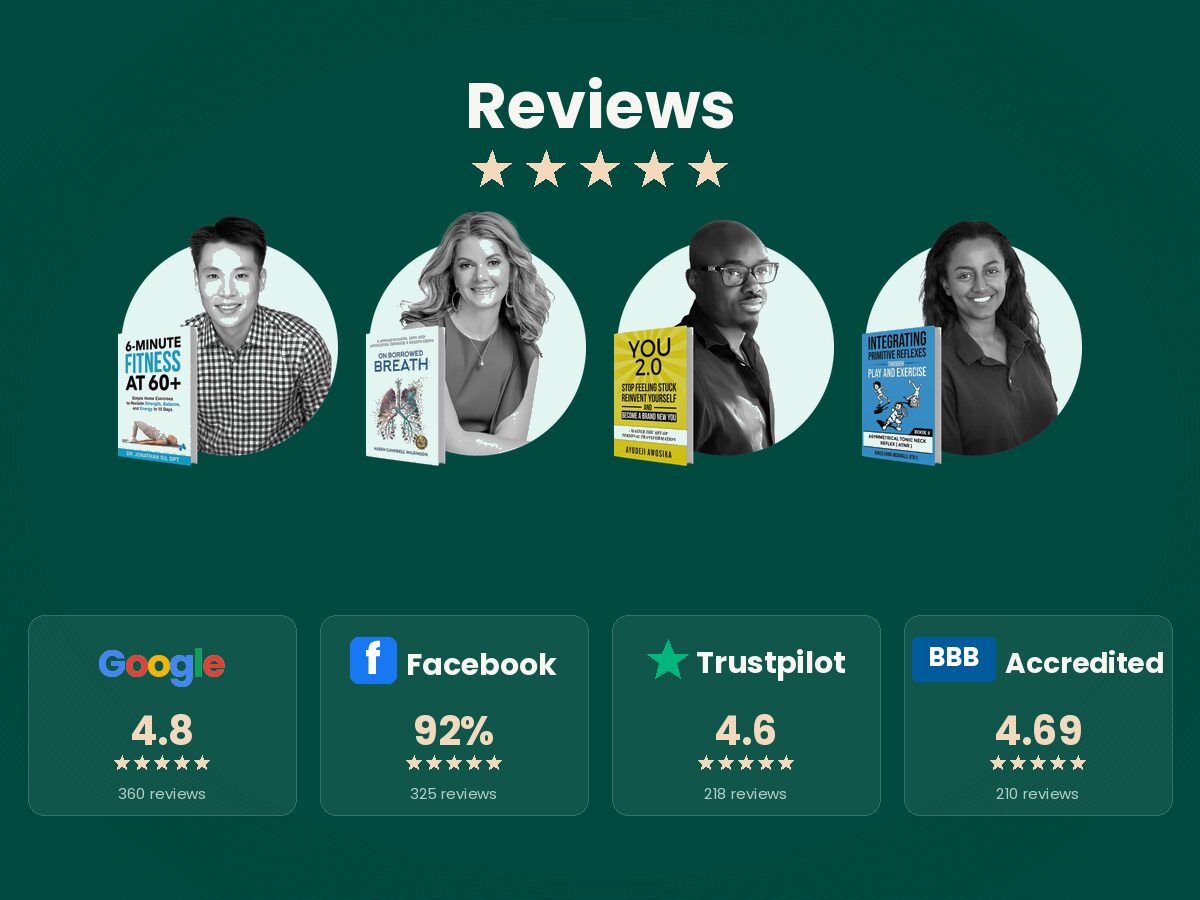
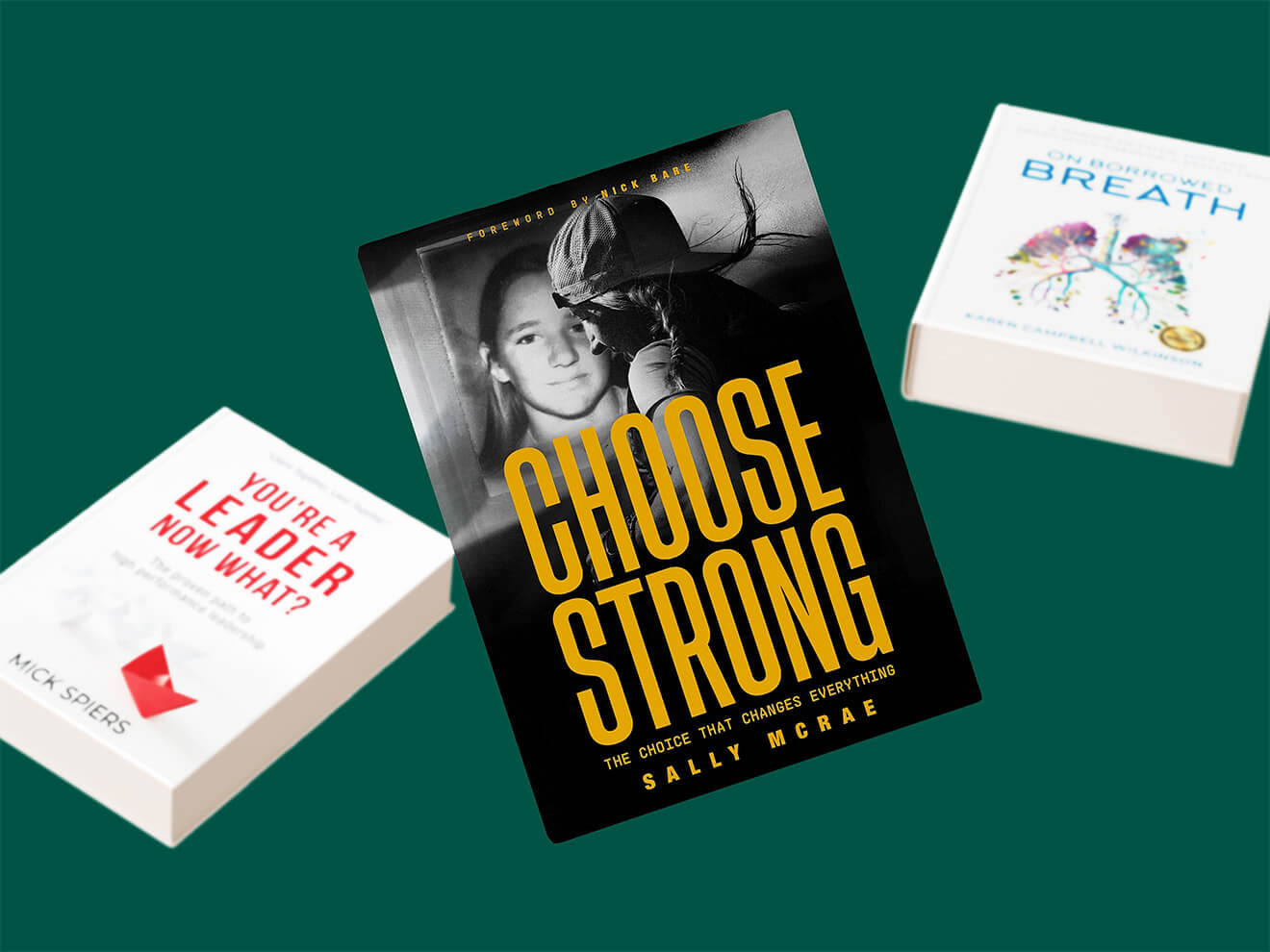
Those are the decisions that separate a published book from a selling one, and they're the ones our authors get coaching on. Mike Acker's Speak with No Fear sold more than 40,000 copies and led to a traditional deal with Wiley. Karen Campbell Wilkinson's book turned into 100+ speaking engagements and a coaching business. Both were print on demand. Neither result came from the printer.
Your book is closer than you think
We handle the production work (editing, cover design, formatting, Amazon upload, categories and keywords, and the launch) alongside 1:1 coaching. Tell us about your book and we'll help to build you a custom plan. Schedule a free consult.
Frequently asked questions
What are print on demand books?
Print on demand books are printed individually after a reader places an order, then shipped directly to them. The author carries no inventory, pays no upfront print run, and has printing costs deducted from each sale instead.
How much does book printing on demand cost?
Most platforms are free to start. Printing a 200-page black-and-white paperback costs roughly $3.40 on Amazon KDP, $4.25 on IngramSpark, $5.66 on Draft2Digital, $5.84 on Lulu, and $6.48 on BookBaby. That cost comes out of each sale.
What are the best print on demand book printers?
Amazon KDP Print for the lowest cost and highest volume, IngramSpark for bookstore and library distribution, Lulu for specialty formats, Draft2Digital for simplified Ingram access, Barnes & Noble Press for the B&N ecosystem, and BookBaby for done-for-you packages.
How much do authors earn per print on demand book?
On Amazon, you earn 60% of list price minus printing cost for books priced $9.99 or above, and 50% for books priced below that. A 300-page paperback at $16.99 costs $4.60 to print and earns roughly $5.59 per copy.
Is print on demand cheaper than traditional printing?
Per copy, no. Bulk printing is far cheaper at volume. Overall, yes for most authors, because print on demand eliminates upfront cost, storage, and the risk of unsold inventory entirely.
Can print on demand books get into bookstores?
Yes, but it takes deliberate setup. Use IngramSpark, set a 55% wholesale discount, and enable returnability. Bookstores rarely order titles that don't meet both conditions, and they're reluctant to buy from Amazon as a competitor.
Do I need my own ISBN for print on demand book publishing?
Not for KDP, which provides a free ISBN tied to that edition. You do need your own if you want to control metadata across retailers or publish the same edition through multiple platforms. Each format needs its own ISBN.
Which print on demand book services should I avoid?
Avoid any company charging thousands upfront to publish. That includes Author Solutions imprints such as Trafford, AuthorHouse, iUniverse, and Xlibris. Legitimate print on demand book services are free to join and earn when your book sells.