












TL;DR: A professional short bio is a 50–200 word snapshot of your expertise, credentials, and brand, written to establish credibility and invite your audience to engage further. The most effective bios lead with your strongest credential, speak directly to your target audience, and end with a clear next step. The five real-world examples below—from Whitney Johnson to Amy Porterfield—show exactly how high-profile experts structure theirs, with analysis you can apply immediately.
Why Most Professional Bios Fall Flat
Most people write their professional bio like a resume summary. They list titles, degrees, and years of experience in chronological order and produce something that's technically accurate and completely forgettable.
A professional bio isn't a record of where you've been. It's a pitch for why someone should trust, follow, or hire you right now. That distinction changes everything about how it should be written.
The five examples in this post are from people who have figured this out. They've distilled years of expertise into tight, engaging paragraphs that do three things: establish authority, communicate personality, and make the reader want more.
If you're building a personal brand, positioning yourself as an expert, or writing a book to grow your business, your professional bio is one of the highest-leverage pieces of writing you'll produce. Get it right and it works across every platform, your website, podcast guest introductions, speaking engagements, social media profiles, and media outreach.
What Is a Professional Short Bio?
A professional short bio is a concise, curated summary of your expertise, accomplishments, and brand (typically 50–250 words) designed to establish credibility and give your audience a clear reason to engage with you further.
It differs from an author bio in scope. An author bio speaks specifically to readers of a book, while a professional bio is a broader statement of who you are and what you offer across your entire brand. It differs from an About the Author page in that it's designed for external use, websites, conference programs, press kits, social profiles, rather than the back of a single book.
You'll need different versions for different contexts:
| Version | Word Count | Used For |
| Twitter/X bio | 15–30 words | Social media profile |
| Instagram bio | 30–50 words | Social media profile |
| Speaker intro | 75–100 words | Conference programs, podcast intros |
| Short bio | 100–200 words | Website, LinkedIn, press kit |
| Full bio | 250–400 words | LinkedIn, full website About page |
The most efficient approach: write your full bio first (up to 400 words), then cut it down to each shorter version. It's far easier to trim than to expand.
How to Write a Professional Short Bio
Write your professional bio by starting with your strongest credential, speaking directly to your target audience's interests, adding 2–3 specific accomplishments, and closing with a next step or humanizing personal detail.
Here's the step-by-step process:
Step 1: Start with Prewriting
Before you write a single sentence, gather the raw material:
- What do you do, and for whom?
- What products, services, or books do you offer?
- What are your top 3–5 credentials (awards, publications, organizations, media mentions)?
- What specific results have you achieved — numbers, scale, named clients?
- What do you want the reader to do after reading this bio?
Don't edit during this phase. Get everything on the page first.
Step 2: Define Your Audience
The single biggest mistake in bio writing is writing for everyone. A bio for a neuroscience professor's Stanford page should read differently from a bio for a brand design consultant's LinkedIn — even if both are the same person.
Ask: Who will be reading this specific bio, and what do they need to believe about me before they'll take action?
Step 3: Build the 5-Paragraph Full Bio
Use this structure as your scaffold:
- Introduction (1 paragraph)—Your current title, role, and the clearest statement of what you do and for whom. Establish the frame immediately
- Body Paragraph 1 (accomplishments)—Your most impressive, specific, verifiable credentials: named awards, media mentions, books, client names, data points
- Body Paragraph 2 (methodology or mission)—What drives your work. The "why" behind your expertise that differentiates you from others in your field
- Body—Paragraph 3 (backstory or additional credibility)—Relevant experience that deepens your authority: previous roles, education, career history that feeds directly into what you do now
- Conclusion (1 paragraph)—Where you're going and how readers can follow: your vision, your next project, and a next step (website, newsletter, social media)
Step 4: Cut to the Right Length
Once you have the full bio, trim it to the version you need. Cut in this order:
- Remove all career history that doesn't directly support your current positioning
- Collapse specific accomplishments into their most impressive summary
- Trim adjectives and replace them with specific nouns and numbers
- Cut the conclusion to a single sentence + CTA
First Person vs. Third Person
Third person (she/he/they) is standard for formal contexts, such as press kits, conference programs, author media kits, book back matter. It reads as more authoritative and can be quoted directly by journalists.
First person (I) is increasingly common for LinkedIn profiles and personal website About pages, where it creates a warmer, more direct connection. Choose the person that matches the platform's expectations, and stay consistent within each version.
5 Short Bio Examples (With Analysis)
1. Whitney Johnson—Leadership Training (372 words full / 188 words short)
Industry: Leadership development | Offers: Coaching, books, keynotes, workshops
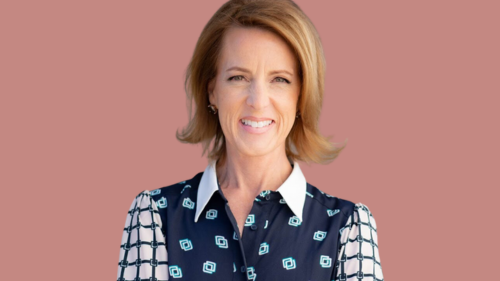
Short bio: "Whitney Johnson, CEO and Co-Founder of Disruption Advisors, is a world-class coach globally recognized thought leader, author, keynote speaker, and consultant helping organizations operationalize a high-growth mindset in their leaders and teams. Whitney is the WSJ, USA Today, and Amazon bestselling author of Smart Growth… She is ranked a top talent coach by Marshall Goldsmith 100 Coaches, recognized by Thinkers50 as one of the top 10 leading business thinkers in the world…"
What makes it work: Whitney's bio demonstrates exactly how to scale down from a 372-word full bio to a 188-word short version without losing impact. The full LinkedIn bio includes her Wall Street analyst background, specific stock tickers, and investment fund details. The short version strips all of that and leads with titles and current positioning. Every retained credential is the strongest of its kind: WSJ bestselling author, top 10 business thinkers globally, top talent coach. Nothing survives the cut unless it's the most impressive version of a claim.
Key technique to borrow: Maintain parallel versions at different lengths and update them simultaneously. Whitney has even shorter versions for YouTube and X (Twitter)—a single sentence each. Decide where each version lives before you write it.
Full bio (source) | Short bio (source)
2. Tiffany Dufu—Peer Coaching & Women's Leadership (third person)
Industry: Peer coaching, women's leadership | Offers: Books, public speaking
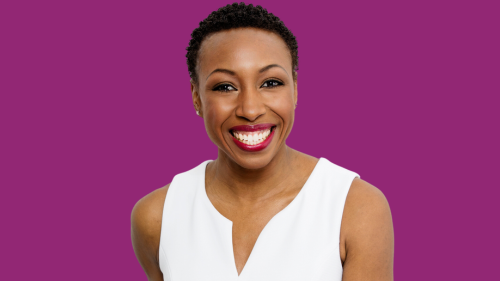
Short bio: "Tiffany Dufu is President of the Tory Burch Foundation, which empowers women entrepreneurs by providing access to capital, education, and community. She's the author of the bestselling book Drop the Ball: Achieving More by Doing Less... Named to Entrepreneur's 100 Powerful Women and Fast Company's League of Extraordinary Women, Tiffany has raised over $25 million toward the cause of women and girls. She's the founder of The Cru, a peer coaching tech company that was acquired by Luminary in 2023... Her writing has appeared in The Oprah Magazine, ESSENCE, and the New York Times."
What makes it work: Tiffany's updated bio leads with her current role—President of the Tory Burch Foundation—which is a more prominent and immediately recognizable platform than her previous opener (founder of The Cru). Her bio has also evolved to reflect her full arc: founder → acquisition → foundation president. That trajectory communicates that she consistently builds at a higher level. The fundraising figure has grown too, from $20 million to over $25 million—a small but important update. Stale numbers signal a stale brand. The addition of her writing credits (Oprah Magazine, ESSENCE, New York Times) layers in media authority alongside the business credentials.
Key technique to borrow: When your role changes, reorder the entire bio, don't just swap one line. Tiffany's current role (foundation president) is more powerful than her founding story, so it now leads. Your most impressive current credential always belongs first, regardless of chronology.
Short Bio (source)
3. Chris Do—Brand Design & Creative Entrepreneurship (123 words, first person)
Industry: Brand design | Offers: Public speaking, courses, workshops
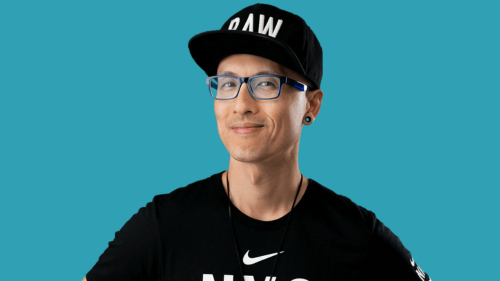
Short bio: "As the Founder and CEO of The Futur, I have over 27 years of experience in brand design, strategy, and consultancy, working with clients such as Microsoft, Sony, Nike, and Starbucks. I am passionate about helping people realize their value and communicate it to others… My mission is to empower the next generation of creative entrepreneurs and leaders to achieve their full potential."
What makes it work: Chris uses first person throughout, unusual for a formal bio, but it works here because his brand is built on directness and accessibility. The named clients (Microsoft, Sony, Nike, Starbucks) in the opening sentence do most of the credibility work: there's no need to explain what he does after those four names. His mission statement at the close ("empower the next generation") elevates the bio beyond a credential list into a statement of purpose, which is exactly the kind of copy that resonates with the creative audience he serves.
Key technique to borrow: Name-drop your most impressive clients in the first or second sentence. If you've worked with recognizable organizations or individuals, that's stronger credibility than almost any award.
Short Bio (source)
4. Andrew Huberman, Ph.D—Neuroscience & Health (third person)
Industry: Neuroscience | Offers: Public speaking, podcast, upcoming book
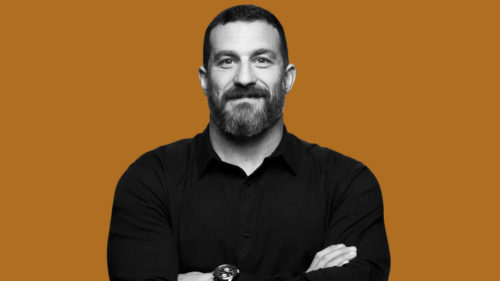
Short bio: "Andrew Huberman, Ph.D., is a neuroscientist and tenured professor in the Departments of Neurobiology and Ophthalmology at Stanford University School of Medicine. His Huberman Lab has published over 75 peer-reviewed articles in top journals including Nature, Science, Cell, and Neuron, and has made significant contributions to our understanding of brain development, visual perception, stress and resilience, and neural plasticity. In 2021, he launched the Huberman Lab podcast, which quickly became and remains the most popular health and science podcast in the world, consistently ranking #1 in science and education and in the top 10 of all podcasts. He is the author of the upcoming book Protocols: An Operating Manual for the Human Body. Work from the Huberman Lab has been featured in TIME, BBC, Scientific American, and Discover."
What makes it work: For an academic-to-mainstream crossover figure, Huberman's bio must satisfy two distinct audiences simultaneously—the scientific community (who need his Stanford tenure, lab publications, and journal credentials) and the general public (who need reassurance that he's legitimate without wading through academic jargon). He threads this precisely: the department affiliations and 75+ peer-reviewed articles establish hard institutional authority, while the podcast ranking ("the most popular health and science podcast in the world") signals that his work has cleared the public credibility test too.
The upcoming book Protocols is worth noting as a bio update lesson: the moment a book deal is announced or a release date is set, it belongs in every version of your bio. It signals momentum; that you're building, not coasting. The co-founder credit for Scicomm Media (which also produces Perform with Dr. Andy Galpin and David Senra's podcast) quietly signals entrepreneurial range beyond the lab.
Notice what remains absent throughout: any self-descriptive adjectives. No "world-renowned," no "leading expert." Every claim is externally validated: ranked, published, featured, awarded. This is the right call for any author or expert whose institutional affiliations are strong enough to do the heavy lifting.
Key technique to borrow: If your credentials are strong, let them speak. Strip all self-assigned superlatives and replace them with verifiable external validations: published in, ranked by, featured in, awarded by. And if you have a book coming, even pre-publication, put it in the bio now.
Short Bio (source)
5. Amy Porterfield—Online Marketing & Entrepreneurship (third person)
Industry: Digital entrepreneurship | Offers: Courses, podcast, NYT bestselling book, speaking
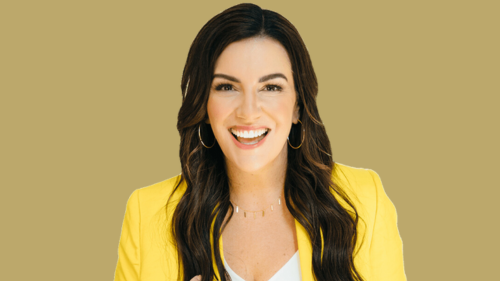
Short bio: "Amy Porterfield helps women entrepreneurs grow from six to seven figures using clear systems and proven marketing strategies designed for long-term sustainability. Her work emphasizes simplicity, consistency, and building businesses that grow without burnout. Over the past 16 years, Amy has generated more than $130 million in revenue and supported 100,000+ students through her signature programs. She is a New York Times bestselling author of Two Weeks Notice and the host of the chart-topping podcast The Amy Porterfield Show, where she teaches actionable strategies for women growing from six to seven figures. Amy's work has been featured in Forbes, Entrepreneur, Business Insider, Fast Company, MSNBC, Inc. 5000, and more."
What makes it work: Amy's updated bio is a textbook example of strategic repositioning. Her earlier bio focused on general digital entrepreneurship (email lists, digital courses, webinars). This version narrows sharply to a specific audience (women entrepreneurs) and a specific transformation (six to seven figures). That precision makes the bio far more magnetic to exactly the right reader, and less relevant to everyone else, which is exactly the point.
The scale metrics do the heavy lifting on credibility: $130 million in revenue over 16 years and 100,000+ students are numbers that require no editorial comment. The NYT bestseller credential and the named media outlets (Forbes, Entrepreneur, Fast Company, MSNBC) provide external validation that stacks on top of the raw numbers. The CTA—her newsletter—points to the lowest-friction entry into her world.
Notice also that this bio dropped the podcast name change gracefully: the old bio referenced Online Marketing Made Easy; the current bio reflects the rebrand to The Amy Porterfield Show. This is why keeping your bio current matters—an outdated platform name signals to a savvy reader that the rest of the information may be stale too.
Key technique to borrow: Narrow your audience as specifically as you can without excluding people you actually serve. "Women entrepreneurs growing from six to seven figures" is more compelling than "entrepreneurs," and it's still a massive audience. Specificity signals mastery. And if your brand has evolved (new book, new niche, new platform name), update every version of your bio simultaneously. For authorpreneurs especially, a NYT bestseller credential belongs in sentence one, every time.
Short Bio (source)
Short Bio Templates You Can Use Right Now
Template 1: The Credential-First Bio (Best for academics, executives, nonfiction authors)
[Name] is a [title] at/of [organization], specializing in [specific area]. [He/She/They] has [most impressive credential: award, publication, scale metric]. [His/Her/Their] work has [specific measurable outcome or external validation]. [Name] is also the author of [book title] and speaks regularly on [topic]. [Personal closing sentence]. Learn more at [URL].
Template 2: The Mission-First Bio (Best for coaches, consultants, personal brand builders)
[Name] helps [specific audience] achieve [specific outcome]. As [title/founder of X], [he/she/they] has [most relevant credential or result]. [Second credential or client/media name-drop]. [Name]'s [book/podcast/course] reaches [scale metric] and focuses on [topic]. [Personal detail]. [CTA: website or newsletter].
Template 3: The Story-Led Bio (Best for fiction authors, speakers, thought leaders with a compelling origin)
[Name] didn't set out to become a [role]. [Brief origin story — 1 sentence]. Today, [he/she/they is/are] [title and current work]. [Most impressive credential or publication]. [Personal detail that connects to the work]. [CTA: where to find more].
What the Best Short Bios Have in Common
After studying these five examples alongside hundreds of others, the patterns are consistent:
They open with the strongest available credential—not the earliest. Don't start with where you went to college. Start with the result of everything that came after. Whitney Johnson opens with her world-class status, not her Wall Street origins.
Every claim is specific and verifiable. "Top business thinker" is forgettable. "Recognized by Thinkers50 as one of the top 10 business thinkers in the world" is citable. The difference is specificity. Numbers, named organizations, and external recognitions carry weight that self-assigned adjectives never will.
They speak to one audience, not all audiences. The best bios feel written for a specific reader. Amy Porterfield's updated bio is a masterclass in this: she narrowed from "entrepreneurs" to "women entrepreneurs growing from six to seven figures." That precision makes the bio more magnetic to the right reader, not less appealing overall.
They have personality without sacrificing professionalism. Even Andrew Huberman's densely academic bio closes with a note about his co-founded media company and investment activity—a nod to the entrepreneurial side of his brand that resonates with his audience.
They end with a clear next step. Every strong bio points somewhere: a podcast, a website, a book, a newsletter. Don't leave readers at the end of a bio with nowhere to go.
Common Short Bio Mistakes to Avoid
Writing in chronological order. Your bio is not your LinkedIn timeline. Lead with where you are and what you've achieved, not where you started.
Using generic superlatives. "Passionate," "dedicated," "innovative," and "world-class" (when self-assigned) carry no weight. Replace every adjective with a specific noun or number.
Not updating it regularly. A bio that references a book from 2019 as your latest release signals you've stopped moving. Update every time you hit a new milestone: a new book, a major media mention, a significant audience milestone.
One size for every context. Your LinkedIn bio, conference bio, author media kit bio, and social profiles should each be tailored to their context and audience, not copied from a single source.
Burying the most impressive thing. If you're a New York Times bestselling author with 25 million books sold, that belongs in sentence one, not paragraph three.
Frequently Asked Questions
What is a professional short bio? A professional short bio is a 50–250 word summary of your expertise, credentials, and brand identity—designed to establish credibility and direct your audience toward the next step in your relationship with them. It's distinct from a resume in that it emphasizes positioning and personality, not just chronology.
How do you write a short bio about yourself? Start with prewriting: gather all your credentials, clients, publications, and accomplishments without editing. Then identify your target audience, lead with your strongest relevant credential, add 2–3 specific supporting accomplishments, and close with a next step. Write the full version first (up to 400 words), then cut to the length you need.
Should a professional bio be written in first or third person? Third person (he/she/they) is standard for press kits, book back matter, and conference programs—it can be quoted directly by journalists and hosts. First person (I) is increasingly common for LinkedIn and personal website About pages, where it creates a more direct, conversational tone. Match the convention of the platform.
How long should a professional bio be? It depends on the context. Social media bios run 15–50 words. Speaker introductions and conference bios run 75–150 words. Website and LinkedIn bios run 150–250 words. Full bios for press kits or LinkedIn can run up to 400 words. Maintain a version for each context.
What's the difference between a professional bio and an author bio? An author bio speaks specifically to readers of a book—it appears in the back matter or on a book's Amazon page and focuses on credentials relevant to that specific work. A professional bio is a broader brand statement used across multiple platforms and contexts. Most authors need both, tailored separately.
Can I use my professional bio as my About the Author page? Not directly. Your About the Author page is written specifically for readers who just finished your book, it's tailored to that audience and ends with a book-specific CTA. Your professional bio is a standalone document for external use. They'll share material but should each be written for their specific context.
Use Your Bio as the Foundation of a Bigger Platform
A well-crafted bio is the starting point, not the destination. The authors and experts featured in this post don't just have great bios. They have books, podcasts, courses, email lists, and speaking careers built on top of a clear, consistent brand identity.
If you're an expert with knowledge worth sharing, a book is one of the most powerful ways to establish that authority permanently. It's the credential that no one can take away, and one of the most effective lead magnets for building an audience that compounds over time.
The selfpublishing.com team has helped 7,000+ experts, coaches, and entrepreneurs write a book to grow their business, from the first outline to launch day. If you're ready to take that step, schedule a free strategy call and let's talk about your book.
Last updated: April 2026