

















TL;DR
Juxtaposition in literature is the placement of two contrasting elements close together so their differences sharpen each other. It's a literary device, and it works on characters, settings, time, tone, imagery, and individual words. Writers use it to build theme, create irony, and make a reader feel a contrast rather than be told about it.
There's a reason the opening line of A Tale of Two Cities is the most quoted sentence in English literature and not, say, the second line.
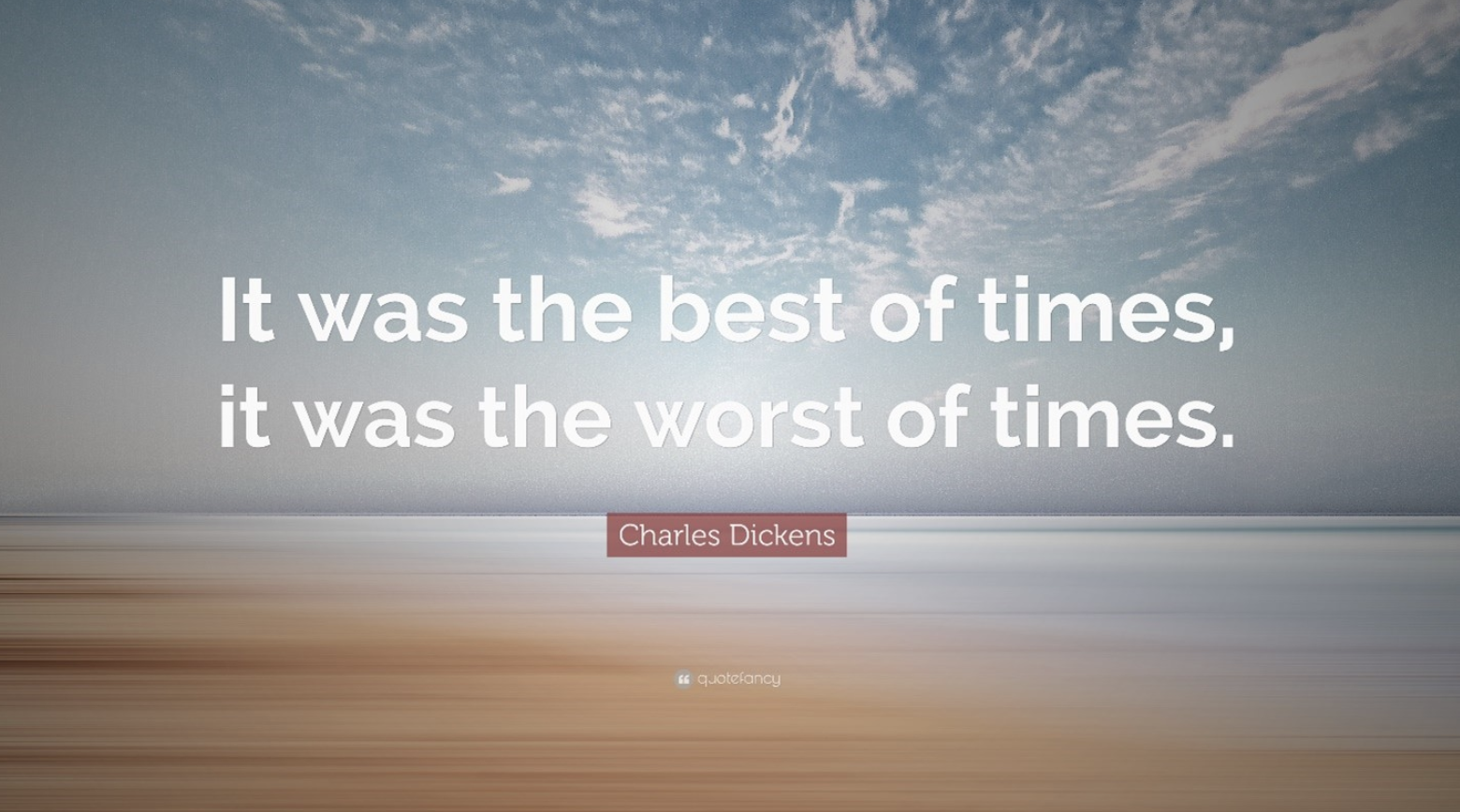
"It was the best of times, it was the worst of times."
Dickens doesn't explain the French Revolution. He puts two opposites side by side and lets the collision do the work. That's juxtaposition, and it's the difference between a story that tells you what to think and one that makes you feel it.
The problem is that most authors use juxtaposition by accident. They stumble into a good contrast in a first draft, never notice it, and never sharpen it. This guide covers what juxtaposition in literature actually is, the six types you can use deliberately, 15 examples worth studying, and how it differs from the four devices it gets confused with constantly.
What is juxtaposition in literature?
Juxtaposition is the placement of two or more contrasting elements near each other so the reader compares them and each one appears sharper.
The word comes from the Latin juxta ("beside") and the French position. That's the whole mechanic: put things beside each other. Proximity is the entire technique.
The elements can be almost anything. They can be two characters, two settings, two timelines, two images, two words in the same sentence. What matters is that the reader encounters them close enough together to register the contrast.
Here's the part most definitions leave out. Juxtaposition doesn't require opposites. Contrast is the common use, but placing two similar things side by side to reveal an unsettling likeness is also juxtaposition, and often the more sophisticated move. When a hero and a villain turn out to want the same thing, that's juxtaposition doing its best work.
Juxtaposition is a technique of proximity, not a technique of contrast
This distinction matters when you're editing. If two contrasting things sit 200 pages apart, the reader won't connect them. The device lives in the arrangement, which means juxtaposition is often fixed in revision rather than drafting. You move a scene, and suddenly it means something.
Is juxtaposition a literary device?
Yes. Juxtaposition is a literary device, and it's one of the broadest. Several other devices are specific forms of it.
It's more accurate to call it a structural device than a figure of speech. Metaphor and simile operate inside a sentence. Juxtaposition operates at any scale: two words, two paragraphs, two chapters, or the architecture of an entire novel.
That breadth is why the juxtaposition literary device gets confused with so many others. Oxymoron, antithesis, and the character foil are all juxtaposition applied at a particular level, with particular rules. There's a full comparison table below.
Why do authors use juxtaposition?
To create meaning the reader assembles themselves, which lands harder than meaning the author states outright.
Five specific jobs it does well:
- Sharpens character. A patient character next to an impatient one makes both traits visible without a single line of description.
- Builds theme without stating it. Put wealth beside poverty often enough and the reader draws the conclusion. You never have to write the thesis.
- Creates irony. Most irony is a juxtaposition of expectation and outcome, placed close enough for the gap to show.
- Controls emotional intensity. A quiet scene before a violent one makes the violence louder. Contrast is how you manage a reader's pulse.
- Compresses exposition. Showing two worlds back to back explains a social order faster than a chapter of history.
The 6 different types of juxtaposition
Juxtaposition works at 6 levels: character, setting, temporal, tonal, linguistic, and thematic. Most novels use several at once.
1. Character juxtaposition
Two characters placed together so their traits define each other. This is the most common type, and when one character exists mainly to illuminate another, that character is a foil.
Darcy and Bingley in Pride and Prejudice are the cleanest example in English fiction. Darcy is reserved, proud, and socially clumsy. Bingley is warm, open, and eager to please. Neither trait would register as strongly without the other standing next to it.
2. Setting juxtaposition
Two places contrasted to carry an argument about the world of the story.
In The Hunger Games, District 12 is grey, coal-dusted, and hungry. The Capitol is saturated with color, food, and cosmetic excess. Suzanne Collins never has to write an essay about wealth inequality. The reader travels between the two settings and reaches the conclusion unassisted.
3. Temporal juxtaposition
Two timelines cut against each other so the reader reads them simultaneously.
Gone Girl alternates Nick's present-day narration with Amy's diary entries from the early years of their marriage. The hopeful past sits directly beside the poisonous present, and the friction between them is most of the book's tension before the twist reframes both.
4. Tonal juxtaposition
A sudden shift in mood or register, placed for impact.
Comedy immediately before tragedy is the oldest version. Shakespeare puts the Porter's drunken joking in Macbeth directly after Duncan's murder. It's a scene that has puzzled readers for 400 years and works precisely because it's so wrong for the moment.
5. Linguistic juxtaposition
Contrast at the level of words and syntax. This is where juxtaposition overlaps with oxymoron and antithesis.
Milton's "darkness visible" in Paradise Lost puts two words together that cancel each other, and the collision produces an image nothing else could. Blake's Songs of Innocence and of Experience runs the technique across a whole collection, pairing "The Lamb" against "The Tyger."
6. Thematic juxtaposition
Two ideas held in tension across the whole work. Civilization against savagery, freedom against safety, love against duty.
Heart of Darkness is built on one: Conrad places European "civilization" beside what it actually does in the Congo, and the contrast is the entire argument of the book.
15 juxtaposition examples in literature
| Work | The juxtaposition | Type |
|---|---|---|
| A Tale of Two Cities — Dickens | "It was the best of times, it was the worst of times" | Linguistic |
| Macbeth — Shakespeare | "Fair is foul, and foul is fair" | Linguistic |
| Macbeth — Shakespeare | The Porter's comedy directly after Duncan's murder | Tonal |
| Romeo and Juliet — Shakespeare | Impulsive Romeo against level-headed Mercutio | Character |
| Paradise Lost — Milton | Heaven and Hell as mirrored architectures; "darkness visible" | Setting, linguistic |
| Pride and Prejudice — Austen | Reserved Darcy against warm Bingley | Character |
| Frankenstein — Shelley | The creature's eloquent speech against his monstrous appearance | Character |
| The Great Gatsby — Fitzgerald | The Valley of Ashes against the mansions of West Egg | Setting |
| Heart of Darkness — Conrad | European civilization against colonial brutality | Thematic |
| The Lamb / The Tyger — Blake | Innocence and experience as paired poems | Thematic |
| Of Mice and Men — Steinbeck | Small, sharp George beside large, gentle Lennie | Character |
| 1984 — Orwell | The Ministry of Truth, which manufactures lies | Linguistic, thematic |
| The Hunger Games — Collins | District 12 against the Capitol | Setting |
| Gone Girl — Flynn | Nick's present narration against Amy's diaries | Temporal |
| The Road — McCarthy | Tenderness between father and son inside total devastation | Tonal, thematic |
Juxtaposition in poetry
Poetry uses juxtaposition more densely than prose because compression is the form's whole advantage.
Robert Frost's "Fire and Ice" sets two ways for the world to end against each other in 9 lines, and the poem is nothing but that contrast. Blake's paired Songs work at collection scale. Imagist poets built entire poems out of two images set beside each other with no connective explanation at all. The reader supplies the relationship.
The lesson for prose authors: poetry proves you can delete the sentence that explains the contrast. The contrast explains itself.
Juxtaposition vs. oxymoron, antithesis, paradox, foil, and irony
Juxtaposition is the umbrella. Oxymoron, antithesis, and foil are juxtaposition applied at a specific level with specific rules.
This is the single most confused set of terms in literary analysis, so here it is straight:
| Device | What it is | Example | Relationship to juxtaposition |
|---|---|---|---|
| Juxtaposition | Any two elements placed close together for comparison | District 12 and the Capitol | The parent category |
| Oxymoron | Two contradictory words directly adjacent | "Darkness visible" | Juxtaposition compressed to 2 words |
| Antithesis | Contrasting ideas in balanced, parallel grammar | "It was the best of times, it was the worst of times" | Juxtaposition plus parallel syntax |
| Foil | A character whose traits illuminate another character | Bingley to Darcy | Juxtaposition applied to characters |
| Paradox | A statement that seems self-contradictory but reveals a truth | "I must be cruel to be kind" | Related, but its job is revelation, not comparison |
| Irony | A gap between expectation and reality | The Ministry of Truth | Often the result of juxtaposition, not a type of it |
Two quick tests. If it's two words touching, it's an oxymoron. If it's two clauses in matching grammar, it's antithesis. If it's bigger than a sentence, call it juxtaposition.
And one correction worth making: a foil is not the same as an antagonist. A foil can be a best friend, a sibling, or a love interest. Bingley is Darcy's foil and also his closest friend.
How to use juxtaposition in your writing
Choose the two elements, define what the contrast should mean, place them close enough to register, then check the reader actually sees it.
1. Find the juxtapositions you already wrote
Start here, not with invention. First drafts are full of accidental contrasts. Read through and mark every place two things sit near each other in tension. Sharpening an existing one always reads more naturally than bolting on a new one.
2. Name what the contrast is supposed to do
Write it in one sentence: this scene sits next to that one so the reader feels how much he's lost. If you can't finish that sentence, you have a contrast without a purpose, and readers will invent a meaning you didn't intend.
3. Close the distance
Juxtaposition fails most often because the two elements are too far apart. Move them into adjacent chapters, adjacent scenes, or the same page. Proximity is the device.
4. Cut the sentence that explains it
Once the contrast is on the page, find the line where you explain what it means and delete it. That line is the most common way authors kill their own juxtaposition. Trust the reader to do the work. That's the entire point of using the device instead of exposition.
5. Test it on a reader who doesn't know your intentions
Ask one question: "What did you take from those two chapters together?" If the answer isn't close to what you wrote in step 2, the juxtaposition isn't landing yet.
4 mistakes to avoid
- Using it constantly. If every scene contrasts the one before it, the pattern becomes the noise instead of the signal. Contrast only reads as contrast against a baseline.
- Contrast with no purpose. Two opposing things placed together for no reason read as a failed attempt at cleverness.
- Forcing it. A manufactured juxtaposition sticks out the way a manufactured metaphor does. It reminds the reader they're reading, and immersion is expensive to rebuild.
- Explaining it. The most common one. You built a contrast that works, then wrote a paragraph telling the reader what it means. Delete the paragraph.
Where this fits in your book
Juxtaposition is one of those devices that separates a competent draft from a book people recommend. It costs nothing to use (no extra words, no new scenes, often just a reordering) and it's the difference between stating your theme and letting a reader discover it.
It's also the kind of thing that's much easier to see in someone else's manuscript than your own. Most authors need a structural read from someone who knows what to look for before the contrasts in their book start pulling their weight.
If you want help adding juxtaposition in your next book, selfpublishing.com offers 1-on-1 coaching and five rounds of professional editing as part of our publishing packages. These also include marketing assistance and help with self-publishing your book so you can have the next bestseller in your genre.
If you are interested in learning more, reach out for a free consultation call today.
Frequently asked questions
What is the simple definition of juxtaposition?
Placing two things side by side so the reader compares them. In literature that means two characters, settings, timelines, images, or words positioned close enough that their differences become obvious.
What is an example of juxtaposition in a sentence?
"It was the best of times, it was the worst of times" from A Tale of Two Cities. Two opposite descriptions of the same period sit in one sentence, and the contradiction is the point.
Why do authors use juxtaposition in literature?
To make readers reach a conclusion themselves. Placing two contrasting elements together lets the author build theme, sharpen character, and create irony without stating any of it directly.
Is juxtaposition the same as an oxymoron?
No. An oxymoron is a specific, compressed form of juxtaposition. Two contradictory words directly beside each other, like "deafening silence." Juxtaposition is the broader device and can operate across entire chapters.
Can juxtaposition compare similar things instead of opposites?
Yes, and it's often the stronger move. Placing two similar things side by side to reveal an uncomfortable likeness (a hero and a villain who want the same thing) is juxtaposition working at its most sophisticated.
Is juxtaposition used outside of literature?
Constantly. It's fundamental to photography, painting, film editing, and advertising. Film cuts between two shots for exactly the reason a novelist places two scenes together.