















TL;DR
Self-publishing on Amazon is worth it for most authors, but it's not passive income. The real challenges aren't upload mechanics, they're ranking volatility, a market of over 7 million e-books, thin reviews, and 4-figure upfront costs for editing and design. Most self-published books sell fewer than 100 copies. Authors who treat it as a business, not a lottery ticket, are the ones who build lasting income.
When I published my first book, Drive Your Destiny, on Amazon's Kindle Direct Publishing platform in 2013, there was no roadmap. No comprehensive courses, no proven systems, no AI tools. Self-publishing was the Wild West: exciting, unpredictable, and full of possibility.
Amazon self publishing has changed almost beyond recognition since then. What was a scrappy community of indie authors trading tips in Facebook groups is now a billion-dollar marketplace, and more than 1.4 million self-published titles go live through KDP every year. The tools got better. So did the competition. And so did the ways this business can quietly wear you down if nobody warns you first.
Ten years and dozens of books later, here's what I wish someone had told me on day one. Here is a look at the hidden challenges of self-publishing on Amazon, the hard truths behind the highlight reel, and what I'd do differently if I were starting today.
Get Your Free eBook of Published.
The proven path from blank page to 10,000 copies sold - written by 7-time bestselling author, Chandler Bolt
Why Amazon KDP is so appealing at first
Amazon KDP's 70% royalty rate, near-instant publishing, and total creative control are why most authors start here. But that same accessibility is also what fuels the competition problem later in this article.
Coming from a world where traditional publishers offered a measly 10–15% royalty, KDP's 70% option felt like finding hidden treasure. I remember running the math: sell 100 books a month at $4.99, and that's a decent side income.
Then there was the creative control. No gatekeeper telling me my book wasn't marketable enough, or that my cover needed to "follow industry trends." I could write what I wanted and put it in front of readers on my own timeline with no six-month-to-two-year wait like my traditionally published titles overseas required.

Upload the manuscript, build a cover (mine wasn't great at first), fill in the metadata, and within 24–48 hours you're a published author with a book in front of millions of potential readers. For most authors asking "what's the best self-publishing platform?", Amazon KDP is still the default answer, simply because of reach.
That ease is real. It's also exactly why the next section exists.
The hard truths of Amazon KDP
Is amazon self publishing worth it despite the downsides? Yes for most authors, but expect ranking volatility, a market of 7+ million titles, and income that builds over years, not weeks.
First, ranking volatility. One day your book sits at #5,000 in the Kindle Store; the next it's #150,000 with no explanation. Amazon's algorithm favors what's selling right now, not what sold well last month, which makes it nearly impossible to build lasting momentum without constant intervention.
Then there's market saturation. When I started, there were a few hundred thousand e-books on Amazon. Today that number has ballooned past 7 million, and it grows by thousands daily. Standing out is like trying to get noticed in a stadium where everyone's wearing the same color shirt.
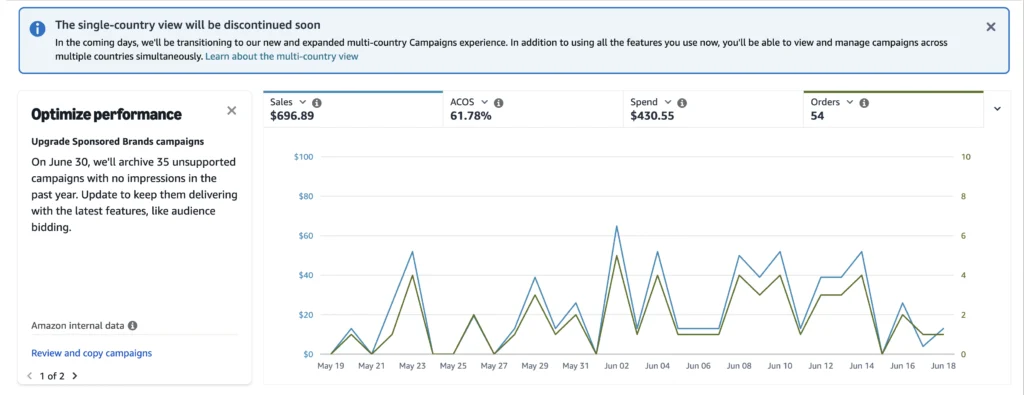
So can you make money self-publishing on Amazon? Yes, but far fewer authors than the "Make $10K a Month!" ads suggest. Most self-published books sell fewer than 100 copies in their lifetime. My own first book made about $150 in its first month. By year three, with five books published and a growing email list, I was earning around $3,000 a month, which was enough to supplement my income, not replace it.
It took nearly five years of consistent publishing and marketing before I could call writing a full-time career.
Have a look at our guide to Publishing By the Numbers if you want more of a breakdown of potential profits by genre.
Here's the biggest misconception about selling self-published books on Amazon: it isn't passive income. It's actively demanding income. I spend more time marketing my books than writing them. My email list, social media, ads, promotions, and keeping up with best practices that shift constantly.
One practical note: Amazon requires reviewers to have spent at least $50 on the platform recently, using a non-new, regularly active account. That's part of how they screen for authenticity. Never offer payment or incentives for reviews; it violates Amazon's policy and can get your account flagged.
Technical and algorithmic headaches
KDP's backend glitches, unannounced algorithm shifts, and inconsistent content-policy enforcement are the frustrations that never make it into the "Make $10K a month" ads.
KDP's backend is notorious for glitches. I've uploaded a corrected manuscript and watched the old version keep showing to readers. Categories mysteriously change. Keywords get dropped. Sales reporting lags right when you need it most, during a promotion.
Amazon updates its discovery algorithm regularly, often without warning, folded into the broader stream of amazon publishing news that most authors never see until their sales drop. A book with steady, consistent sales for months can vanish from search results overnight, forcing a full rethink of your metadata strategy.
Can KDP reject a book? Absolutely, and the reasoning can feel arbitrary. I once had a book temporarily removed for being flagged as "similar to freely available content on the web". It was entirely original. It took weeks of back-and-forth to resolve. One of my books is still blocked over a year later, over a false "stolen content" claim, despite never having been published anywhere before.
Content violations are the most common reason a book gets blocked, but sometimes it's a technical glitch or a misunderstanding, and support responses can be vague form letters that don't address your specific case.
KDP Select and print-on-demand: fine print matters
KDP Select's 90-day exclusivity trades access to Apple Books, Kobo, and Barnes & Noble for Amazon's promotional tools, which is a trade-off that made more sense a decade ago than it does today.
When Amazon introduced KDP Select, promising enhanced visibility and promotional tools, I jumped on immediately. The catch: enrolling means selling your e-book exclusively through Amazon for at least 90 days, giving up readers on Apple Books, Barnes & Noble, Kobo, and international markets where Amazon isn't dominant.
In the early days, that trade-off made sense. Free promotions could catapult a book up the charts and drive sustained sales afterward. Today, those same promotions barely move the needle without a substantial marketing push behind them.
As for print-on-demand through KDP Print, quality control can be inconsistent. I've received author copies with misaligned covers, out-of-order pages, and inconsistent paper quality. Readers judge those issues as reflecting on you, the author, not on Amazon's printing service. Every author has to weigh exclusivity against reach; I've run both strategies, and the right one depends on your genre, goals, and marketing capacity.
Review woes and reader feedback
Reviews are the currency of credibility on Amazon, but they've become harder to earn. Roughly 1 in 100 readers leave one today, down from 1 in 20 a decade ago.
Amazon has tightened review policies to fight fake reviews, which is good in theory, but it often catches legitimate reviews in the crossfire. I've had readers tell me their honest, positive reviews vanished without explanation.
Then there's the emotional side. No matter how thick your skin, a one-star review can ruin your day, especially when it's clear the reviewer misunderstood the book or didn't finish it. The hardest part: you can't respond to reviews on Amazon. When a review misrepresents your book, your only option is to watch potential readers turn away based on misinformation.
Financial and legal considerations
Self-publishing isn't free: budget $600–$3,000 for editing, $100–$500 for a cover, and at least $200–$2,000 per launch for marketing if you want a book that competes.
- Professional editing: $600–$3,000 depending on length and depth
- Cover design: $100–$500 for a quality e-book and print cover
- Formatting: $100–$300 if you don't do it yourself
- Marketing: potentially unlimited, but plan for $200–$2,000 per launch
- Amazon Ads: budget at least $10/day during launch periods

When I started, I tried to cut corners here. The result: lower sales and reviews that called out editing issues or an amateurish cover. Readers judge books by their covers, and they notice poor editing every time.
Does Amazon own the rights to your book? No. Amazon's terms grant them a non-exclusive license to distribute your content. You keep the copyright. Enrolling in KDP Select gives them exclusive e-book distribution rights only for the enrollment period.
One piece of fine print worth knowing: the unofficial "10% rule" for Amazon KDP means that if you update your book, Amazon suggests the new version contain at least 10% new or changed material before it triggers a re-notification to previous buyers. That matters if you're fixing typos versus doing a substantive revision.
Emotional burnout and the lonely road
Writing is solitary by nature; add publishing, marketing, and business management, and burnout becomes a real risk, so connecting with other authors is the most effective counter.
I've cycled through creative enthusiasm followed by doubt and exhaustion. There were months I couldn't look at my sales dashboard because the numbers were discouraging, and months I questioned whether the effort was worth it, especially measuring my results against other authors' highlight reels.
What helped: connecting with other authors who understood the struggle. Finding a community, online or in person, made the difference. I've learned to detach my self-worth from my book sales — some months are better than others, and that's fine. Publishing is a marathon.
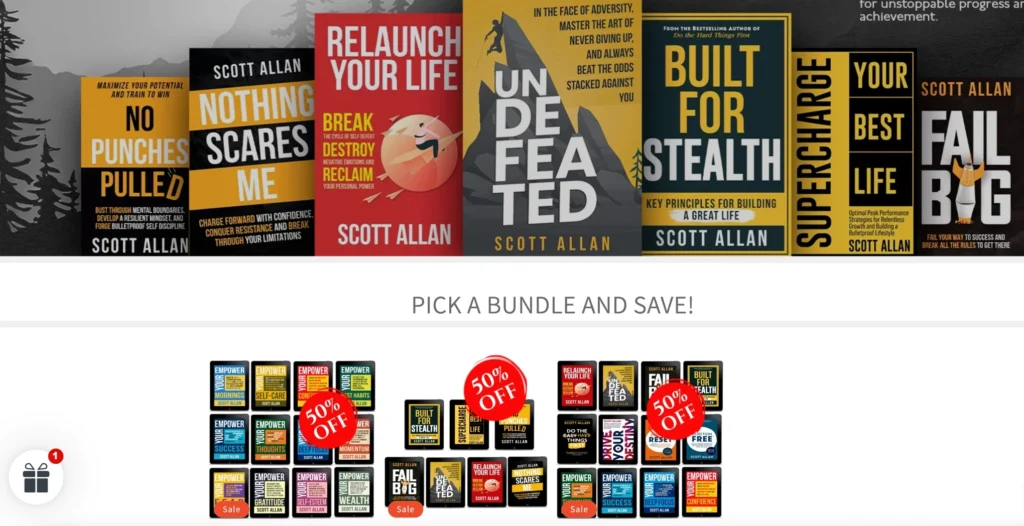
At the same time, self-publishing's independence has given me real freedom. Unlike my traditionally published titles, where I have minimal say after submission, my self-published catalog lets me pivot quickly, experiment, and act on reader feedback directly. That autonomy counterbalances the harder parts of the journey.
Industry challenges at large
Beyond Amazon specifically, declining attention spans, AI-generated content flooding the market, and pricing pressure from 99-cent e-books affect every author, traditionally published or not.
Readers increasingly prefer shorter books or bite-sized content, which pushes authors to write faster and shorter, sometimes at the cost of depth. The rise of AI content generation is the most disruptive shift I've seen: what once represented hundreds of hours of human effort can now be drafted in hours. These AI-generated books often lack authentic voice, but they still add to market saturation and make real discovery harder for readers hunting for quality.
Pricing pressure keeps intensifying too. 99-cent e-books and Kindle Unlimited have conditioned readers to expect more content for less money, making it harder to price books at a level that fairly compensates authors. Staying current with self-publishing updates and platform policy shifts is now part of the job description, not an occasional check-in.
Despite all of this, I'm still releasing a new book every six weeks. Not everyone needs that pace, but staying active keeps your whole catalog visible and selling, creating a compounding effect that occasional releases can't match.
What I wish I knew sooner
Build your email list from day one, focus on series over standalones, and invest in professional editing and design before you publish. These five lessons would have saved me years.
- Build your email list from day one. Your direct connection to readers matters more than any algorithm or platform.
- Focus on a series rather than standalone books. Series readers are loyal, and each book helps sell the others.
- Invest in professional editing and cover design from the start. First impressions matter, and you rarely get a second chance with readers.
- Understand that publishing is a business, not just an art form. Treat it with the seriousness of any other venture.
- Don't compare your beginning to someone else's middle. Every successful author started exactly where you are now.
If you're just starting today: study bestsellers in your genre, join genre-specific author groups, set realistic expectations for your first few books, schedule breaks to avoid burnout, and remember why you started writing in the first place.
Final thoughts
Knowing everything above, I'd do it again without hesitation.Tthe challenges are real, but so is the reward of reaching readers directly.
The self-publishing landscape keeps evolving at a dizzying pace. What worked yesterday may not work tomorrow. That's both the challenge and the opportunity. Authors who approach it with flexibility, persistence, and a willingness to learn will find their way forward, even as the industry transforms around them.
If you're weighing whether to self-publish or already on the path and feeling overwhelmed: every established author was once exactly where you are now. Keep writing, keep learning, keep connecting.
If you'd rather have a team handle the publishing logistics while you focus on writing, schedule a free consult and we'll build a plan around your book and goals.
Frequently asked questions
Is self-publishing on Amazon worth it?
Yes, for most authors. Amazon's reach and 70% royalty option make it the most accessible path to readers. But it's worth it only if you treat it as a business: budgeting for editing and design, building an email list, and publishing consistently rather than expecting one book to carry you.
Can you make money self-publishing on Amazon?
Yes, but the majority of self-published books sell fewer than 100 copies in their lifetime. Meaningful income typically takes multiple books, a growing email list, and active marketing over several years, not one launch.
What are the biggest problems with Amazon self-publishing?
Ranking volatility, a market of over 7 million competing titles, inconsistent review enforcement, unannounced algorithm changes, and upfront costs for editing and cover design that many new authors underestimate.
Does Amazon own the rights to my self-published book?
No. You retain full copyright. Amazon receives a non-exclusive license to distribute your content, or an exclusive e-book license only if you enroll in KDP Select for that enrollment period