

















TL;DR
Flash fiction is a complete story told in 1,500 words or fewer, built on one character, one image, and one emotional twist. The strongest flash fiction pieces cut everything that isn't essential, then land a gut-punch final line. Master the format with this 7-step framework: emotion, character, imagery, inciting incident, hook ending, complete plot, and heavy editing.
Most new fiction writers treat flash fiction as a warm-up exercise. As something you write before you're ready for a "real" story.
That's backward.
Flash fiction is one of the hardest formats to write well, because it gives you no room to hide.
Every sentence has to earn its place.
That's exactly why it's one of the fastest ways to sharpen your craft: it forces you to master emotion, imagery, and pacing in a space too small for filler.
Below is the same 7-step framework we teach inside our fiction coaching program, plus real examples from a published flash fiction author, so you can see the format working, not just read about it.
Let's discuss what flash fiction is, some flash fiction examples, and tips on writing a flash fiction piece of your own.
Guide to Self-Editing Mastery
Learn how to avoid the most time-consuming editing mistakes most authors make and self-edit your book like a seasoned professional with our free guide.
What is flash fiction?
Flash fiction is a complete short story told in 1,500 words or fewer. Stories under 100 words are usually called "micro fiction" or "sudden fiction."
Flash fiction isn't a fragment or a scene, it's a full story with a beginning, middle, and end, compressed into a tight word count. The category includes several sub-lengths:
| Format | Typical length | What defines it |
|---|---|---|
| Micro fiction | Under 100 words | A single image or moment with a complete emotional arc |
| Flash fiction | 100–1,500 words | A full story: setup, conflict, and a twist or reveal |
| Short story | 1,500–7,500 words | Room for subplots, multiple scenes, and a slower build |
| Novella | 17,500–40,000 words | Sustained plot across chapters, still a single throughline |
One of the most famous examples of flash fiction is a six-word memoir often shared in writing circles: "For sale: baby shoes, never worn." In six words, it implies loss, grief, and an entire unspoken backstory. That's the mechanism flash fiction runs on: compression that forces the reader to fill in the emotional gaps themselves.
What is the structure of a flash fiction story?
A flash fiction story needs three structural anchors: a tightly focused length, one clear character, and an ending that lands with emotional weight.
Length
Length is the defining constraint. A flash fiction piece can run anywhere from a single sentence to 1,500 words, but the shorter it gets, the more each word has to do.
Character
Flash fiction supports one character in focus. Because there's no space to develop an ensemble, the character's perspective has to come through concrete imagery and action, not exposition.
The twist
The ending should land with impact, usually through a reveal or emotional gut-punch. Most successful flash fiction leans tragic or bittersweet. A small space carries big emotion better than a neutral one.
How to write flash fiction: A 7 step framework
Writing strong flash fiction means working through seven elements in order: emotion, character, imagery, inciting incident, hook ending, complete plot, and heavy editing.
These seven elements don't all need to appear in every story, but they're the strongest starting framework if you're staring at a blank page.
1. Start with the emotion
Decide what you want the reader to feel before you write a single line of plot. Your last line should reverberate with that emotion.
In the story What Remains, an editor once pushed to cut a more emotionally loaded final image for one that was easier to visualize. But the author stuck to her guns.
She was advised to cut the line, “She imagined her son with the raccoon, swaddled in the dirt,” to, “The mud she stomped off her boots, the sand in the park” as the last line.
The lesson: the clearest image isn't always the most powerful one. Protect the emotional weight of your ending, even if it costs some clarity.
2. Narrow to one character
Cut the cast down to one character in focus. Don't split attention across multiple people, subplots, or themes. Flash fiction only has room for one central idea.
3. Build with imagery, not description
Write with all five senses, not just sight. A smell or a texture creates a stronger memory trigger than a visual description alone, and that emotional shortcut matters more when you have fewer words to work with.
The fastest way to strengthen imagery: show, don't tell. Telling explains a feeling to the reader. Showing lets them experience it through description. In a form this short, every sentence needs to carry double duty with plot and feeling at once.
"He showered her with roses, but never asked her favorite flower."- Dandelions, Actually, R. Gatwood (13-word micro fiction)
4. Open with the inciting incident, not the backstory
Start in the middle of the action. There's no room for setup, so open with your character already doing something that signals conflict or tension.
To protect that page time, tighten your prose using these edits:
- Choose strong nouns and strong verbs over stacked adverbs and adjectives
- Cut any adjective that just restates what the noun already implies (a "quiet whisper" adds nothing... all whispers are quiet)
- Remove redundant phrasing and repeated ideas
- Cut most articles (a, an, the). Read the sentence aloud, and if it still works without them, leave them out.
The rule that governs all of it: start late, end early.
5. Land a hook ending
Plan your twist before you draft the rest. Here's how one flash fiction example by Hannah Lee Kidder breaks down using this framework:
- Emotion: tragic sadness and regret
- Character: an older woman living alone
- Imagery: dead animals, a rundown house
- Inciting incident: the woman collecting roadkill
- Hook ending: she's giving the animals the burials she couldn't give her infant son, who died in a house fire
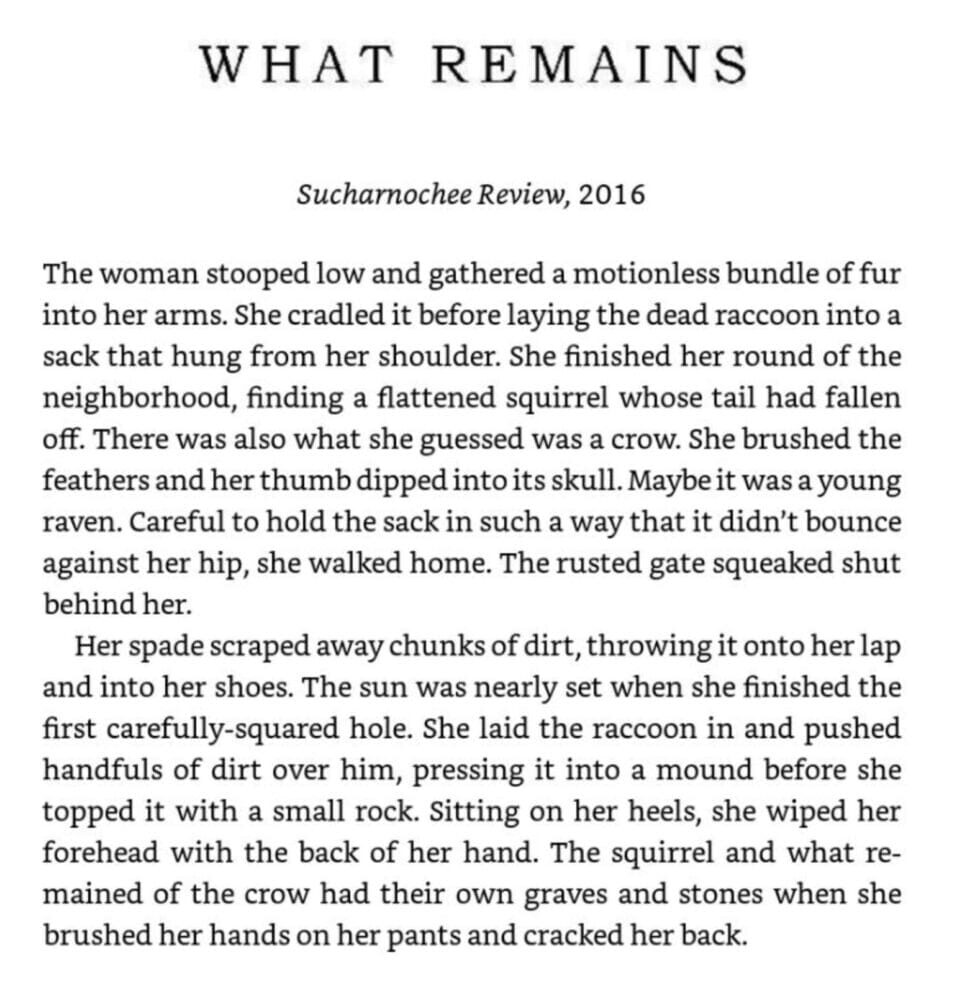
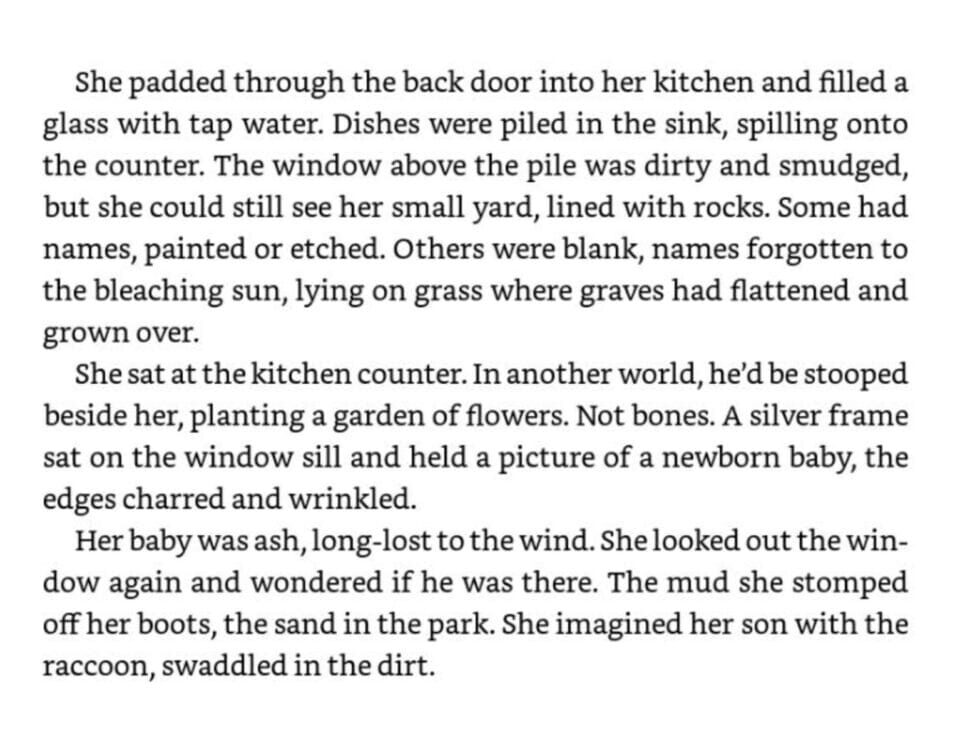
Every detail in that story serves the twist. Nothing is there just to add color.
6. Write the complete plot first
Don't try to hit the word count on your first pass. Write the story at whatever length it needs, then cut it down to size in editing. Trying to write "flash-sized" from the first draft usually produces a thinner story.
7. Edit heavily, in two distinct passes
Most of the actual work in flash fiction happens after the first draft, across two kinds of edits:
- Condensing: cut unnecessary words and swap in more precise language. Go for precision, not the most obscure synonym. An over-complicated word choice usually confuses meaning instead of sharpening it.
- Polishing: once only the necessary words remain, refine word choice, connotation, and subtext in what's left.
Is flash fiction hard to write?
Yes. Flash fiction is often harder to write than a longer story, because fitting a complete arc into a small word count leaves no room for filler or a weak sentence.
Micro fiction is the extreme case. It's tempting to assume 20 words is easier than 300, but it's usually the opposite. It's harder to build a complete emotional arc in 20 words than in 300.
"We came around the corner and there they were: young lovers, hands clasped. I drew the outline, Joe directed the crowd." - Love Is Forever, Merrilee Faber
Notice how the title in both examples above does real narrative work. In a format this compressed, even the title is part of the story, not just a label.
How do you publish flash fiction?
You can publish flash fiction individually through literary magazines and submission platforms, or compile a group of stories into a self-published collection.
For individual submissions, Submittable is a free tool that lets you filter open calls by genre, length, and theme, and track your submissions in one place.
Traditionally publishing a short story collection is rare, especially for a new writer. Most traditional publishers pass on story collections from authors without an existing platform. Self-publishing removes that gatekeeper entirely, and it's how most working flash fiction authors get a collection into readers' hands.
If you go the collection route, keep your titles from giving away each ending. The title should hook curiosity, not spoil the twist.
Flash fiction FAQ
What is flash fiction?
Flash fiction is a complete short story told in 1,500 words or fewer.
What counts as flash fiction?
Any complete story, with a beginning, middle, and twist ending, that falls under roughly 1,500 words counts as flash fiction. Stories under 100 words are typically classified as micro fiction instead.
What are the rules of flash fiction?
There's no single rulebook, but strong flash fiction consistently follows the same pattern: one character in focus, sensory imagery instead of exposition, a story that opens mid-action, and an emotionally weighted twist ending.
What is the best flash fiction?
Some of he best flash fiction examples include Franz Kafka’s “Give It Up!”, George Saunders’s “Sticks”, and Lydia Davis’s “End of Phone Conversation with Verizon Adjustment Person”
Your next step
You now know what flash fiction is, how it's structured, and the seven-step process for writing one that actually lands. The only step left is to write.
Whether it's a flash fiction collection or your first novel, we'll walk you through writing, publishing, and marketing it, with a coach, not just a course. You can sign up for our Fundamentals of Fiction course or book a free strategy call to discuss your options today.