















TL;DR: To learn how to market a fiction book, pick one genre and reader, build a cover and retailer page that match that genre, and write a series so each book sells the next. Then collect reviews, grow an email list from the back of your book, run Amazon ads on comparable titles, and add promo sites and BookTok. Track read-through, not just sales.
You finished the novel. Now it sits on Amazon beside thousands of other books, and nobody knows it exists. Grand View Research projects the self-publishing market will grow from $3.6 billion in 2025 to $5.7 billion by 2033, with fiction as its largest segment.
Most fiction authors respond by posting on every platform and hoping. That spreads effort thin and sells few copies. This guide gives you the 12 steps we teach fiction authors at selfpublishing.com, in the order that moves sales.
Who this guide is for
Authors publishing genre fiction on their own: romance, mystery, thriller, fantasy, sci-fi, and similar. If you plan to query literary agents instead, jump to the FAQ at the end.
How is marketing fiction different from marketing nonfiction?
Fiction sells on genre fit, cover, and series momentum. Nonfiction sells on a problem solved. Readers shop inside genres, so your marketing must signal genre in seconds.
- Discovery happens on retailer sites. Fiction readers mostly find books on Amazon, Kobo, and Apple Books, so your retailer page does most of the selling.
- Readers are voracious and price-sensitive. A fan can finish a book in a day and want the next one tonight.
- The sample decides the sale. Readers abandon a weak first chapter quickly, so editing is marketing.
What the market data says about genre
Demand for fiction is healthy but uneven by genre. Print unit sales at Circana BookScan outlets reached 762.4 million in 2025, and adult fiction grew 1%.
| Genre | 2025 print units | Change vs 2024 |
|---|---|---|
| Romance | Almost 44 million | +3.9% |
| Suspense and thriller | 25.5 million | −2.2% |
| Fantasy | 24.1 million | −8.7% |
| Science fiction | Just over 6 million | +22.1% |
Step 1
Choose your genre and three comp titles
Name one genre, one subgenre, and three comparable titles published in the last five years. Every marketing decision that follows depends on those three books.
Comp titles are books your ideal reader already buys. You will use them for your blurb, your Amazon ad targeting, your cover brief, and your promo pitches.
- Search your subgenre on Amazon and sort by best sellers.
- Pick three books close to yours in tone, tropes, and length.
- Record each one's cover style, price, categories, and review count.
If your book has not been written yet, do this first. Writing to a proven market is the fastest way to shorten the path to sales.
Step 2
Make the cover, title, and blurb signal your genre
Your cover and blurb have one job: tell the right reader this is their kind of book within three seconds. Match genre conventions instead of fighting them.
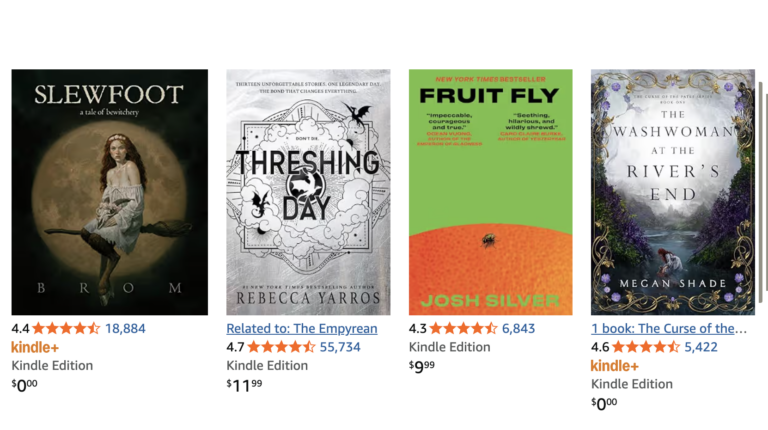
Fiction covers must echo the genre and hint at the story. Put your cover next to your three comps at thumbnail size. If it looks like a different genre, redesign it.
A blurb structure that works
- One hook line that names the character and the problem.
- Two or three short paragraphs of stakes and conflict.
- A closing line that sells the feeling of the read.
Edit the first chapter as hard as the blurb. The retailer's sample is often the last thing a reader sees before buying.
Step 3
Optimize your retailer page
Your Amazon page is your storefront. Choose categories and keywords that match your comps, then upgrade the description and A+ content so the page converts.
- Pick categories where your comp titles rank, not the broadest category available.
- Fill all seven keyword slots with phrases readers type, such as trope and subgenre terms.
- Use A+ content to show series order, review quotes, and cover art.
- Add a universal book link so readers on any store can buy.
Step 4
Write a series and track read-through
A series is the strongest fiction marketing asset because each reader you win can buy several books. Read-through rate tells you whether the series is working.
Read-through is the share of readers who buy the next book after finishing the previous one. Multiply each step to get the full-series rate.
Example read-through math
A series with 45% from book one to two, 60% from two to three, and 70% from three to four has a full-series read-through of 18.9% (0.45 × 0.60 × 0.70).
Fix book one before you spend on ads. If read-through is low, ad money pours readers into a leaky funnel. Readers who finish an error-free, immersive book one are far more likely to buy book two.
Many authors also price book one low or free to feed the series.
Step 5
Build an email list from the back of your book
Offer a free bonus scene or short prequel on the last page of your novel. Readers who finish are your warmest audience, and email is the only channel you own.
- Write a short prequel, bonus scene, or character story.
- Put a link to it in the back of every book you publish.
- Deliver it through an email service and send a welcome message.
- Email subscribers when a new book opens for preorder and again on launch day.
Step 6
Build a review and advance reader team
Send advance copies to genre readers four to six weeks before launch, and ask for honest reviews in launch week. Reviews are the social proof that converts browsers.
- Recruit readers from your email list, social followers, and ARC platforms such as NetGalley and BookSirens.
- Ask for honest reviews only. Never pay for reviews or require a positive one, because Amazon removes them.
- Pitch genre-specific book bloggers. Many prefer print copies, so budget for a few.
Our recommendation: aim for 25 to 50 advance readers on a first launch. Expect a fraction to post reviews.
Step 7
Run Amazon ads on your comp titles
Start with Sponsored Products ads that target your comp titles and genre keywords. Judge results by royalties plus series read-through, not by book one profit alone.
Amazon Ads Sponsored Products offers automatic, keyword, and product targeting. Product targeting on comparable series is especially effective because it reaches confirmed readers in your genre.
- Launch one automatic campaign and one keyword campaign for book one.
- After two to four weeks, download the Search Term Report and move winning terms into keyword campaigns.
- Add product targeting on your three comps.
- Advertise book one most heavily if your read-through is strong.
Our recommendation: Start with a small daily budget you can afford to lose while you learn, and raise it only after sales appear.
Most authors try all 12 steps at once and stall
If you want help implementing this, our Market Your Book program walks you through launch and promotion with expert coaching. selfpublishing.com has helped authors publish over 7,000 books, working with authors from 91+ countries.
Step 8
Stack promo sites and price promotions
Run a discount on the same day as newsletter promo sites. The combined spike lifts your Amazon rank and puts the book in front of new readers.
- Apply for a BookBub Featured Deal. It is selective, so apply early and apply again.
- Book smaller genre newsletters for the same dates.
- Use promos on book one, with the rest of the series ready to buy.
Promos amplify reviews and a strong cover. They do not fix a weak book page. See our guide to book marketing services before you pay anyone.
Step 9
Show up on BookTok and short-form video
BookTok shows fiction readers what to read next. Post short videos about tropes, characters, and reading moments instead of ads for your book.
Circana reported that BookTok author sales grew nearly 20% in 2024 versus 2023. Romance, fantasy, and thriller readers all use it to discover books.
- Lead with a trope hook, such as a favorite romance setup or a villain line.
- Show the writing process, covers, and character art.
- Reply to comments with video answers. Readers love access to authors.
Step 10
Collaborate with authors in your genre
Swap newsletter mentions, join anthologies and box sets, and cross-promote with authors who share your readers. You borrow trust instead of building it alone.
Look for authors at a similar career stage and in the same subgenre. Offer first, then ask. A shared box set or a newsletter swap can reach hundreds of readers who already love your genre.
Step 11
Add events, book clubs, and local media
Book clubs, libraries, and local events convert slower than ads, but they build the word of mouth that fiction depends on. Use them after steps one through eight.
- Book clubs: offer a reading guide and a live or virtual Q&A.
- Libraries and bookstores: propose a signing or a local-author event.
- Podcasts and local press: pitch the story behind the book, not the book alone.
- Awards: useful for credibility, but rarely a sales driver on their own.
Step 12
Track three numbers and cut what does not move them
Review sales, read-through, and email signups every month, then cut tactics that do not move them. Fiction marketing is a testing loop, not a one-time launch.
Marketing never ends after launch week. Stay active, answer readers, and release the next book while momentum is warm.
A 90-day plan for a fiction launch
| Phase | When | Priorities |
|---|---|---|
| Set up | 60 to 30 days before launch | Comp titles, cover, blurb, retailer page, email list, bonus scene |
| Build buzz | 30 to 0 days before launch | Advance reader team, preorder link, BookTok teasers, author swaps |
| Launch | Launch week | Reviews, launch email, first ads, promo stack |
| Optimize | Days 8 to 30 | Search Term Report, add product targeting, fix the page |
| Scale | Days 31 to 90 | Check read-through, increase winning ad budgets, plan book two |
If you only do three things
- Make the cover, blurb, and retailer page match your genre.
- Write a series and measure read-through.
- Collect emails from the back of every book.
What are the most common fiction marketing mistakes?
The costly mistakes are marketing before the book is ready, ignoring genre conventions, and spending on ads before read-through is proven.
- Launching without a professional cover or edit.
- Targeting "everyone who reads" instead of one subgenre.
- Advertising book one when readers do not continue to book two.
- Treating social media followers as a substitute for an email list.
- Starting marketing after launch day instead of 60 days before.
Your book is closer to readers than you think
Book a free call and we will map your first 90 days of fiction marketing with you.
Frequently asked questions
How do you market a fiction book with no budget?
Start with free steps: a genre-matched cover and blurb, a retailer page with the right categories and keywords, a back-of-book email offer, and an honest advance reader team. Add BookTok and author newsletter swaps. Paid ads can wait until read-through is proven.
How many copies do you need to sell to make $100,000?
At a $4.99 ebook price and the 70% KDP royalty, you earn about $3.49 per copy before delivery fees, so roughly 28,700 copies. At $2.99 you earn about $2.09 per copy, so roughly 47,800. Series authors reach these numbers faster because one reader buys many books.
When should you start marketing a novel?
Start at least 60 days before launch. Build the cover, blurb, retailer page, and email list first, then recruit advance readers. Waiting until launch day wastes your biggest sales window.
Do fiction authors need an author website?
A one-page site with your books, bio, and email signup helps, but your retailer page and email list matter more. Build the site after those two.
Is Kindle Unlimited worth it for fiction?
It depends on genre. Series authors in genres with heavy Kindle Unlimited readership often start there because page reads pay per page and read-through compounds. Enrolling means exclusivity with Amazon for the enrollment term, so check the current KDP Select terms before you commit.
How do you pitch a fiction book to an agent?
You need a polished query letter and usually a synopsis and sample pages. You only need an agent if you want to publish traditionally. Self-published authors keep higher royalties and full creative control.