
















TL;DR: How many words in a children's book depends on one thing: the age of the reader. Board books run up to 100 words, picture books 400–800, early readers 1,000–2,500, chapter books 5,000–15,000, and middle grade 20,000–55,000. Land outside your category's range and agents, librarians, and parents notice before they read your first line.
You wrote a 1,900-word picture book. It reads beautifully out loud, your family loves it, and you're ready to find an illustrator.
Here's the problem: at 1,900 words, it isn't a picture book. It's roughly triple the length the format allows, and nobody in the process (not the illustrator you're about to pay, not the printer, not the parent deciding whether this survives a fourth bedtime reading) is going to tell you that until you've spent money.
Children's book word counts are stricter than any other category in publishing, because the numbers aren't style preferences. They're driven by how children actually read, and by how books physically get printed.
This guide gives you the exact range for every age band, the production math behind picture books, and a 5-step method for cutting a manuscript that's running long.
How many words in a children’s book?
A children's book runs from 100 to 55,000 words depending on the reader's age. The average picture book is about 500 words.
Use this table as your working reference. These are the ranges publishers, agents, and professional editors expect in 2026, informed by the category standards used across the industry and by organizations like the Society of Children's Book Writers and Illustrators (SCBWI).
| Format | Reader age | Word count | Page count |
|---|---|---|---|
| Board book | 0–3 | Up to 100 | 12–24 |
| Early picture book | 2–5 | 100–400 | 24–32 |
| Picture book (fiction) | 3–7 | 400–800 (target 500) | 32 |
| Picture book (nonfiction) | 5–9 | 1,000–2,000 | 32–48 |
| Early reader | 5–8 | 1,000–2,500 | 32–64 |
| Chapter book | 6–9 | 5,000–15,000 | 64–96 |
| Middle grade | 8–12 | 20,000–55,000 | 100–250 |
| Upper middle grade | 10–14 | 40,000–55,000 | 150–275 |
| Young adult | 13+ | 60,000–90,000 | 200–350 |
Two rules make this chart usable:
- Write to the age, not to the story. Pick your reader first, then fit the story to the range. Doing it the other way around is how a 1,900-word picture book happens.
- The ranges overlap on purpose. An advanced 7-year-old reads chapter books while a classmate is still in early readers. Aim at the middle of your band.
Writing for adults too, or comparing categories? Our guide to how many words are in a novel covers every adult genre.
Children’s book word count by age
Word count climbs with reading age. The younger the reader, the fewer words, because attention span and decoding ability set the ceiling.
Board books (ages 0–3): up to 100 words
Board books are read to a child who can't yet follow a plot. Many have no story at all, they simply name things. Colors, animals, first words, bedtime routines.
Keep the total under 100 words, and often far under. One short phrase per page is standard. The physical object matters more than the text at this age, which is why board books are printed on thick card and built to be chewed.
Write for repetition, not surprise. A parent will read this book 200 times. Rhythm and predictability are features.
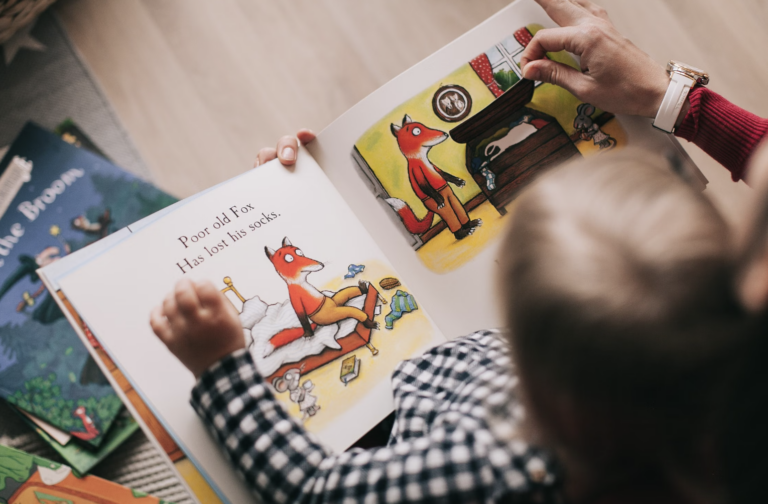
Picture book word count (ages 3–7): 400–800 words
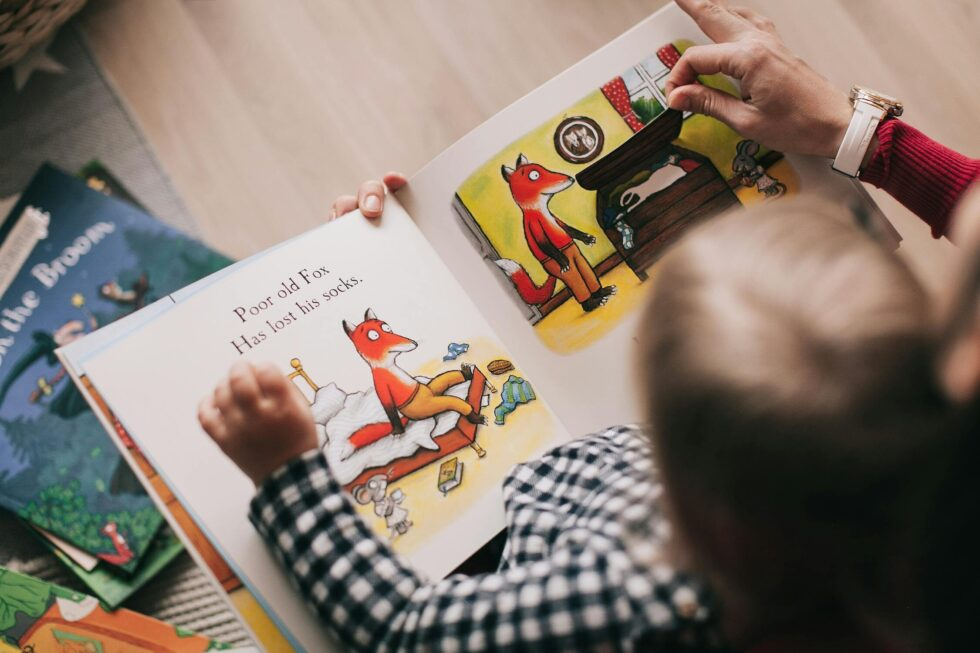
The picture book word count standard is 400–800 words, with 500 as the safe target. Above 1,000 words, most agents and editors pass.
This is the format most people mean when they say "children's book," and it's where the most manuscripts get rejected on length alone.
The number has been falling for 30 years. Twenty years ago 1,000 words was unremarkable; today under 600 is a much easier sell. The reason is competition for attention from screens, from shorter attention spans, and from the read-aloud test every picture book has to survive.
- Under 400 words: minimalist, works well for ages 2–5
- 400–800 words: the contemporary standard
- 800–1,000 words: acceptable, but you'll need a reason
- Over 1,000 words: you're likely writing an early reader or a nonfiction picture book, not a picture book
Nonfiction picture books get more room (1,000–2,000 words is standard for ages 5–9) because the information has to carry the book rather than the emotion.
How many words in a book for 5 year olds?
For 5 year olds, write 400–800 words if an adult reads it aloud, or 1,000–2,500 words if the child reads it independently.
Age 5 is the fork in the road. A 5-year-old sits in both formats depending on who's holding the book, so decide which experience you're writing before you draft:
- Read-aloud (picture book, 400–800 words). The adult does the decoding. You can use rich vocabulary, wordplay, and sentences a child couldn't read alone.
- Read-alone (early reader, 1,000–2,500 words). The child does the decoding. Vocabulary has to be simple, sentences short, and words phonetically sound-out-able.
Getting this backwards is a common and expensive mistake. A "picture book" full of sight words a 5-year-old can't decode frustrates the reader it was written for.
Early readers (ages 5–8): 1,000–2,500 words
Early readers, also called leveled or beginning readers, are the bridge between picture books and chapter books. They run 32 to 64 pages with an illustration on most spreads.
Word count matters less here than word choice. These are some of the first books a child reads without help, so the goal is a completed book and the confidence that comes with it.
- Repeat words and phrases deliberately; repetition builds fluency
- Use short sentences with one clause
- Favor words a child can sound out
- Rhyme and near-rhyme reinforce decoding
Chapter books (ages 6–9): 5,000–15,000 words
Chapter books are a child's first real novel experience. Short chapters of 3 to 5 pages, one clear plot line, a protagonist close to the reader's own age, and spot illustrations rather than full-page art.
Keep subplots out. One problem, one character trying to solve it, chapters that end at a moment that pulls the reader forward.
Middle grade (ages 8–12): 20,000–55,000 words
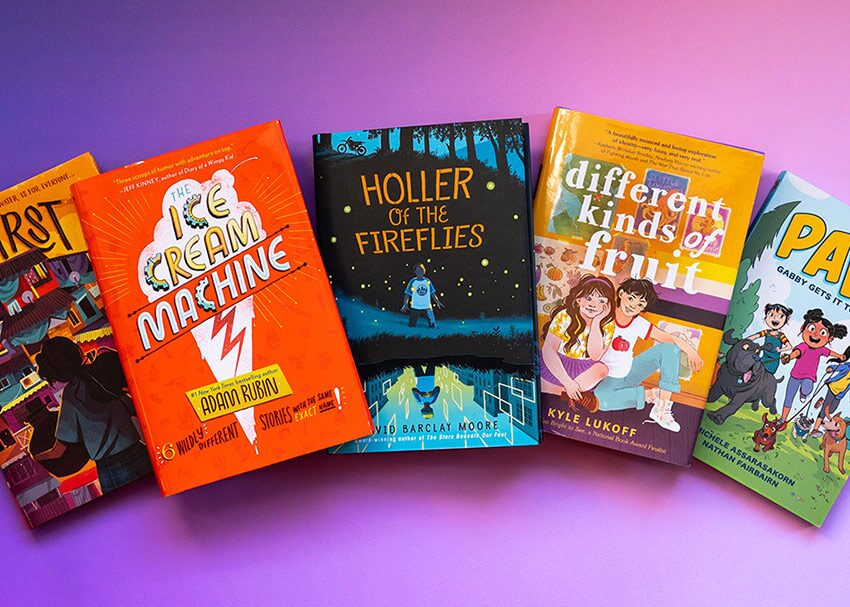
Middle grade is a full novel: multiple characters, subplots, and real emotional weight. Protagonists are usually 10–13, because kids read up in age.
How many words in a book for 8-12 year olds?
For 8-12 year olds, write 20,000–55,000 words. Contemporary middle grade sits at 30,000–45,000; fantasy and adventure run to 60,000.
The sub-bands matter more than the headline range:
| Middle grade type | Word count |
|---|---|
| Younger / simpler middle grade | 20,000–35,000 |
| Contemporary middle grade | 30,000–45,000 |
| Fantasy, sci-fi, or adventure | 45,000–60,000 |
| Upper middle grade (ages 10–14) | 40,000–55,000 |
Above 65,000 words, the industry starts asking whether you've written young YA instead. Speculative genres get more room because worldbuilding costs pages, but that's a reason for 60,000 words, not 90,000.
Young adult (ages 13+): 60,000–90,000 words
YA sits outside "children's book" in most catalogs, but it's the next rung on the ladder. Standard YA runs 60,000–90,000 words, with YA fantasy stretching to 120,000+.
Why 32 pages controls your picture book word count
Picture books are printed on folded sheets in multiples of 8, which is why 24, 32, and 40 pages are standard (and 32 is the default).
This is the part most first-time children's book authors never learn, and it's the reason picture book word counts are so rigid.
A picture book isn't printed page by page. Large sheets are printed, folded, and trimmed into signatures, so page counts come in multiples of 8. Print a 30-page book and you pay for 32 pages anyway.
Here's what 32 pages actually gives you:
- 2–4 pages of front matter (title page, copyright, dedication)
- Roughly 14 double-page spreads of story
- At 500 words total, that's about 35 words per spread
That number changes how you write. You're not writing chapters or scenes, you're writing 14 beats, each one earning a page turn. Good picture books swing wildly around the 35-word average: two words on one spread, sixty on the next, a wordless one after that. The variation is the pacing.
Once you see the story as 14 turns instead of 500 words, the length stops feeling arbitrary. For the full process from idea to finished draft, see how to write a children's book.
What 2025 sales data says about which length to write
The kids' market outgrew the adult market in 2025, and the youngest formats grew fastest while middle grade struggled.
If you're choosing between formats rather than committed to one, the sales data is worth reading before you commit a year to a draft. According to Circana BookScan figures reported by Publishers Weekly:
- US print book sales reached 762.4 million units in 2025, up 0.3% over 2024
- Children's fiction units rose 1.6%, while young adult fiction fell 1.8%
- In Q3 2025, the kids' market was the market's top growth segment, with infant and preschool books up 13%
- Middle grade was the most challenged segment, down 2% in the same quarter
The strategic read: demand is strongest at the shortest word counts, and hardest at 20,000–55,000 words. That doesn't mean don't write middle grade. It means middle grade needs a series plan and a marketing plan, while a strong 500-word picture book competes in the healthiest part of the market.
Representation shapes that demand too. Our analysis of children's book characters by the numbers breaks down who actually appears in children's books, and the gaps that are still wide open for new authors.
How to cut a picture book to 500 words
Cut by a third. It's almost always achievable, because over-length picture book drafts run long in the same five predictable places.
Work through these in order:
- Delete anything the illustration will show. "She had curly red hair and freckles" is the illustrator's job, not yours. This alone often cuts 15%.
- Cut your first paragraph. In most drafts it's the writer warming up, not the story starting. Test it: does the book still make sense beginning at paragraph 2?
- Kill adverbs and dialogue tags. "She said excitedly" becomes "she said," then usually becomes nothing at all.
- Replace transitions with page turns. "The next morning, after breakfast, they walked to the park" is a page turn, not a sentence.
- Remove every sentence that explains a feeling. The picture carries emotion better than the text can. If you've written "he felt sad," delete it.
Then read the whole book aloud with a timer. A picture book should run under 5 minutes. If it doesn't, keep cutting.
Most first-time children's book authors get stuck here, not at the drafting stage. Cutting your own work is a learned skill, and it's most of what our coaches do with authors in Children's Book School.
5 word count mistakes we see most often
- Writing 1,500–2,500 words and calling it a picture book. The most common single reason a children's book manuscript gets passed over.
- Writing "for all ages." It isn't a category. Bookstores, libraries, and Amazon all shelve by age band, so a book for everyone reaches no one.
- Counting illustration notes in your word count. They don't count, and you should include very few of them (usually only where the text would make no sense without one).
- Padding middle grade to feel like a "real" novel. A tight 32,000-word middle grade beats a bloated 60,000-word one. Length isn't credibility.
- Writing to the parent instead of the child. Adults buy the book, but children decide whether it gets read again. Lessons and morals tacked onto the last page are written for the buyer, not the reader.
How many words should a children’s book be for your story?
Answer three questions: who reads it, whether pictures carry the plot, and how many problems the story has, and the word count picks itself.
- Who reads it out loud? An adult reading to a child means picture book, 400–800 words. A child reading alone means early reader or chapter book.
- Do the illustrations carry the plot, or decorate it? If removing the pictures breaks the story, you're writing a picture book. If the text stands alone, you're in chapter book or middle grade territory.
- How many problems does your story have? One problem, one arc: picture book or chapter book. A main plot plus subplots and a character who changes: middle grade.
If your story genuinely won't fit the range you landed on, the fix is structural, not cosmetic. Too long: cut a character, merge two, or drop a subplot. Too short: add a point-of-view character, add a subplot, or start the story at a different moment.
Frequently asked questions
How many words should a children's book be?
It depends on the reader's age. Board books run up to 100 words, picture books 400–800, early readers 1,000–2,500, chapter books 5,000–15,000, and middle grade 20,000–55,000 words.
What is the average picture book word count?
About 500 words. The contemporary range is 400–800 words across 32 pages, which works out to roughly 35 words per double-page spread.
Can a picture book be over 1,000 words?
It can, but it's a hard sell. Over 1,000 words, most agents and editors will pass unless it's nonfiction, where 1,000–2,000 words is standard for ages 5–9.
How many words are famous picture books?
Commonly cited counts show how short the format really is: Goodnight Moon is about 130 words, The Very Hungry Caterpillar about 224, and Where the Wild Things Are about 338.
Do illustration notes count toward word count?
No. Illustration notes sit outside your manuscript word count, and you should use very few - only where the text makes no sense without one.
How many pages is a 500-word children's book?
32 pages, the picture book standard. Page counts come in multiples of 8 because of how books are printed, so 24, 32, and 40 pages are the practical options.
How long does it take to write a children's book?
A picture book draft can be written in a weekend; getting it to 500 tight, submission-ready words usually takes 2–6 months of revision. Middle grade takes considerably longer. See how long it takes to write a book.
Who this guide is for
If you've written a children's book and you're not sure whether it's the right length, you're solving the exact problem we see most often. Most first-time children's book authors write 2–3 times the words their format allows, then either publish it anyway and watch it stall, or cut blindly and lose the story.
At selfpublishing.com we've helped a community of over 7,000 authors publish their stories. Our coaches work with children's book authors on exactly this: fitting the story to the format, then getting it illustrated, printed, and launched.
Next steps:
- Ready to write? Start with how to write a children's book for the full step-by-step process
- Want a coached path from blank page to published? Schedule a consult and we'll build a plan around your book