














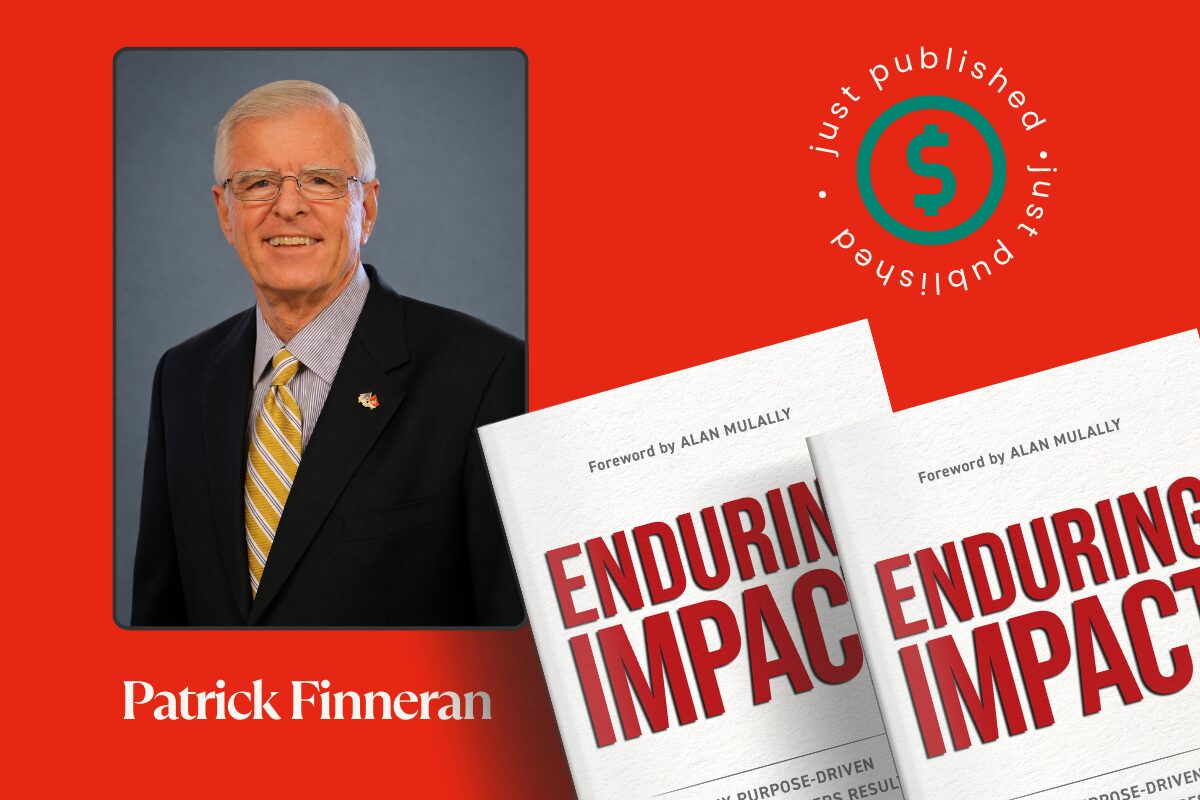

Putting profit over purpose is not sustainable, but there is a way to successfully lead businesses to long-term success for all stakeholders.
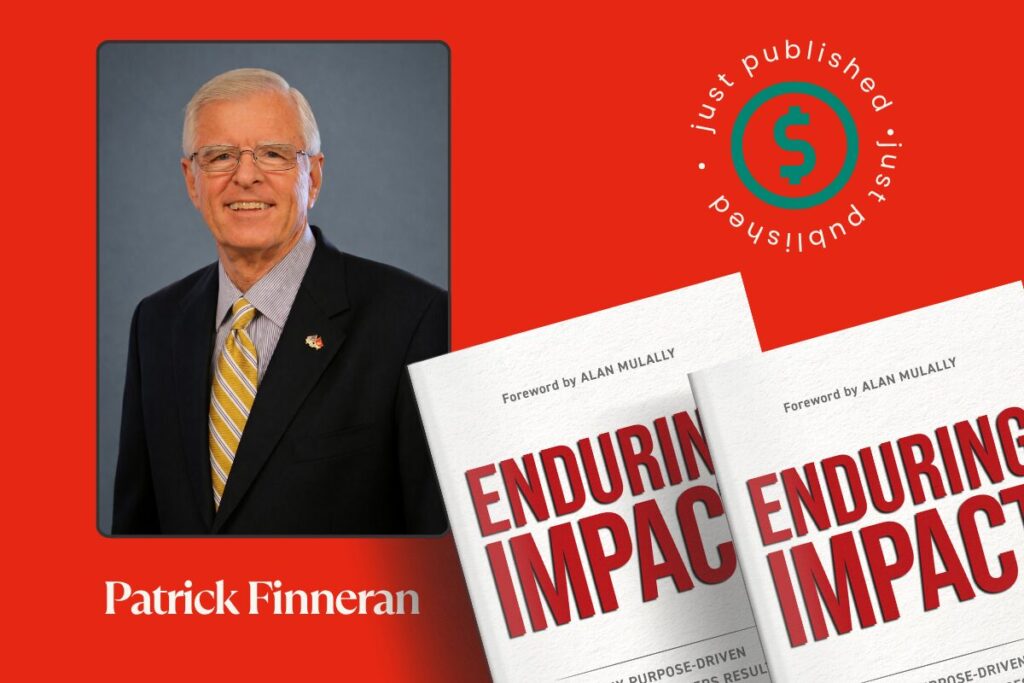
In Enduring Impact, Patrick Finneran draws on decades of experience as a Marine Corps officer and senior aerospace executive to show how purpose-driven leadership produces consistent, sustainable results.
At the heart of the book is the F/A-18E/F Super Hornet program—one of the few major defense programs completed on cost, on schedule, and without contract changes. Its success offers a clear lesson: how leaders think, decide, and act determines whether results endure. This book is a guide for leaders who want more than short-term wins. It’s for those committed to building organizations that perform, endure, and earn trust.
So, let’s get into it!
Book Title: Enduring Impact: Why Purpose-Driven Leadership Delivers Results That Last
Genre: Business, Leadership
Website: acceleratedperformancesolutions.net
Hi, Patrick! Thanks for taking the time to talk with us today. Can you start by telling us what inspired you to write this book?
Most American businesses, if not businesses worldwide, are so myopically focused on the next quarter financials and stock price that they've lost sight of their purpose. Companies that once focused on delighting their customers and treating their employees with dignity and respect are now reducing the value they provide customers and treating the employees like commodities to be reduced. I know at the top, the CEOs and board members are being handsomely rewarded, simply based on stock price. This crony capitalism is unhealthy not just for business but also for our country. There is a better way.
Enduring Impact demonstrates through numerous examples that all stakeholders can benefit once companies work together with their employees, customers, suppliers, and shareholders to create value for everyone. The primary example we use is the McDonald Douglas/Boeing FA/18 EF development and production program—one of the very few department of defense programs to complete its original contract on cost and on schedule. This program is a prime example of working together with a clear purpose, compelling vision, intrinsic values and a clear mission to exceed our customers expectations, value our employees, and excite our shareholders.
Amazing! So why did you feel that right now was the time to share this message?
I've been thinking of writing this book for a long time; about three years ago, it was evident to me that the way American business is going was fueling the increased movement toward socialism in this country. I had a long talk with a good friend named Alan Mulally. Allen is the former CEO of Boeing commercial airplanes and also of the Ford motor company. Alan encouraged me to write an article for Leader To Leader Journal, and he said at the end of that article I would know whether or not I wanted to write this book. I did, he was right, and I wrote the book.
Who would you say must read this book?
The leaders of any organization. From the CEOs of Fortune 50 companies to small businesses. From nonprofit organizations to the government, the basic tenets of leading people, recognizing human dignity, and understanding that your organization exists for some purpose beyond just profit are always the same.
It is not that profit isn't important, but it should be the result not the objective.
The other audience would be students in business schools anywhere, especially those seeking an MBA.
What are some of the biggest lessons this book will teach these leaders and students?
Leadership is not about title, position on the work chart, or, in some cases, your position in the family. Leadership is a process. It requires lifelong learning because it's always changing. You manage things, you'll lead people. It's always about people.
The "soft stuff" matters. Creating a vivid description of the desired future state as a critical first step. It begins with understanding where you are, deciding where you want to be, and then determining how you're going to get there. Once you have that clear vision, then you need to make sure you and your organization always operate by a clear set of values. Values are intrinsic, generally moral principles that guide everything you think say and do. They are the basis of the culture of your organization. Your mission should be customer-focused, and explaining very succinctly what it is, you're going to do for that customer.
From your vision and mission you then develop your strategic goals. These are the pillars of your vision in the centerpiece of your long-range business plan.
Finally, you have to have solid processes. You need robust, repeatable processes, accurate data, and frequent measurement. At the end of the process, if it is not producing the outcome you desire, change the process.
Can you tell us a bit about the writing process?
Earlier, I mentioned that I had a conversation with Alan Mulally who suggested that I write an article for the Leader To Leader journal. He said, “If you can condense your thoughts into 3500 words, then you'll be able to write your book more effectively.”
As I said before, he was right. The article was published in April 2024. To write the article, I had to think about the points I really wanted to make in the book to help me organize my thoughts. I then referred to the selfpublishing.com guidelines, which were very helpful. I didn't wait till I finished the whole book to get some outside opinions. I think it was about four or five chapters completed when I sent that information to colleagues of mine who are very seasoned and experienced executives to get their feedback.
I used that process throughout writing the whole book. I can't thank those people enough. When I had probably the fourth draft of the book completed, I sent it to the deans of two business schools who are friends of mine to get their insights. That was also very valuable since one of my audiences is the students in business school. I’d bet I've read the book about 50 times in hindsight. I would rewrite the last chapter and the epilogue, but it wasn't significant enough to stop the process. Perhaps I'll do a second edition at some point in time.
What was the hardest part about turning your expertise into a book?
Deciding what to say and what not to say. I was very sensitive about saying anything negative about any one particular person or any one company unless it was public domain. I think the other part that was difficult was trying to figure out how to reach an audience that probably doesn't want to hear what I have to say because the audience that needs to hear it are the CEOs who need to change what they're doing and I don't think they believe that. I am much more hopeful that rising executives and students will find this book very helpful.
What was your favorite part about this process?
I enjoyed the entire process. So much so that I'm inclined to write another book after I get this one fully published and marketed. People have said I should use a mainstream publishing company, but I will probably stick with selfpublishing.com, who helps you learn to write and self-publish, because they make this process very easy. I would like to specifically compliment my coach, Brett, and Dakota from book production, in particular, although there were a number of other people who were very good.
What are your plans for the future with this book and/or your business?
I'm hoping this book will generate the opportunity for speaking engagements, particularly at universities. My team will probably use it to promote our consulting company, but mostly I just want to get feedback that people are thinking about what's in the book. Hopefully it will be part of a movement to successfully save American business because if we don't change the way, we are perverting capitalism and we're going to find ourselves as a socialist country. I don’t believe that's healthy for anybody.
Any final inspiration for others looking to self-publish?
In my mind, selfpublishing.com is a major publishing company. They provide all the support and advice an author could ask for. The biggest advantage to self-publishing is that you retain the intellectual property of your book, as well as 100% of the royalties. In terms of the value for money, I feel like selfpublishing.com has been an extraordinary value addition. Again, my coach, Brett, and my publishing coordinator, Dakota, were just amazing people who did a fantastic job.
More about Patrick Finneran:
Patrick Finneran is a retired U.S. Marine Corps officer, combat veteran, and former senior aerospace executive. He held senior leadership roles at McDonnell Douglas and Boeing, including serving as a division president, and worked on major programs such as the F/A-18. A graduate of the University of Notre Dame, he now advises organizations on leadership, strategy, and building businesses that deliver lasting results.
Has Patrick’s story inspired you to share your own? Learn more about the book writing support, editing services, book coaching, and more she received as a part of the Author Advantage Accelerator Elite Program? Schedule a consultation today or take the quiz above to find the right program for you and your book!
Other related selfpublishing.com articles: