




















TL;DR
A writing structure is the order you deliver information in. There are three families: narrative structures for stories, informational structures for explaining, and persuasive structures for convincing. Twelve structures cover almost every project. These are narrative arc, circular, epistolary, braided, in medias res, inverted pyramid, chronological, listicle, spatial, problem-solution, cause and effect, and compare and contrast.
Most stuck manuscripts aren't a writing problem. They're an order problem.
The research is done, the ideas are good, the sentences are fine, but the reader keeps drifting because the information arrives in the wrong sequence. That's what a writing structure fixes. It's not decoration. It's the load-bearing decision that determines whether anyone finishes what you wrote.
Here's the part nobody tells first-time authors: you don't need to invent a structure. Twelve of them already exist, they've been stress-tested for centuries, and picking the right one takes about four questions.
This guide covers all twelve writing structures: what each one is, what it's best for, its underlying shape, and a real writing structure example you can copy.
Need A Nonfiction Book Outline?
Get customizable templates for easy book writing and structuring.
What Is a Writing Structure?
A writing structure is the pattern that determines the order information reaches your reader, and which piece lands first, last, and hardest.
Every piece of writing has a structure whether you chose one or not. The difference between authors is whether that structure was a decision or an accident.
Structure controls three things a reader feels but rarely names:
- What they learn first - which frames everything after it
- What they're waiting for - which is the only reason they keep reading
- What they remember - which is almost always whatever came last
Writing structure vs. outline vs. plot
These three get used interchangeably and shouldn't be.
| Term | What it is | Example |
|---|---|---|
| Writing structure | The pattern - the reusable shape of delivery | Problem-solution |
| Outline | The plan - that pattern filled in with your specific content | Ch. 1 the problem, Ch. 2–7 the fix |
| Plot | The events - what actually happens, in fiction only | She finds the letter, then lies about it |
You choose the structure first, build the outline second. Doing it the other way around is why so many drafts collapse in the middle.
The 3 Families of Writing Structure
All writing structures fall into three families based on what you're trying to do: tell, explain, or convince.
Most articles on this topic hand you a flat list of ten structures and leave you to guess. Grouping them by purpose makes the choice obvious in seconds.
1. Narrative structures - you're telling a story. The reader stays for what happens next. Used in novels, memoir, personal essay, case studies, and most brand storytelling.
2. Informational structures - you're explaining something. The reader stays because they need the information. Used in journalism, how-to writing, textbooks, reports, and reference content.
3. Persuasive structures - you're changing a mind. The reader stays because you've created tension between where they are and where they could be. Used in sales copy, op-eds, proposals, and most nonfiction business books.
Note that the families overlap in practice. A great nonfiction book usually runs a persuasive structure at the book level and informational structures inside individual chapters.
5 Narrative Writing Structures
Narrative structures organize writing around change over time. They show a character or subject who ends somewhere different than they started.
1. Narrative arc
Best for: novels, memoir
Difficulty: low
Exposition → rising action → climax → falling action → resolution
The default structure of Western storytelling, and the one you should use unless you have a specific reason not to. A protagonist wants something, obstacles escalate, everything breaks at the climax, and the aftermath settles into a new normal.
Example: nearly every commercial novel on a bestseller list. It works because readers have been trained on it since childhood, so the shape itself is invisible.
2. Circular narrative
Best for: literary fiction, short stories
Difficulty: high
Opening image → journey → return to the opening image, changed
The story ends where it began, but the meaning of that opening has shifted because of everything in between. Powerful for themes of inevitability, cycles, and inescapable patterns.
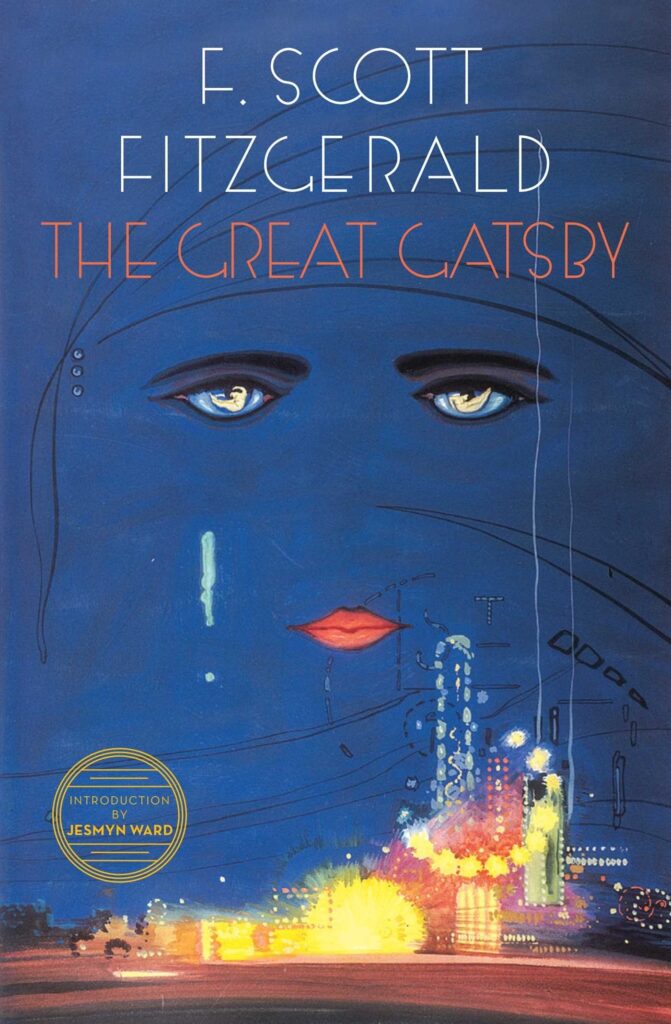
Example: The Great Gatsby opens and closes with Nick reflecting on the past from a distance. The final image of boats against the current only lands because of the 180 pages before it.
3. Epistolary
Best for: thrillers, historical fiction, YA
Difficulty: medium
Document → document → document (letters, emails, texts, transcripts, diary entries)
The story is assembled entirely from written artifacts. It creates unusual intimacy (the reader feels like they're reading something private) and gives you built-in unreliable narration, since every document was written by someone with an agenda.
Example: Dracula by Bram Stoker, told through journals, letters, and newspaper clippings. Modern versions swap in Slack threads and voice memos.
4. Braided
Best for: creative nonfiction, memoir, essay
Difficulty: high
Thread A → Thread B → Thread C → A → B → C → convergence
Two or three separate storylines alternate throughout, connected by theme rather than plot, and converge at the end. A personal story braided with historical research braided with a scientific concept, for example.
Example: Most literary memoir published in the last decade. The technique lets you write about a large idea without lecturing, because the personal thread carries the emotion while the research thread carries the argument.
5. In medias res (nonlinear)
Best for: thrillers, mystery, screenwriting
Difficulty: medium
Crisis moment → backfill how we got here → catch up → resolve
Open in the middle of the action, then jump backward to explain it. Buys you reader patience up front, which is why it's everywhere in commercial fiction. The risk is that the flashback section drags. The backfill needs its own forward momentum.
Example: Countless thrillers that open on a body, then rewind six months.
Writing fiction? Structure choice gets a lot easier once you understand the underlying beats every story needs. Our book outline guide shows how to build inside whichever structure you pick.
4 Informational Writing Structures
Informational structures organize writing by importance, sequence, or category so readers can find what they need without reading everything.
6. Inverted pyramid
Best for: news, press releases, executive summaries
Difficulty: low
Most important information → supporting details → background → nice-to-know
Front-load everything. The reader gets the complete answer in the first two sentences and can stop reading at any point without missing the point. Built for journalism, but now the default for anything read on a phone.
Example: any wire-service news article. Also the reason this post opens with a TL;DR.
7. Chronological order
Best for: history, process writing, biography
Difficulty: low
First → next → then → finally
Events in the order they happened. The simplest structure available, and the right choice whenever sequence carries meaning — a recipe, a historical account, a step-by-step tutorial.
Example: any instructional guide where step three fails if you skip step two.
8. Listicle
Best for: blog posts, reference content, roundups
Difficulty: low
Promise a number → deliver N discrete items → brief close
Information broken into numbered, self-contained chunks. Dismissed as shallow, but it's the correct structure whenever the items have no natural order and readers want to skim. The failure mode is padding. Twelve real items beat twenty with eight filler entries.
Example: the structure of the article you're reading right now.
9. Spatial
Best for: travel writing, description, technical docs
Difficulty: low
Near → far, or top → bottom, or outside → inside
Organize by physical position rather than time or importance. Underused and genuinely useful. It's how you describe a room, a building, or a landscape without the description turning into an inventory list.
Example: travel writing that walks you from the street, through the door, into the room.
3 Persuasive Writing Structures
Persuasive structures create a gap between the reader's current situation and a better one, then close it with your argument.
10. Problem-solution
Best for: nonfiction books, proposals, sales copy
Difficulty: low
Name the problem → prove it's real → present the solution → show the outcome
The workhorse of nonfiction. Most business and self-help books are a single problem-solution structure stretched across ten chapters. It works because it earns the reader's attention before asking for their belief.
Example: nearly every prescriptive nonfiction bestseller. The most common mistake is rushing past the problem. Readers won't accept a solution to a problem they don't feel yet.
11. Cause and effect
Best for: analysis, op-eds, explanatory nonfiction
Difficulty: medium
This happened → because of this → which produced this
Trace the chain from root cause to consequence. Persuasive because it reframes the reader's understanding of something they thought they already understood. Also runs in reverse: start with a familiar effect and work backward to a surprising cause.
Example: most popular-economics and popular-science writing.
12. Compare and contrast
Best for: reviews, decision content, academic writing
Difficulty: medium
Block method (all of A, then all of B) or point method (A vs. B on each criterion)
Analyze two or more subjects against shared criteria. The point method is almost always stronger for readers making a decision, because it lets them compare directly instead of holding A in memory while reading B.
Example: any "X vs. Y" article. Also the table three sections above this one.
Writing Structure Examples: All 12 Compared
Quick answer
Use this table to match your project type to a structure in under a minute.
| Structure | Family | Best for | Reader stays because |
|---|---|---|---|
| Narrative arc | Narrative | Novels, memoir | They want to know how it ends |
| Circular | Narrative | Literary fiction | They sense a pattern completing |
| Epistolary | Narrative | Thrillers, historical | It feels like private access |
| Braided | Narrative | Creative nonfiction | They want the threads to connect |
| In medias res | Narrative | Thrillers, mystery | They need the crisis explained |
| Inverted pyramid | Informational | News, summaries | They got the answer immediately |
| Chronological | Informational | History, tutorials | The sequence is the point |
| Listicle | Informational | Blog posts, roundups | They can skim to what they need |
| Spatial | Informational | Travel, description | They can picture it |
| Problem-solution | Persuasive | Nonfiction books | They have the problem |
| Cause and effect | Persuasive | Analysis, op-eds | It explains something puzzling |
| Compare and contrast | Persuasive | Reviews, decisions | They're choosing between options |
How to Choose the Right Writing Structure
Quick answer
Answer the four questions below and usually one structure is left standing.
- What do you want the reader to do differently? Feel something → narrative family. Understand something → informational. Do or believe something → persuasive. This eliminates two-thirds of the options immediately.
- What does the reader already know and feel? A reader who already feels the problem doesn't need three chapters proving it exists. A reader who doesn't won't accept your solution without them.
- Does the material have a natural shape? If events must happen in order, go chronological. If two ideas are genuinely in tension, go compare and contrast. Fighting the material's natural shape is the most common cause of a stalled draft.
- How long is the piece? Braided and circular structures need room. They generally fail under 2,000 words. Inverted pyramid and listicle work at any length.
One more rule that saves months: you can change structures mid-draft, but you cannot change them mid-chapter. If a chapter isn't working, it's usually running two structures at once. Pick one, cut the other, and it almost always clicks.
4 Common Writing Structure Mistakes
1. Choosing a structure after drafting
You write 30,000 words, then try to impose order on them.
Fix: pick the structure before you outline. Retrofitting a structure costs more time than writing the draft did.
2. Picking the most impressive structure instead of the right one
Braided and nonlinear structures look sophisticated, so first-time authors reach for them.
Fix: use the simplest structure that does the job. A well-executed narrative arc beats a botched braided essay every time.
3. Running two structures at once
The chapter is half chronological and half problem-solution, so it feels like it's fighting itself.
Fix: one structure per chapter. Nest different ones inside a book, never inside a section.
4. Structuring for yourself instead of the reader
The order matches how you researched or lived it, not how someone else needs to receive it.
Fix: ask what the reader needs to know first to understand anything else, and start there.
Writing Structures FAQ
What are examples of structure in writing?
Common writing structure examples include the narrative arc (novels), inverted pyramid (news), problem-solution (nonfiction books), chronological order (history and tutorials), compare and contrast (reviews), cause and effect (analysis), and epistolary (stories told through letters or messages). Most published writing uses one of these twelve patterns.
What are the 7 types of story structure?
The seven most commonly taught story structures are the three-act structure, Freytag's pyramid, the hero's journey, Dan Harmon's story circle, Fichtean curve, save the cat beat sheet, and seven-point story structure. All seven are variations on the same underlying narrative arc — setup, escalating conflict, climax, resolution — differing mainly in how finely they subdivide the middle.
What are the 8 main types of writing styles?
Writing styles and writing structures are different things. The commonly cited eight styles are narrative, descriptive, expository, persuasive, creative, technical, journalistic, and review writing. Style describes how you write; structure describes the order you deliver it in. You choose both, independently.
What is the 2-3-1 rule in writing?
The 2-3-1 rule is a sentence-level emphasis technique popularized by writing teacher Donald Murray. Put your second-strongest idea at the beginning, the weakest in the middle, and the strongest at the end — because the final word of a sentence carries the most weight.
It applies to sentences and paragraphs, not to document structure. Worth knowing, but it doesn't answer which of the types of structure in writing you should use for a chapter or a book.
Can you use more than one writing structure in a book?
Yes, and most good nonfiction does. Run one structure at the book level — usually problem-solution — and use different structures inside individual chapters. The rule is that structures nest but don't overlap: one structure per section, never two competing inside the same chapter.
Now Pick One and Start Writing
You don't need to master all twelve writing structures. You need to pick the one that fits the book in front of you and commit to it long enough to finish a draft.
Start with the four questions above. Write down your answer to the first one (tell, explain, or convince) and you've already eliminated eight structures. Pick from what's left, build your outline inside it, and start.
The authors who finish aren't the ones who found the perfect structure. They're the ones who chose a good-enough structure early and stopped renegotiating it.
Ready for the next step? Our guides to how to write a book and how to write a nonfiction book pick up where this one leaves off, or grab a free copy of Published., the proven path from blank page to 10,000 copies sold.