


























TL;DR
Observational humor turns ordinary, everyday moments into laugh-out-loud writing by noticing details other people overlook. To write it, sharpen your attention to daily life, keep your examples relatable, exaggerate for comedic effect, time your delivery, and refine every line until only the funniest version survives.
You've tried writing funny before. You noticed something absurd about grocery store self-checkout lines or your family group chat, wrote it down, and it landed flat. The observation was true. It just wasn't funny yet.
That gap, between "this is relatable" and "this made someone laugh out loud," is where most humor writers get stuck. Observational humor looks effortless in the hands of Jerry Seinfeld or David Sedaris, but it runs on a specific, learnable set of techniques. This guide breaks those techniques into a 5-step framework you can apply to your next essay, book, or bit.
Get Your Free eBook of Published.
The proven path from blank page to 10,000 copies sold - written by 7-time bestselling author, Chandler Bolt
What is observational humor?
Observational humor, also called observational comedy, is a comedic style that finds humor in the ordinary and mundane parts of everyday life rather than in invented scenarios or wordplay.
It works by naming the quirks, social conventions, and small absurdities that most people notice but never say out loud. Jerry Seinfeld built an entire career on this: pointing at the specific inconvenience of airline peanuts or parallel parking and articulating exactly why it's ridiculous.
Because it draws from shared experience, observational humor is one of the most universally accessible comedic styles. A reader doesn't need context, a setup, or an inside joke to get it. They just need to have lived through the moment you're describing, which means the sharper and more specific your observation, the wider your humor lands.
Observational humor examples in books and stand-up
The clearest observational humor examples come from writers who turn a single mundane detail, a diary entry, a road trip, a family dinner, into a fully developed comedic set piece.
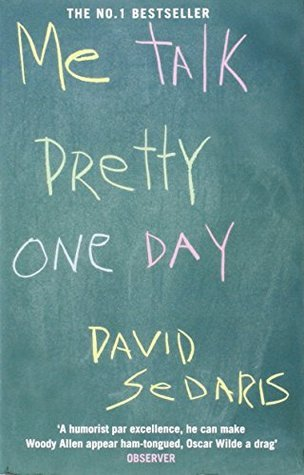
Me Talk Pretty One Day — David Sedaris
Sedaris mines language barriers, family dynamics, and his own social missteps for essay-length observational humor that never relies on exaggeration alone; the humor comes from precision.
Bridget Jones's Diary — Helen Fielding
Told through diary entries, Bridget's play-by-play of modern single life (calorie counts, dating disasters, New Year's resolutions) is observational humor built on format as much as content.
The Catcher in the Rye — J.D. Salinger
Holden Caulfield's running commentary on "phoniness" shows how a consistent comedic point of view, not just isolated jokes, can carry an entire book.
Calvin and Hobbes — Bill Watterson
A six-year-old's musings on school, parents, and the universe prove observational humor doesn't need adult cynicism to land; it needs a consistent, specific voice.
A Confederacy of Dunces — John Kennedy Toole
Ignatius J. Reilly's sarcastic take on 1960s New Orleans shows how observational humor can be filtered entirely through one exaggerated, opinionated character.
On stage, Jerry Seinfeld and the late Louis C.K. built full sets from single observations stretched to their logical, absurd conclusion. Whether it's a page or a stage, the mechanics are the same, which is exactly what the framework below teaches you to build.
How to write observational humor: a 5-step framework
Writing observational humor comes down to 5 repeatable steps: sharpen what you notice, keep it relatable, exaggerate for effect, time the delivery, and refine ruthlessly until only the funniest version remains.
1. Train your observational skills
Keen observation is the raw material for every joke you'll write. Most people notice that something is odd; observational humor writers notice exactly what makes it odd and can name it in one sharp sentence.
Start carrying a running list, in your phone or a notebook, of small frictions you hit during the day: the specific way people react in an elevator, the absurd wording on a receipt, the ritual of a family dinner. You're not writing jokes yet. You're building a bank of raw, true details to shape later.
2. Make it relatable
An observation only becomes humor when the reader recognizes it as true for them, too. The most effective way to do this is to aim for universal, not personal, specificity: describe your exact experience with the self-checkout machine, but frame it so anyone who's used one nods along.
- Anchor on shared experiences: commuting, family holidays, dating apps, group chats.
- Avoid niche references that only you or a small circle would understand.
- Test it on someone outside your immediate circle before you commit it to the page.
3. Exaggerate for effect
Exaggeration and hyperbole take a true, ordinary observation and stretch it past the point of realism, which is where the laugh lives. If your true observation is "the printer jams constantly," the exaggerated version treats the printer as a sentient enemy plotting your downfall.
The rule: exaggerate the reaction or the framing, not the underlying truth. The reader has to recognize the real situation underneath the joke, or the exaggeration reads as random instead of funny.
4. Master timing and delivery
Timing and delivery determine whether a true, exaggerated observation actually lands as a joke. In writing, this means controlling where the punchline sits in the sentence, and how much setup you give it before you get there.
The most common fix here: cut the sentence short. Most first-draft observational humor over-explains the joke, which kills it. If you're wondering how to write observational comedy for the stage specifically, the same rule holds even harder: a comic delivering a bit live has to trust the audience to catch up, and so should you on the page.
5. Refine ruthlessly
The first draft of a joke is rarely the funniest version of that joke. Refinement means cutting every word that isn't doing comedic work, tightening the setup, and reading the line out loud to hear where it drags.
Run each observation through 2 or 3 rounds of edits before you consider it finished. Ask: does every word earn its place, or is the joke buried under explanation?
Common mistakes to avoid
Over-explaining the joke. If you have to add "which is funny because..." after the line, cut back to the observation itself and trust the reader.
Going too niche. A joke that only your close friends will understand isn't observational humor; it's an inside joke. Widen the reference.
Exaggerating the wrong element. Stretch the reaction or framing, not the core fact, or the joke stops feeling true.
Skipping revision. Humor writing needs more editing passes than most prose, not fewer, because timing is everything.
FAQ: observational humor and observational comedy
What is observational comedy?
Observational comedy is another name for observational humor: a comedic style built on noticing and naming the quirks of everyday life, social conventions, and human behavior, rather than on invented scenarios.
What is observational humor best used for?
It works well in memoirs, personal essays, humor collections, stand-up sets, and any nonfiction writing that benefits from a relatable, conversational voice.
Do I need to be a professional comedian to write it?
No. Observational humor is a craft skill, not a personality trait. Writers like David Sedaris and Bill Watterson built entire careers on it without ever doing stand-up.
Turning your observations into a book
If you've got a notebook full of sharp, funny observations about your life and you're not sure how to shape them into a memoir or humor collection, that's exactly the gap our coaching closes. We've helped thousands of authors go from a folder of ideas to a published, sellable book. Book a free strategy call to learn more.


