


















TL;DR A flashback is a scene that interrupts the present timeline to show something that already happened. The best ones are short, triggered by something concrete, and change how the reader reads the present. Below are 31 flashback examples from novels, films, TV, and memoir, plus the tense mechanics for writing one in first person.
Most flashbacks fail for the same reason: the writer needed the reader to know something, and a flashback was the fastest way to hand it over.
That's backstory delivery, not storytelling. The reader feels the seams, loses the thread of the present scene, and skims until the italics stop.
A flashback earns its place when it does something a present-tense scene can't, when it makes the reader re-read the present differently. This guide breaks down 31 examples that pull it off, sorts them by medium, and gives you the mechanics to write your own.

What is a flashback?
A flashback is a scene that jumps backward from a story's present timeline to show an earlier event. It interrupts the current scene, plays out in the past, and returns the reader to the present.
Flashbacks can land anywhere in a story. Most prologues are flashbacks. So is any chapter that opens with a character remembering something in real, scene-level detail rather than summarizing it in a sentence.
The distinction that matters: a flashback is a scene, not a mention. "She'd broken her arm at nine" is backstory. Two paragraphs of the fall, the sound, and her father's face is a flashback.
Why writers use flashbacks
- To reorder the story for impact. If the beginning isn't the most compelling part, start later and drop the beginning into the middle.
- To buy investment first. Let readers care about the character before you ask them to sit through the character's history.
- To withhold. Delaying a piece of information creates intrigue that a chronological telling can't.
- To recontextualize. The strongest use: a flashback that makes an earlier present-day scene mean something completely different in hindsight.
Those are all legitimate. What follows separates the flashback story examples that do this well from the ones that just stall the plot.
Flashback examples in books
Flashbacks are harder in prose than on screen, because there's no visual cue for a time shift. Novelists carry the whole transition on tense, white space, and trigger.
Here are 11 novel-length flashback examples, and what each one is doing structurally.
- The Book Thief — Markus Zusak
Death narrates out of order, flashing back and forward across Liesel's story. Knowing the ending early doesn't kill the suspense, it moves the suspense from what happens to how we get there. - To Kill a Mockingbird — Harper Lee
The whole novel is adult Scout recounting her childhood. The retrospective distance is the point: it lets a child's observations carry an adult's understanding. - The Five People You Meet in Heaven — Mitch Albom
Structured entirely around returns to Eddie's past. Each flashback answers a question the afterlife framing has just raised. - The Odyssey — Homer
The original in medias res. Odysseus recounts years of travel to the Phaeacians, which is why the epic can open in the middle and still make sense. - Rebecca — Daphne du Maurier
Opens with the narrator dreaming of returning to Manderley, then flashes back to how she got there. The frame tells you the house is gone before you know why you should care. - Beloved — Toni Morrison
Memory arrives in fragments and out of sequence, because that's how the characters experience it. The disordered structure is the trauma, not a description of it. - Slaughterhouse-Five — Kurt Vonnegut
Billy Pilgrim is "unstuck in time." Vonnegut removes the transitions on purpose. The reader gets no more warning than Billy does. - The Kite Runner — Khaled Hosseini
A present-day phone call opens the book, then the narrative drops into Kabul for most of the novel. The frame gives every childhood scene a shadow of consequence. - A Christmas Carol — Charles Dickens
The Ghost of Christmas Past is a flashback with a chaperone. Giving the flashback a literal escort solves the transition problem completely. - Gone Girl — Gillian Flynn
Amy's diary entries run as an alternating past timeline against Nick's present. The two timelines are set up to contradict each other, and that contradiction is the twist. - Harry Potter and the Half-Blood Prince — J.K. Rowling
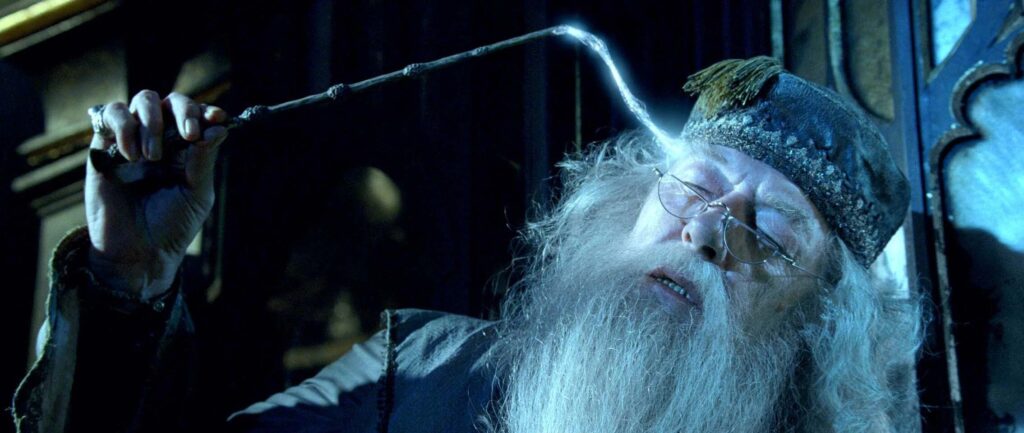
The Pensieve makes flashbacks a physical object characters step into. If your world allows it, an in-world device is the cleanest transition you can build.
An example of flashback used to disorient the reader on purpose
Most of the time you want the seams of a flashback to be clean. Sometimes you want the opposite. Here's an excerpt from the short story Wolverine Frogs:
TW: sexual assault
The warm sun and humidity hit my face like opening a dryer mid-cycle. I step onto the sidewalk and start down the street.
“Maya, wait up!” Andre is buttoning his shirt and running toward me barefoot.
I keep walking. “I have to get back before next period.”
“Wait.” He grabs my arm. “Maya, just look at me.”
I was pinned to the ground in the dim room, fingernails digging into the wooden floorboards, red light blinking in front of my face.
“Just look at me,” the man said through gritted teeth.
I closed my eyes tight.
“Look at me!”
I was on my stomach and he was on top of me and I couldn’t look at him if I tried. My fingers were white, gripping at the cracks on the floor.
I press my hands into the floor and push up as hard as I can. He falls off and I face him. I lunge and dig into his skin, tearing at his eyes with claws I didn’t know I had.
“Maya, stop!” Andre cries.
I’m outside, in the sun. A bird sings somewhere.
The character is having a trauma flashback, so she doesn't know when or where she is, and neither does the reader. There's no scene break and no italics. The only signal is the tense shift from present ("I step onto the sidewalk") to past ("I was pinned to the ground").
It's confusing by design, and it's brief enough that the confusion never becomes frustration. Notice the repeated line "just look at me" doing the work of the trigger.
An in-scene flashback example that isn't meant to confuse anyone
Compare that to this passage from Landline by Rainbow Rowell:
Her mom had turned Georgie’s childhood bedroom into the pug trophy room as soon as she graduated from high school—which was irritating because Georgie didn’t actually move out of the house until she graduated from college.
“Where else am I supposed to display their ribbons?” her mom had said when Georgie objected. “They’re award-winning dogs. You’ve got one foot out the door anyway.”
“Not currently. Currently, I have both feet on my bed.”
“Take off your shoes, Georgie. This isn’t a barn.”
This isn't a full scene, it's a scrap of remembered dialogue triggered by Georgie walking into her old bedroom. It's marked with italics and past perfect ("had turned," "had said") while the surrounding scene sits in simple past.
What it buys: Georgie's entire dynamic with her mother, delivered in four lines, inside an action the character was going to take anyway. Written as a standalone scene, that would have cost a page and a half.
Flashback examples in movies
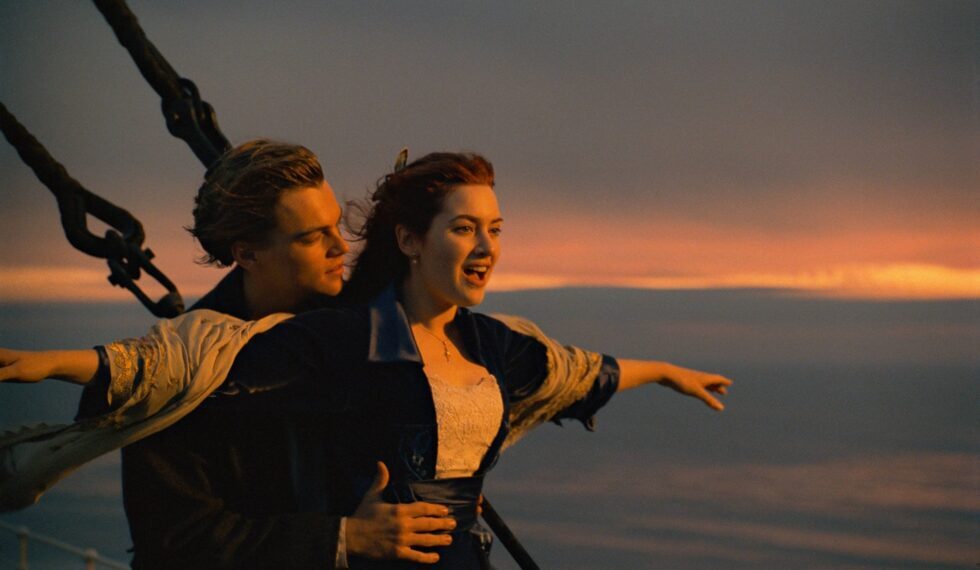
Film can flash back with a single cut, so filmmakers use them far more freely than novelists. That makes movies the best place to study flashback structure, and the worst place to copy flashback technique.
- Forrest Gump
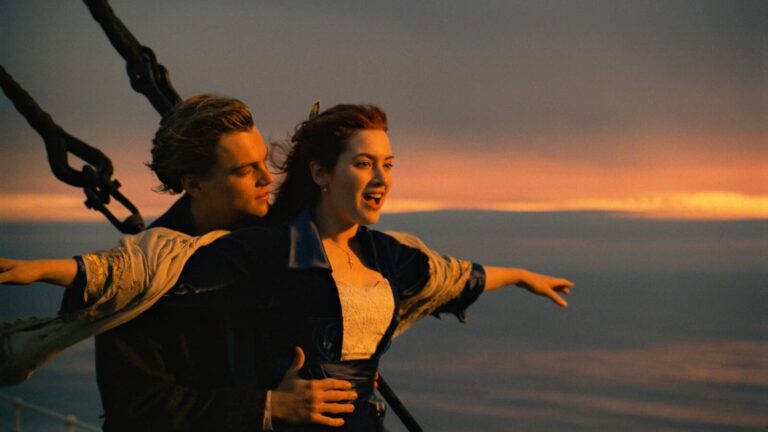
Nearly the entire film is Forrest telling his life story to strangers on a bench. The frame does double duty: it delivers the plot and characterizes Forrest through how people react to him. - Titanic
Told as elderly Rose's recollection. You know from minute one that she survives, so the tension transfers entirely onto Jack, which is exactly where the film wants it. - Casablanca
The Paris sequence is the textbook example: one flashback, placed at the precise moment the audience is desperate to know why Rick is like this. - The Godfather Part II
Runs young Vito's rise in parallel with Michael's decline. The flashbacks aren't context, they're the other half of an argument the film is making. - Up
The "Married Life" montage covers decades in about four minutes, with no dialogue. Proof that a flashback's emotional weight has nothing to do with its length. - Saving Private Ryan
Bookend structure: a present-day cemetery opens and closes a film that lives almost entirely in the past. The frame tells you what the story is for. - Slumdog Millionaire
Each game-show question triggers a flashback that explains how Jamal knows the answer. The trigger is built into the premise, so no transition ever feels arbitrary. - Memento
Reverse chronology rather than true flashback, but it teaches the same lesson: withholding the past is a tension engine, not just an information problem. - Eternal Sunshine of the Spotless Mind
Memories collapse as they're erased. The flashbacks degrade in real time, which turns exposition into an active, urgent scene. - The Notebook
Worth studying as the counterexample. The frame (Noah reading their story aloud) mostly delivers information the film could have shown directly, and cuts away from the emotional scenes to do it. When a flashback frame doesn't change what the past scenes mean, it's costing you more than it earns.
Flashback examples in TV shows
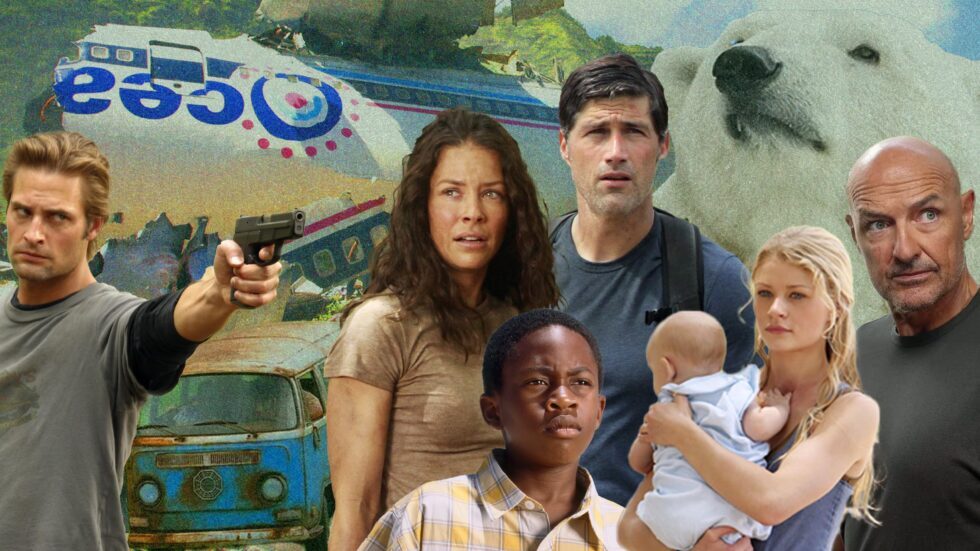
Television leans on flashbacks harder than any other medium, because episodic structure needs a repeatable way to feed backstory across seasons.
- LOST
Built a signature audio "whoosh" to mark every time jump, plus changes in character appearance and setting. When your structure is complicated, spend real design effort on the signposting. - This Is Us
Past and present run as two continuous timelines, not interruptions. The reveals land because the show trains you to read every present scene as an answer to a past one. - Orange Is the New Black
One character's backstory per episode. A rigid, predictable pattern that lets the audience relax into the structure instead of decoding it. - Better Call Saul
Uses black-and-white for the framing timeline and color for everything else. A single unmissable visual rule replaces every verbal explanation. - Breaking Bad
Cold opens that jump the timeline (sometimes back, sometimes forward) then let the episode catch up. The gap itself is the hook. - How I Met Your Mother
The entire series is a father narrating to his kids. The frame is also the joke, the title, and the series-long question.
Flashback essay examples (memoir and personal narrative)
In creative nonfiction, a flashback lets a writer open at the most compelling moment of their life instead of the earliest one. The structure is identical to fiction, the events just have to be true.
These are the flashback essay examples worth studying if you're writing memoir or a personal narrative:
- The Glass Castle — Jeannette Walls
Opens with adult Jeannette in a taxi, spotting her mother digging through a dumpster. Then it flashes back to childhood. That one present-day image gives every childhood scene its stakes. - Educated — Tara Westover
Moves between the narrating adult and the child living it. The gap between what young Tara believed and what adult Tara knows is where the book's meaning lives. - Night — Elie Wiesel
Written from decades of distance about events recounted in immediate, present-feeling scene. Retrospection doesn't have to soften anything. - "Goodbye to All That" — Joan Didion
The essay is a sustained look backward at eight years in New York. The retrospective frame is what allows the judgment. You can't assess a period you're still inside. - The Year of Magical Thinking — Joan Didion
Circles the same memories repeatedly rather than presenting them once. Grief doesn't move in a line, and the structure refuses to pretend it does.
The one rule for flashbacks in a personal essay
If you're writing a short personal narrative (the kind assigned in school or submitted to a literary magazine) use one flashback, and put it where the reader is already asking the question it answers. Short essays don't have room to rebuild momentum twice.
Types of flashback
There are two core types (the full flashback scene and the in-scene flashback) plus three structural variations that shape an entire book rather than a single moment.
| Type | What it looks like | Best for |
|---|---|---|
| Full flashback scene | A complete scene set in the past, usually separated by a scene break or chapter change, with a clear trigger in and out. | A past event important enough to dramatize in full — a death, a betrayal, a first meeting. |
| In-scene flashback | A few lines to a few paragraphs woven into a present scene, often in italics or past perfect. No scene break. | Relationship dynamics, a single revealing memory, character texture. The most common type in novels. |
| Frame narrative | The whole story is told from a later point in time. The "present" is the act of telling. | Stories where hindsight changes the meaning — Titanic, To Kill a Mockingbird. |
| Alternating timeline | Past and present run as two full storylines in alternating chapters. | When the two timelines argue with each other — Gone Girl, The Godfather Part II. |
| Involuntary flashback | The character is pulled into the past against their will, usually by trauma. Transitions are deliberately blurred. | Putting the reader inside a character's dissociation, as in the Wolverine Frogs excerpt above. |
The in-scene flashback is the one most novelists actually need. It costs the reader the least and, done well, does most of what a full scene would have done anyway.
How to write a flashback in a story: 5 rules
Earn it, need it, use it sparingly, keep it short, and make it pay off. If a flashback fails one of these five, cut it and work the information into a present scene.
These are the five rules on how to write flashbacks that hold up across every example above.
1. Earn your flashback
A long flashback early in a story is a bet that readers care enough about your character to time-travel with them. Usually they don't yet.
If your flashback runs longer than a page or two, put it after readers have a reason to want the character's history. Until then, they'll read it as delay.
Transition in and out with a trigger
Flashbacks shouldn't appear out of nothing. The cleanest way in is a concrete trigger such as a smell, a phrase, an object, or a sound the character recognizes. That's the logical bridge from the present into the past, and it's what Slumdog Millionaire and the Landline excerpt both use.
Coming back out can be as simple as someone in the present saying, "Hello?" You need something to jolt the character forward. Clear edges give readers the stability to follow you.
The flip side: deliberately removing the transitions is how you make readers feel as displaced as your character. Use that on purpose or not at all.
2. Make sure the flashback is relevant and necessary
Don't move around your timeline without a reason. It makes a story harder to follow for no return. Run every flashback through the same three questions we use for structuring a novel:
- Is it crucial to the reader's understanding? If no, cut it.
- Does the story make sense without it? If yes, cut it.
- Can you weave the information into a present scene instead? If yes, cut it.
Three cuts, one survivor. That's the ratio you want.
3. Use flashbacks sparingly
A flashback costs the reader effort. They have to hold two timelines, re-orient, and rebuild momentum when you return. Spend that currency deliberately.
If you have four flashbacks in the first fifty pages, you don't have a flashback technique, you have a structure problem. Start the story later.
4. Keep the flashback brief
You don't need pages of backstory. Most of it belongs in your regular timeline anyway, delivered through what characters say, avoid, and react to.
If a flashback is genuinely necessary, you should be able to hit the point and get out. Up covers a marriage in four minutes. Rowell covers a mother-daughter relationship in four lines.
5. Make the flashback meaningful
A flashback should carry weight, not just information. If all it does is transfer facts to the reader, it's an info dump with a costume on.
The test: does the present scene mean something different after the flashback than it did before? If yes, keep it. If no, the flashback isn't working, the information is.
How to write a flashback in first person
First person makes the tense shift do all the work. If your narration is past tense, dip into past perfect for two or three sentences, then drop to simple past. If it's present tense, write the flashback in simple past.
This is the mechanical question writers get stuck on, so here's the whole thing in one place.
If your story is in past tense
Use past perfect ("had") to enter the flashback, then switch to simple past once you're inside it, then use "had" again on the way out. Stacking "had" through an entire flashback is exhausting to read.
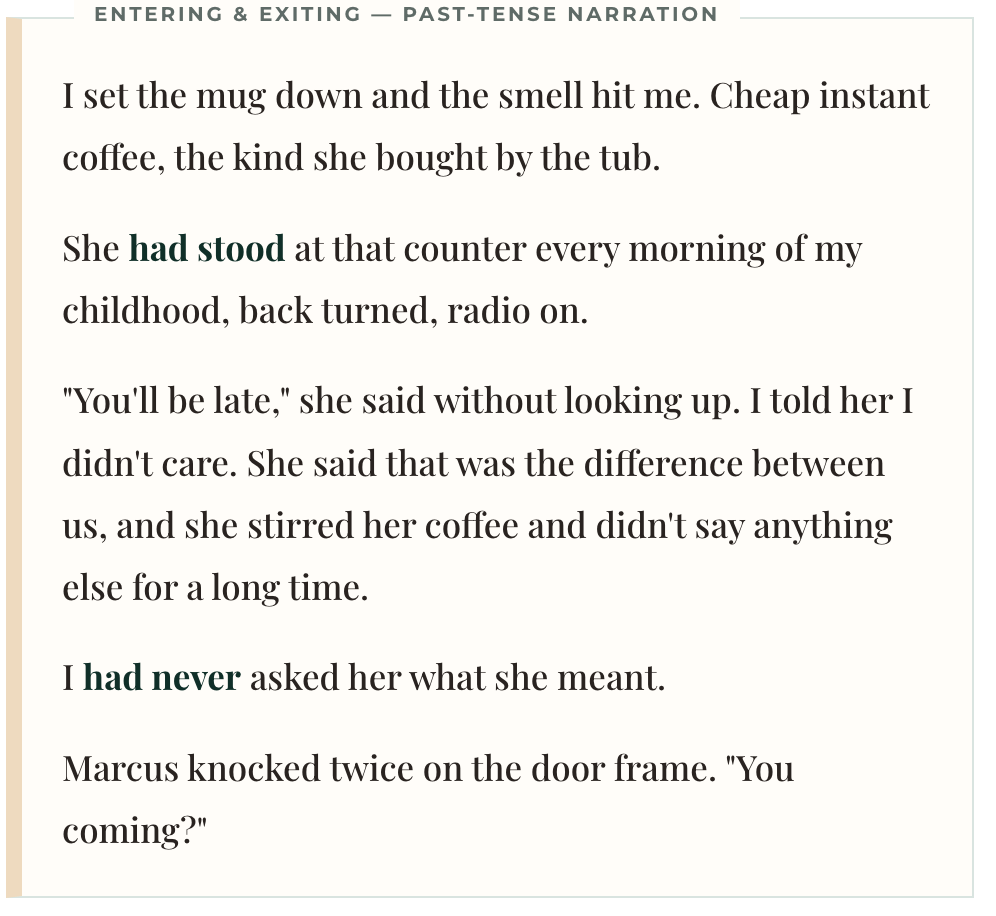
Two "had"s: one in, one out. Everything between them sits in simple past, which reads like a scene instead of a report.
If your story is in present tense
Write the flashback in simple past. The contrast is unmistakable and you don't need italics, a scene break, or a signpost, that's exactly what the Wolverine Frogs excerpt does.
Three first-person rules that apply either way
- Don't announce it. "I remembered the day my father left" tells readers a flashback is coming. Just start it. The tense will carry them.
- Keep the narrator's age consistent. Decide whether the flashback is narrated by who they were then or who they are now, and hold it. Slipping between the two is the most common first-person flashback error.
- Use italics with restraint. Italics work for a paragraph. Past three or four, they become genuinely hard to read on a screen or an e-reader.
Common flashback mistakes
- Flashing back in chapter one. Readers haven't invested yet. If chapter one needs a flashback to make sense, chapter one starts in the wrong place.
- The dream-sequence flashback. Almost always a workaround for the writer's inability to find a real trigger.
- Flashbacks that only carry information. If a line of dialogue could deliver the same thing, use the line of dialogue.
- No exit trigger. Readers can tell they've returned to the present, but they don't know when it happened, so the next page feels ungrounded.
- Backstory disguised as flashback. Summarized past events aren't a flashback. If there's no scene, no sensory detail, and no dialogue, you're writing exposition. See our guide to writing dialogue that carries backstory for the alternative.
- Too many, too close together. Two flashbacks in one chapter almost always means the present timeline isn't strong enough to hold the reader.
Flashbacks in writing: FAQ
How do I indicate a flashback in writing?
Use a trigger to ease in - a smell, sound, object, or phrase that pulls the memory up. Then signal the time shift with tense: past perfect ("had been") for a few sentences before settling into simple past, or simple past if your narration is present tense. To exit, bring the character back with a jolt: someone calling their name, a noise, a physical sensation.
Are flashbacks lazy writing?
Not when they're doing something a present scene can't. A flashback that adds depth, builds suspense, or changes the meaning of the present is craft. One that exists to hand the reader facts is a shortcut, and readers feel it.
Should flashbacks be written in past tense?
It depends on your main narration. If your story is in past tense, go one step further into past perfect for a few lines, then switch to simple past inside the flashback. If your story is in present tense, write the flashback in simple past.
How long should a flashback be?
Most in-scene flashbacks run a paragraph to a page. Full flashback scenes work best under a chapter. If yours is running longer, check whether it's actually a second timeline, in which case structure it as alternating chapters instead of an interruption.
Why might a writer use a flashback?
To reveal backstory without an info dump, create suspense by withholding, show what's driving a character's behavior, or make an emotional beat land harder by giving it context at the exact moment it's needed.
Are flashbacks overused?
In new fiction, yes. Many writers reach for a flashback instead of working backstory into the present narrative, which is harder but almost always better. A few well-placed flashbacks are powerful. Frequent jumps confuse readers and kill momentum.
What's the difference between a flashback and a prologue?
A prologue sits before chapter one and usually isn't interrupting anything. A flashback interrupts an established present timeline. Most prologues are flashbacks in content, they just don't have a present scene to return to yet.
Start with the structure
Flashbacks are one tool for building an impactful story, and they're one of the trickiest to use well. Every example above works because the writer made a deliberate choice about their timeline before they wrote a word of the past.
That's the order that matters: structure first, flashbacks second. If you know where your story starts and what your present scene is doing, you'll usually find that half your planned flashbacks were never necessary.
Want a hand mapping it out? Book a free call with our team and we'll walk through your story's timeline with you.