















TL;DR: First serial rights give a magazine, newspaper, or website the exclusive right to publish your work first, usually a short piece or a book excerpt. Once it runs, the rights return to you. First North American serial rights (FNASR) limit that exclusivity to North America. Read every contract closely so you never give away more than you intend.
An editor loves your essay and asks for "first serial rights." Or your book contract lists them in a clause you skimmed on page nine. You want the yes, but you don't know what you're agreeing to.
It matters. Sign without understanding and you could lose the chance to resell your work, block a bigger excerpt deal, or hand over every right you own for a single check.
This guide is for fiction and nonfiction authors, whether you're pursuing a traditional deal, self-publishing, or pitching articles to build your platform. You'll learn what first serial rights are, how they differ from second serial and one-time rights, how they work with books, whether posting online uses them up, and what to look for in a contract.
A quick note: this guide is educational, not legal advice. Have a literary agent or publishing attorney review any contract before you sign it.
What are first serial rights?
First serial rights give a publication the exclusive right to publish your work for the first time, before it appears anywhere else.
"Serial" here means a periodical: a magazine, newspaper, journal, or online outlet, as opposed to a book. A publication that buys first serial rights gets to run your piece first. That piece might be a short story, an essay, a poem, or an excerpt from your upcoming book.
Three things to remember:
- The exclusivity covers the first use only. Nobody else can run the piece before the buyer does.
- The rights come back to you. After the piece runs, you can resell it or collect it in a book.
- You still own your copyright. You're licensing one right, not selling your work, unless you sign over all rights or a work-for-hire agreement.
First North American serial rights (FNASR) explained
FNASR gives a publication the right to publish your work first in North America, while you stay free to sell it to publications elsewhere.
You'll see FNASR in many magazine guidelines and acceptance letters. It's first serial rights with a geographic limit, so you can still sell first publication rights to outlets in the United Kingdom, Australia, or anywhere else outside North America.
Plain "first serial rights" has no geographic limit, which makes it broader and more restrictive for you. Some contracts also set a time limit on exclusivity, so look for a date range as well as a territory.
For fiction authors, FNASR often applies to short stories and self-contained chapters. For nonfiction authors, it usually applies to excerpts and essays that stand alone.
First serial vs second serial vs one-time rights
First serial rights cover the first publication, second serial rights cover reprints, and one-time rights allow a single nonexclusive run.
| Right | What the buyer gets | Exclusive? | Typical use |
|---|---|---|---|
| First serial rights | The first publication of your work | Yes, until it runs | Unpublished stories, essays, book excerpts |
| FNASR | The first publication in North America | Yes, within North America | Same as above, with a territory limit |
| Second serial (reprint) rights | Publication of work that already appeared elsewhere | No, you can sell reprints to several outlets | Reprints and later excerpts |
| One-time rights | One run of the piece, with no promise it's the first | No | Pieces that have already been published |
| All rights | Every right, often permanently | Yes, usually for good | Rare, and a red flag in most deals |
Second serial rights are usually nonexclusive in the magazine world, so the same piece can run in several publications. If a contract asks for second serial rights, read closely. It can hand the publisher control over every future reprint, and that can cost you income.
How first serial rights work in book publishing
In a book deal, first serial rights let a magazine or website run an excerpt before your book launches, which builds buzz and drives preorders.
Traditional publishers treat serial rights as subsidiary rights, alongside foreign translation, audio, and film. Your contract spells out who controls those rights and how any income is split. Splits vary from deal to deal, which is why an agent matters. (Our guide to the Big Five publishers explains how deals with the major houses work.)
Here's how a prepublication excerpt usually unfolds:
- You, your agent, or your publisher pitches an excerpt to a magazine or website.
- The outlet buys first serial rights (or FNASR) and sets a run date, ideally close to your book's release.
- The excerpt runs with a credit line that points readers to your book.
- The rights return to you, and your book contract keeps governing the book itself.
- Any later reprint is a second serial sale, negotiated separately.
Many outlets expect a credit line for the first appearance, and publishers often want the same in your acknowledgments. Keep a note of the wording each outlet requires.
The strategy works for every kind of book. Nonfiction authors can excerpt a chapter that teaches one method. Memoir authors can excerpt a personal essay. Novelists can offer a short story set in the book's world, or a self-contained opening chapter.
Do first serial rights matter if you self-publish?
Yes. When you self-publish you own every right, so you decide whether to license an excerpt to a magazine or website and what to charge.
There's no publisher holding your subsidiary rights, which means every right is yours to use. That includes first serial rights to your own excerpts. You have two ways to use them:
- License them to an outlet. You earn a fee or exposure, and the publication's audience meets your book before launch.
- Use them yourself. Serialize chapters in your own newsletter or blog to grow your email list and build anticipation.
The tradeoff is timing. Once you publish a piece on your own platform, many outlets will treat it as already published. Decide which route you want before you post anything.
If you're still getting your manuscript ready, start with our guides on how to write a book and finding your book's target audience. Knowing your reader tells you which publications are worth pitching.
Does posting your work online use up your first serial rights?
It can. Many publications count a blog, newsletter, or social post as prior publication, so check guidelines before posting work you plan to sell.
Policies differ. Some journals count any earlier appearance, including a personal blog or a Facebook page. Others only count work that previously ran in print. The outlet's submission guidelines usually spell out which one applies.
Electronic rights are also less clearly defined than print rights, so a contract should name each electronic right separately. Does the outlet get to keep your piece online forever? Can it be included in digital archives or sold to aggregators? If the contract doesn't say, ask.
A safe habit: before you post a poem, essay, or excerpt on your blog, Substack, or social channels, decide whether you might want to sell first publication rights to it. If you might, hold it back.
How to use first serial rights to build exposure
Pitch a self-contained excerpt to an outlet your readers follow, time it near your launch, and ask for a credit line pointing to your book.
Use this five-step process:
- Choose an excerpt that stands alone. It should make sense without the rest of the book and show readers exactly what your book delivers.
- Match outlets to your readers. Look at genre magazines, trade publications, and online outlets your ideal reader already follows. Read each one's guidelines first.
- Pitch with the rights stated. Say which rights you're offering so the editor knows the piece is available.
- Confirm the details in writing. Get the rights granted, the territory, the run date, the payment, and the credit line on paper.
- Plan the follow-up. After the piece runs, link to it from your newsletter and site. Then look for outlets that will buy second serial (reprint) rights.
Sample pitch line: "I'd like to offer first North American serial rights to an excerpt from my upcoming book, [title], which publishes on [date]."
What to look for in a contract
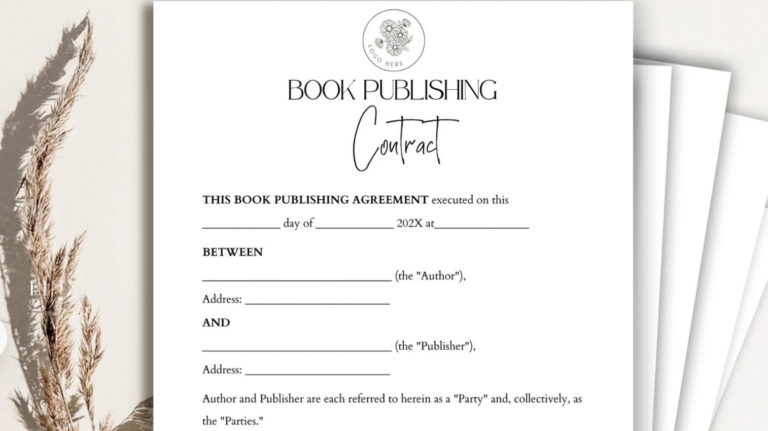
Check which rights you grant, for how long, and where, and push back on all-rights or work-for-hire language that takes away your future income.
Contracts often combine standard boilerplate with terms you can negotiate. Terms like payment, run date, and publicity are often flexible. Boilerplate is usually not, so understand what you're asking for before you push back.
Before you sign, check for:
- The exact rights named. First serial, FNASR, and all rights are very different grants.
- The territory. North America only, or worldwide?
- Exclusivity and reversion. How long is the exclusivity, and when do the rights return to you?
- Electronic and archive rights. Are they named separately, and for how long?
- Second serial or reprint clauses. Do they give the publisher control over your future reprints?
- Payment terms. Payment on acceptance and payment on publication are different deals.
- The credit line. What wording are you required to use?
- Checks with terms attached. If a check carries contract language, ask before you cash it.
The biggest red flags are all rights and work for hire. Both can transfer your control permanently. For book contracts, ask a literary agent or publishing attorney to review the terms before you sign.
Famous examples of serialization
Serialization is an old publishing strategy. Charles Dickens and Arthur Conan Doyle both released novels in magazine installments before the books appeared in full.
- Charles Dickens, A Tale of Two Cities. It ran in installments in All the Year Round, Dickens's own weekly magazine, in 1859.
- Arthur Conan Doyle, The Hound of the Baskervilles. It appeared in The Strand Magazine in 1901 and 1902.
The lesson hasn't changed. Releasing a story in pieces builds anticipation, rewards cliffhangers, and creates an audience before the full book arrives. Today that might be a magazine excerpt timed to your launch, or a newsletter series you run yourself.
Why protecting your rights matters
Your rights are separate assets. Each one you keep can earn income or exposure later, and each one you give away is hard to recover.
There are three reasons to treat your rights carefully:
- Income. You can sell the same piece more than once when you license rights separately.
- Exposure. Each excerpt puts your book in front of a new audience.
- Leverage. The rights you keep, such as translation, audio, and film, give you more to negotiate with later.
Keep a rights log so you always know what you've licensed:
| Piece | Outlet | Right granted | Territory | Date published | Rights revert |
|---|---|---|---|---|---|
| Chapter excerpt | [Magazine name] | FNASR | North America | [Date] | On publication |
| Personal essay | [Website name] | One-time rights | Worldwide | [Date] | [Date] |
First serial rights FAQ
What are first serial rights in plain language?
First serial rights give a magazine, newspaper, or website the exclusive right to publish your work first. It's usually a short piece or a book excerpt. After it runs, the rights return to you, and you can resell the piece or include it in a book.
What's the difference between first serial rights and FNASR?
First North American serial rights (FNASR) limit first publication to North America. Plain first serial rights have no geographic limit. With FNASR, you can still sell first publication rights to outlets outside North America.
Can I sell first serial rights more than once?
No. Once a piece has been published, the "first" right is used up. You can still sell second serial (reprint) rights or one-time rights to other outlets, since those don't require the work to be unpublished.
Do I lose my copyright when I sell first serial rights?
No. You're licensing the right to publish first, not transferring ownership. The exception is a contract that asks for all rights or work for hire. Those can transfer control permanently, so read for them.
Do first serial rights apply to self-published books?
Yes. You own all of your rights when you self-publish, so you can license a first serial excerpt to a magazine or site, or serialize chapters yourself. Remember that posting a piece publicly may count as publication for outlets that want unpublished work.
Do magazines pay for first serial rights?
Often, but not always. Payment varies widely by outlet, and some pay in copies or exposure. Confirm payment terms, including whether you're paid on acceptance or on publication, before you grant the rights.
Take control of your rights and publish your book
Rights can feel like a legal maze, but they come down to one idea: your book is a set of assets, and you decide who gets to use each one. Authors who understand that make better decisions about contracts, excerpts, and launches.
That clarity is also what separates a book that quietly appears from one that arrives with momentum. A well-timed excerpt gets your book in front of a new audience. A clean contract keeps your future options open. A clear publishing path keeps you from signing away more than you meant to.
If you're headed toward self-publishing
You keep control of your rights and make every call yourself. That's powerful, and it's also a lot of decisions: editing, cover design, formatting, categories, and launch strategy. Our coaches work with you one on one so you're not guessing at any of them.
If you're weighing a traditional deal
Knowing which rights matter, and which ones you can keep, makes you a stronger partner for an agent or publisher. Start with our directory of book publishers to see the landscape.
Either way, you don't have to figure it out alone
We've helped authors publish over 7,000 books across 91+ countries, and the pattern is consistent: authors who understand their options publish with more confidence and sell more books. Your book is closer than you think.
If you're ready to talk through your goals, your manuscript, and the right publishing path for you, book a free call with our team.