


















What if everything you've been taught about becoming a successful, confident man is actually what's keeping you from feeling worthy, fulfilled, and free?
That’s the question Ryan Vertucci sought to answer in his new personal growth guide for men, Quit The Game.
Blending personal storytelling with practical exercises and psychological insights, the book challenges conventional self-improvement culture and introduces a different approach to personal transformation: rather than becoming someone others will admire, men must first learn to understand, accept, and respect who they truly are.
Today, we’re going to dig a bit deeper into Ryan’s process, and the principles within The Aligned Man Method.
Book Title: Quit The Game: The Aligned Man Method: 31 Principles for Men Who Are Done Chasing Status and Approval
Genre: Personal Development / Self-Help, Men's Personal Growth, Psychology & Self-Esteem
Website: quitthegame.com
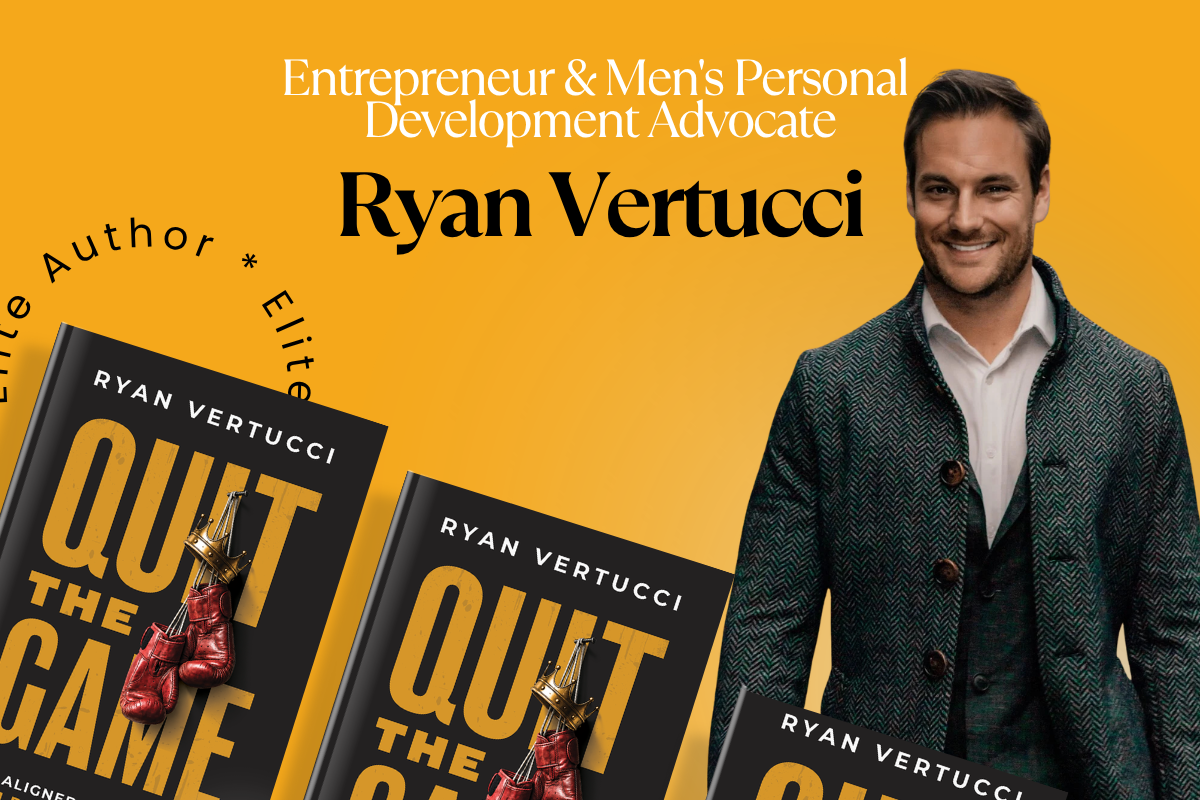
Hi, Ryan. Thanks for chatting with us. Can you start by sharing a bit of the inspiration behind Quit the Game?
I wrote Quit the Game because I spent nearly a decade chasing everything society told me would make me successful, confident, attractive, and fulfilled, only to discover that none of it made me feel worthy of being myself.
I spent hundreds of thousands of dollars on dating programs, confidence coaching, masterminds, and self-improvement. I built a multimillion-dollar business, traveled the world, and surrounded myself with people who appeared to have everything. Eventually, I was even recruited by Dan Bilzerian's organization to help sell the very lifestyle I had spent years pursuing.
But behind the image of success, I was anxious, emotionally exhausted, and constantly seeking approval. No matter what I accomplished, it was never enough.
Through therapy, deep personal reflection, and reconnecting with my Christian faith, I began to recognize that I wasn't pursuing these things because they genuinely mattered to me. I was trying to prove that I was good enough. Many of those patterns traced back to childhood experiences and beliefs I had never questioned.
That realization changed everything. I began asking a different question: Instead of constantly trying to become someone other people would admire, what if I simply focused on becoming a better person?
I wrote this book because I believe millions of men are trapped in the same cycle, spending their lives chasing status, money, women, and approval without understanding why they never feel satisfied.
I wanted to share the lessons I learned through more than a decade of experience, significant financial investment, painful mistakes, and personal transformation so other men wouldn't have to spend the same time and money discovering what I did.
My hope is that men realize they don't need to win the game of external validation. They can quit playing it altogether and start building a life they genuinely respect.
Wow! So what made now the right time to share this story and advice?
The moment I knew I needed to write Quit the Game happened in a place I never intended to visit, during an experience I still struggle to explain as coincidence.
My old life was crumbling. After spending more than a decade chasing success, money, status, women, and the approval of others, I had finally begun to see the truth. Everything I had worked so hard to build on the outside was failing to give me what I had desperately wanted on the inside. The identity I spent years constructing was falling apart, and for the first time, I was beginning to understand why.
I decided to escape to Italy for a few days to clear my head and get away from everything.
While traveling, I found myself in Salerno with a few hours to spare before my train. I knew nothing about the city, so I pulled out my phone and Googled things to do nearby. The Salerno Cathedral appeared in the results, and I decided to visit.
I wandered through the cathedral without any particular expectations. Eventually, I made my way downstairs into a beautiful crypt. I didn't know whose crypt it was or understand the significance of where I was standing. I simply noticed an altar with a single kneeling bench in front of it.
Something compelled me to kneel and pray.
As I knelt there, the Lord's Prayer came to me. It was the first time I had found myself praying those words in that way. I didn't understand why that particular prayer had come to mind, but I prayed it.
Then I got up, left the cathedral, and continued toward the train station.
It wasn't until I got back to the station that curiosity led me to Google the cathedral and discover where I had just been. I had been kneeling at the tomb of St. Matthew.
As I researched Matthew, I learned that his Gospel contains the Lord's Prayer, the very prayer that had come to me while kneeling at his tomb, without knowing whose tomb it was.
Then I learned Matthew's story.
Matthew had been a tax collector, a man whose identity and livelihood were tied to money and worldly pursuits. When Jesus called him, Matthew left his former life behind to follow something greater.
I sat there at the train station trying to process what had just happened. I had traveled halfway around the world because the life I had built around external success was falling apart. Without planning it, I had wandered into the tomb of a man who had walked away from his own former life to follow Jesus. And somehow, without knowing where I was, I had found myself praying the very prayer recorded in his Gospel.
I couldn't shake the experience.
For years, I had been trying to become someone the world would admire. Now I was beginning to understand that perhaps I was being called to become someone entirely different.
That was the moment I realized my story wasn't just about the mistakes I'd made or the money and years I'd wasted. Maybe everything I had experienced could serve a greater purpose. Maybe the lessons I'd learned could help other men who were trapped in the same endless pursuit of validation.
That's when I decided to write Quit the Game.
I didn't want to write another self-help book teaching men how to win at money, status, dating, or success. I wanted to challenge the game itself.
I went to Italy trying to escape a life that was falling apart. I accidentally walked into a cathedral, knelt at a tomb I knew nothing about, and left with the beginning of a new purpose.
After you were inspired to write the book, how did it come to fruition? What was that process like?
The writing process for Quit the Game began with a powerful experience at the Rise Up Kings Forge event in Dallas, Texas, in late January 2026.
Over several days, we explored our subconscious minds, confronted deeply rooted beliefs, and examined the patterns that had shaped our lives. One of the most important lessons was the Be → Do → Have philosophy, the idea that lasting transformation begins with who you are, not what you accomplish or acquire.
On the final day of the retreat, I stood in front of the group and shared the story of my unexpected experience at the tomb of St. Matthew in Salerno, Italy. I explained how I had unknowingly knelt at his tomb and recited the Lord's Prayer for the first time in 25 years, only to discover afterward that Matthew's Gospel was where that prayer was recorded.
I spoke about how Matthew had walked away from his former life as a tax collector to follow Jesus, and how his story mirrored my own decision to leave behind a life built around money, status, and external approval.
Immediately afterward, our group participated in a symbolic exercise where we helped one another climb over a wall. The experience felt particularly meaningful to me. I had just shared how I was overcoming the emotional walls and beliefs that had controlled my life, and now I was physically climbing over a wall with the support of other men.
Less than 24 hours later, I boarded a plane from Dallas to Bali, Indonesia, to write the book.
I arrived in early February 2026 and checked into a place called the Bali Time Chamber. It was almost the complete opposite of the lifestyle I had spent years pursuing.
There was no alcohol, no partying, no women to chase, and none of the usual distractions. Just a peaceful environment surrounded by nature, other men focused on personal growth, a gym, walking trails, and enough Wi-Fi to work and write.
For years, I had filled nearly every moment of my life with stimulation, entertainment, social activities, and the constant pursuit of something more. In Bali, I finally gave myself the space to sit alone with my thoughts and put everything I had experienced into words.
I spent my days reflecting, writing, exercising, walking through nature, and organizing the lessons I had learned throughout my life. I drew from years of personal experiences, therapy, spiritual growth, failed relationships, and the enormous amount of time and money I had invested in the self-improvement industry.
The Be Love → Do Love → Have Love framework became the foundation of the book, organizing the 31 principles into three stages: understanding who you are, aligning your actions with your values, and building a life that reflects your authentic identity.
While in Bali, I wrote the entire manuscript, along with a substantial amount of additional material that has not yet been published.
When I returned to the United States, the next phase began. With the help of talented editors, trusted friends, and a dedicated publishing team, I spent months revisiting the manuscript, refining the stories, strengthening the lessons, and shaping the material into the book it is today.
The most challenging part was being completely honest about my failures, insecurities, addictions, relationships, and the ways I had hurt both myself and others. I made a conscious decision not to sanitize my story to protect my image, because doing so would contradict the very message I was trying to share.
Looking back, there's something meaningful about where the book was written. I spent years traveling the world trying to create the perfect lifestyle and capture the perfect photograph. Yet the most meaningful thing I ever created came from traveling halfway around the world to a quiet place where there was almost nothing to do except reflect, pray, and write.
I spent years chasing a life that looked extraordinary to everyone else. It wasn't until I stepped away from all of it that I finally found the peace and clarity to write Quit the Game.
What was the hardest part about that writing process?
The hardest part of writing Quit the Game was staying true to myself while figuring out how to turn a deeply personal story into something that could genuinely change other people's lives.
The first challenge was choosing authenticity over approval.
The irony of writing a book about breaking free from external validation is that publishing a book opens you up to judgment from everyone. I had to make a conscious decision not to write what I thought would be commercially successful, socially acceptable, or what people wanted to hear.
Some of the stories in this book are deeply personal and uncomfortable. I openly discuss my insecurities, addictions, failed relationships, mistakes, and the ways I spent years trying to manufacture an image of success. It would have been easy to leave those parts out, soften the truth, or present myself as someone who had everything figured out.
But that would have contradicted the entire message of the book.
I had spent years performing for other people's approval. I wasn't going to write a book about authenticity while continuing to perform for my readers.
The second challenge was turning my personal experiences into lessons that would resonate with everyday men.
My story involves extraordinary experiences, expensive mistakes, and a lifestyle that most people will never live. But I didn't want readers to see this as a book about a wealthy entrepreneur who lost his way. I wanted the man who goes to work every day, goes to the gym, struggles with dating, scrolls through Instagram, and occasionally wonders why he isn't further ahead in life to recognize himself in my story.
The challenge was separating the circumstances of my experiences from the emotions and beliefs underneath them.
A reader might never own a yacht, drive an exotic car, or spend thousands of dollars on dating coaches. But he probably knows what it feels like to be rejected, compare himself to another man, question his worth, or believe that achieving something more will finally make him happy.
That's where the real connection happens.
I worked through multiple rounds of editing and refinement, with feedback from trusted friends and my publishing team, continually asking myself whether each story served the reader or simply told them something about me.
Ultimately, I had to learn to trust that the more honest and vulnerable I was about my own journey, the more likely someone else would recognize something meaningful in theirs.
What was your favorite part about that process?
My favorite part of writing this book was watching the story come alive, chapter by chapter, and slowly realizing just how powerful the lessons from my life could be for other men.
As I wrote, I found myself revisiting some of the craziest experiences of my life, remembering what I was thinking at the time, what I believed, and why I made the decisions I did. Some memories made me laugh at how absurd my life had become. Others were painful to revisit. But what struck me most was realizing how many other men are thinking and feeling exactly the way I was, even if their circumstances look completely different.
I began to recognize that my story wasn't really about the money, the women, the parties, or the lifestyle. It was about the insecurities, fears, and need for approval underneath all of it. Watching those experiences become meaningful lessons on the page was incredibly rewarding. Something that had once felt like years of expensive mistakes was becoming something that might genuinely help other people.
The writing process became a form of therapy in itself.
There was something powerful about putting my entire story into words, seeing patterns I hadn't fully recognized before, and understanding how so many seemingly unrelated experiences were connected.
Another highlight was recording the audiobook. Sitting in a studio and reading the entire manuscript aloud was a completely different experience from writing it. Hearing my own words, speaking the stories out loud, and reliving those moments made everything feel real in a new way. It was emotional, therapeutic, and incredibly fulfilling. It also gave me the opportunity to experience the book as a reader might, rather than simply as the person who wrote it.
But perhaps the most meaningful moment was giving my mother the very first copy.
My mother is an important part of this story, including some of its most difficult chapters. When I handed her the book, I explained that she was in it—the good, the bad, and the ugly. I wasn't trying to blame her or reopen old wounds. I wanted to share what I had come to understand about my childhood, our family, and the experiences that shaped both of us.
That moment represented something much bigger than publishing a book. For much of my life, I had struggled to express certain feelings and have honest conversations about the past. Now I was handing my mother a book in which I had finally found the words.
Looking back, my favorite part wasn't simply finishing the manuscript or seeing my name on the cover. It was discovering how much healing could happen through the process of telling the truth.
I started writing Quit the Game because I wanted to help other men understand themselves. What I didn't fully anticipate was how much writing it would help me understand myself, too.
Who would you say must read this book?
Quit the Game is for the everyday man who goes to work, hits the gym, goes out on weekends, swipes through dating apps, and wonders why he still feels like something is missing. He's constantly exposed to images of wealthy entrepreneurs, attractive women, luxury lifestyles, and seemingly confident men who appear to have figured life out. He believes that if he could just make more money, get in better shape, attract more women, or become more successful, he'd finally feel confident, respected, and worthy. So he keeps chasing, comparing himself to others, and trying to become someone he thinks the world will admire, never realizing that the pursuit itself is what's keeping him unfulfilled.
This book is for the man who's tired of feeling like he's falling behind, tired of pretending, and ready to discover that he doesn't need to become someone extraordinary to be worthy of love, respect, and happiness. He needs to stop chasing approval, understand who he truly is, and build a life that reflects his own values rather than everyone else's expectations.
What would you say the top 3 things are that a man like that will learn from Quit the Game?
The three biggest lessons in Quit the Game follow a framework that challenges how most men approach success, relationships, and self-worth: Be Love → Do Love → Have Love. Instead of chasing external achievements to feel worthy, readers learn to build their lives from the inside out through 31 principles rooted in faith, authenticity, and genuine self-respect.
1. BE LOVE — Discover Who You Truly Are
Most men spend their lives trying to become someone others will admire without understanding why they feel the need to prove themselves in the first place.
Readers will learn how childhood experiences, emotional wounds, societal expectations, and unconscious beliefs shape their identities and drive their pursuit of money, status, women, and approval.
Through self-reflection and faith, they'll learn to recognize destructive patterns, reconnect with their authentic selves, and build a foundation of self-worth that doesn't depend on external validation.
The lesson: You were worthy before you ever achieved anything. Stop trying to prove it and start understanding who you truly are.
2. DO LOVE — Stop Performing and Start Living With Integrity
Once you understand who you are, the next step is aligning your actions with your values.
Readers will learn why manipulation, dating games, manufactured confidence, and constantly seeking approval often attract the very relationships and experiences they're trying to escape.
They'll discover how to establish healthy boundaries, develop emotional maturity, choose peace over chaos, take responsibility for their mistakes, and build genuine connections through honesty, faith, and integrity.
The lesson: Stop doing things to make people want you. Start becoming someone you genuinely respect. You attract what you are.
3. HAVE LOVE — Build a Life You No Longer Need to Escape From
Most men believe that once they have enough money, the right body, the perfect relationship, or a successful career, they'll finally feel fulfilled.
Readers will discover that lasting fulfillment doesn't come from accumulating achievements or admiration. It comes from living in alignment with their values, developing meaningful relationships, practicing gratitude, and pursuing a purpose greater than themselves.
They'll learn that ambition and success aren't the problem. The problem is believing those things determine their worth.
The lesson: You don't have to abandon your goals. You have to stop believing you'll finally be enough once you achieve them.
Most men live backward: HAVE → DO → BE. They believe they must first have success, then do the right things, and only then can they be happy and worthy.
Quit the Game reverses that philosophy: BE LOVE → DO LOVE → HAVE LOVE.
What are your plans for the future with this book and your business?
My vision for Quit the Game goes far beyond selling books. I want to build a movement that helps men stop chasing external validation, understand who they truly are, and create lives rooted in faith, authenticity, genuine self-respect, and purpose.
The book is the beginning of that journey. It tells my story through 31 principles and explains how my childhood experiences, insecurities, relationships, and beliefs influenced the decisions I made throughout my life. But I wanted to give readers something more than my personal experiences. I wanted to create a way for them to discover and understand their own stories.
That's why I developed The Aligned Man Method, an online course and community built around the same 31 principles and the Be Love → Do Love → Have Love philosophy.
The course guides men through their own process of self-discovery, using structured exercises, journaling, and personal reflection to help them examine their past, identify recurring patterns, understand the beliefs driving their behavior, and recognize where they've been seeking approval instead of living authentically.
The goal is for every man who completes the program to essentially write a book about himself, just as I did while writing Quit the Game. Not necessarily a book intended for publication, but a personal account of who he is, how he became that person, and what he wants to change.
I believe there's tremendous power in seeing your own story written out in front of you. You begin connecting experiences you never realized were related. You recognize patterns that have repeated for years. And you start understanding that many of the things you've been chasing were attempts to satisfy emotional needs you hadn't fully recognized.
But awareness is only the beginning. The Aligned Man Method also provides a path forward, helping men turn those discoveries into meaningful changes in their relationships, habits, decisions, and everyday lives.
The community provides an opportunity to connect with other men working through similar challenges, share experiences, support one another, and build genuine friendships based on growth rather than competition.
Looking ahead, I plan to continue expanding the program, speaking at conferences and events, appearing on podcasts, and writing additional books that explore relationships, faith, identity, and personal transformation.
Ultimately, I want Quit the Game to be the book that helps a man recognize he's been living his life for everyone else's approval, and The Aligned Man Method to be the process that helps him change it.
If my story can help someone avoid spending the next ten years chasing things that will never make him feel worthy, then the book has accomplished what I wrote it to do.
The book tells my story. The Aligned Man Method helps men understand and rewrite their own.
Is there anything else you want readers to know about you or Quit the Game?
One thing I would love people to understand is that this isn't another self-help book written by someone who studied success from the sidelines. I actually lived the lifestyle that so many men are being taught to chase.
I spent more than a decade and over a million dollars pursuing the things modern self-improvement culture promises will make men confident, attractive, respected, and fulfilled. I built a successful business, acquired the luxury lifestyle, traveled the world, and eventually was recruited by Dan Bilzerian's organization to help promote the very lifestyle I had spent years pursuing.
I became the man these programs were teaching other men to become. And I discovered that the game they were selling had no finish line.
That's what makes this story different. I'm not telling men that success, money, fitness, or dating are bad. I'm sharing what happens when you achieve nearly everything you thought would make you happy and discover that the insecurity driving you never went away.
The book is also deeply personal. I openly discuss childhood experiences, therapy, addiction, betrayal, relationships, and my unexpected return to Christian faith. One of the most meaningful moments occurred when I unknowingly knelt at the tomb of St. Matthew in Salerno, Italy, and recited the Lord's Prayer for the first time in 25 years, only discovering afterward whose tomb I had visited. That experience helped inspire the mission behind this book.
I believe the most compelling part of this story isn't the extraordinary lifestyle I lived. It's how relatable the feelings underneath it are. The man working a regular job, going to the gym, struggling with dating apps, and comparing himself to successful men on Instagram may have more in common with my story than he realizes.
Ultimately, I don't want men to finish this book wishing they had my old life. I want them to recognize that they don't need it. My goal is to reach those men before they spend years believing their happiness is waiting on the other side of their next achievement.
If this book helps even one man stop measuring his worth against someone else's highlight reel and start building a life he genuinely respects, then sharing my story was worth it.
Beyond the book, I've created The Aligned Man Method, a 31-day personal transformation course and community that helps men examine their own stories, identify the beliefs and patterns shaping their lives, and begin making meaningful changes.
More about Ryan Vertucci:
Ryan Vertucci is an entrepreneur, author, speaker, and men's personal development advocate dedicated to helping men break free from the pursuit of external validation and build lives rooted in authenticity, purpose, faith, and genuine self-respect.
A graduate of the University of Delaware with a degree in Business Management and Marketing, Ryan built a successful career in entrepreneurship and real estate. He is the founder and president of Real Property Management Gold, an award-winning property management company serving Southern Maryland. Under his leadership, the company grew to manage approximately 500 properties and earned recognition among the top-performing franchises in the Real Property Management network.
Despite achieving significant professional and financial success, Ryan discovered that outward accomplishments did not necessarily translate into inner fulfillment.
For nearly a decade, he immersed himself in the world of self-improvement, spending hundreds of thousands of dollars on dating programs, confidence coaching, exclusive masterminds, and luxury lifestyle experiences. His pursuit of status and approval eventually led to an association with Dan Bilzerian's organization, where he was recruited to help market the very lifestyle he had spent years chasing.
From the outside, Ryan appeared to have everything society associates with success. Internally, however, he struggled with anxiety, emotional exhaustion, and a persistent feeling that no accomplishment was ever enough.
Through years of personal reflection, therapy, spiritual exploration, and a renewed relationship with Jesus Christ, Ryan began confronting the deeper beliefs and childhood experiences that had shaped his identity. This journey fundamentally changed his understanding of confidence, masculinity, relationships, and personal fulfillment.
Those experiences inspired his book, Quit the Game.
As a speaker, Ryan shares his journey from external achievement to internal alignment, addressing topics including the hidden costs of chasing success, the psychology of validation, authentic masculinity, emotional healing, faith, and the difference between confidence and self-worth.
Today, Ryan lives in the Tampa Bay area of Florida, where he continues to operate his businesses while expanding his work as an author, speaker, and advocate for personal transformation. His mission is to help men stop performing for approval, develop genuine self-respect, build meaningful relationships, and discover that a fulfilling life begins not with having more, but with becoming more aligned with who they truly are.
Connect with Ryan Vertucci:
The Aligned Man Method: alignedmanmethod.com
Instagram: @ryan_vertucci
Community: The Aligned Man Method
Has Ryan’s story inspired you to share your own? Learn more about the book writing support, editing services, book coaching, and more she received as a part of the Author Advantage Accelerator Elite Program? Schedule a consultation today or take the quiz above to find the right program for you and your book!
Other related selfpublishing.com articles: